Chinese Firm Claims It Detected B-2 Bomber Signals During US Strike on Iran
A Chinese defence technology company has claimed that it intercepted radio signals from United States B-2 stealth bombers involved in airstrikes on Iran earlier this month, highlighting the growing role of artificial intelligence and data analysis in modern military monitoring systems. The Hangzhou based firm Jingan Technology said its intelligence platform detected communications linked to the operation during the strike carried out as part of joint US and Israeli military actions targeting Iranian facilities. The claim has drawn attention among defence analysts as it suggests private technology firms may increasingly contribute to real time monitoring of global military activity through advanced data analysis tools.
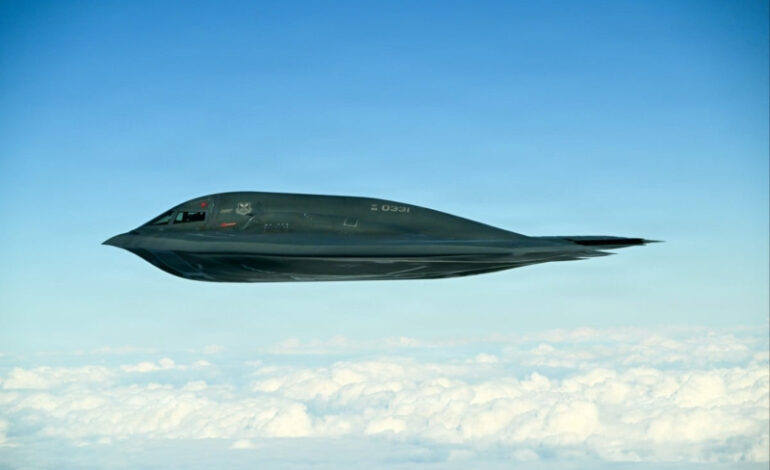
According to the company, its Jingqi war monitoring system identified radio transmissions associated with B-2 bomber operations during the strike on March 1. The system reportedly uses artificial intelligence to analyze multiple streams of open source information including satellite imagery, aircraft movement data and publicly available military records. By combining these sources, the platform attempts to reconstruct military deployments and operational patterns. Jingan Technology said its monitoring system was able to track signals linked to the stealth aircraft as they returned from the mission, indicating that AI driven surveillance tools can interpret signals and operational activity even during complex military operations.
The company also stated that its analysis detected signs of increased US military activity weeks before the strike occurred. By examining patterns such as transport aircraft routes, reconnaissance flights and naval movements, the system concluded that the United States had begun expanding its military presence in the Middle East earlier in the year. The monitoring platform reportedly flagged rising deployments around Iran during early February, when diplomatic discussions were underway regarding Tehran’s missile program. These signals were interpreted as indicators of a potential escalation in military activity in the region.
Jingan Technology said the monitoring system integrates several forms of open source intelligence to build a broader picture of military operations. The platform combines satellite observations with aviation tracking data and analysis of military logistics movements to understand how forces are positioned before and after major operations. Analysts say such systems represent a growing trend in defence technology where artificial intelligence is used to process large volumes of publicly available information in order to identify patterns that might otherwise be difficult to detect.
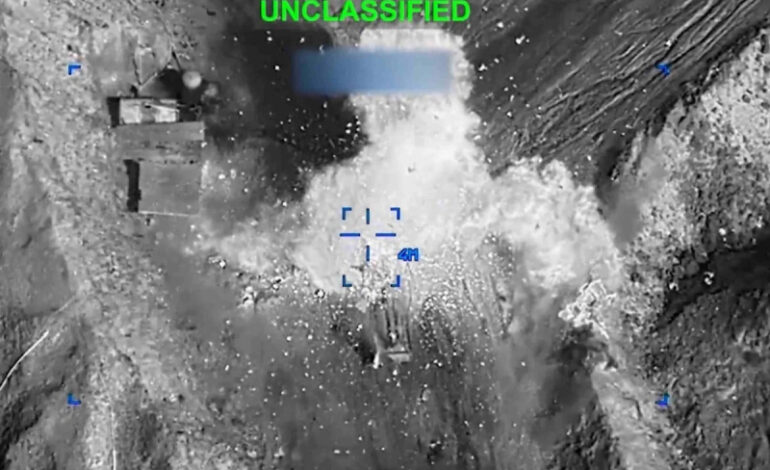
The claim comes amid heightened global attention to military operations following recent strikes targeting Iranian facilities. The operation involved advanced aircraft including B-2 stealth bombers, which are designed to evade radar detection and carry out precision missions. Although stealth aircraft are intended to reduce visibility to traditional radar systems, experts note that other forms of signals and operational indicators may still provide clues about their deployment and movements during missions.
The use of artificial intelligence in defence intelligence gathering is expanding rapidly as governments and private companies develop systems capable of processing massive datasets in real time. AI driven monitoring tools can analyze satellite images, communications signals and transportation patterns to provide early warnings about potential military developments. Such technologies are increasingly used by research institutions, security analysts and defence contractors seeking to improve situational awareness in complex geopolitical environments.
China has been investing heavily in artificial intelligence and advanced data analysis technologies that support national security and defence related research. Companies involved in defence technology are exploring ways to combine machine learning algorithms with satellite data, aviation monitoring tools and open source intelligence platforms. These systems are designed to detect patterns in global military activity, helping analysts interpret events and assess potential security risks as they unfold.
While the company’s claims have not been independently verified, the announcement illustrates how private sector technology firms are playing a growing role in the development of advanced intelligence gathering capabilities. As artificial intelligence systems become more powerful, analysts expect AI driven monitoring tools to become increasingly important for governments, research organizations and security agencies seeking to understand complex military operations and geopolitical developments.