Chinese Reusable Rocket Booster Crashes During First Attempt at Historic Landing
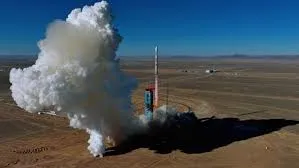
China’s fast growing commercial space industry reached an important milestone with the Zhuque 3 rocket making it to orbit but the mission ended with disappointment as the reusable booster failed to complete its landing attempt. The test marked the first time a private Chinese company had tried to perform a controlled booster recovery similar to the pioneering work done by American competitors. The launch was carried out by a private firm working to prove that China can compete in the global space race where reusable rockets are becoming the standard. Reusability is one of the most important innovations in modern spaceflight because it cuts down launch costs and speeds up turnaround time. The Zhuque 3 made a successful journey into orbit showcasing impressive engineering from China’s private sector but the booster’s return attempt encountered issues and ultimately crashed before completing the planned landing sequence. Although the booster was lost experts say the mission was still a major step forward for China’s commercial space ambitions. Achieving orbit on a first large scale test and attempting a complex landing maneuver demonstrates strong progress. Engineers often expect several failures before perfecting recovery systems since managing atmospheric reentry guidance and propulsion during landing requires extreme precision. Companies like SpaceX also experienced years of trial and error before achieving consistent booster landings. The failed landing highlights the challenges of catching up to established leaders in reusable rocket technology but it also underscores how quickly China’s private sector is advancing. In recent years China has opened the door for private companies to compete alongside state owned aerospace giants. These firms are now designing engines developing new fuels and testing reusable systems in an effort to match the efficiency and cost advantages that reusable rockets offer. Industry analysts say that even with the setback the Zhuque 3 mission will provide valuable data for future tests. Every flight offers engineers critical insights into flight stability thrust control thermal protection and landing algorithms. If the booster failure was caused by propulsion misfires wind conditions or system delays the company will now have real world information to refine its design. Chinese space entrepreneurs see reusability as the key to entering the global commercial launch market where price and reliability determine competitiveness. Faster turnarounds and lower costs could also support China’s growing interest in satellite networks lunar missions and deep space exploration. The test comes at a time when China’s commercial space sector is expanding rapidly with dozens of startups developing rockets ranging from small satellite launchers to medium lift vehicles. The government has encouraged more private innovation to keep pace with global rivals and reduce reliance on traditional state run programs. Although this landing attempt ended in a crash the milestone of reaching orbit combined with the effort to recover the booster marks a turning point. China’s private space industry has now entered the same arena as major players pursuing reusable technology and while challenges remain the momentum behind these companies continues to grow. Future tests will determine how quickly China can close the gap and bring its own reusable rockets into reliable operation as part of a broader race shaping the future of spaceflight.