Chinese Tech Giants Rush to Deploy OpenClaw AI Tools as Adoption Surge Sweeps the Market
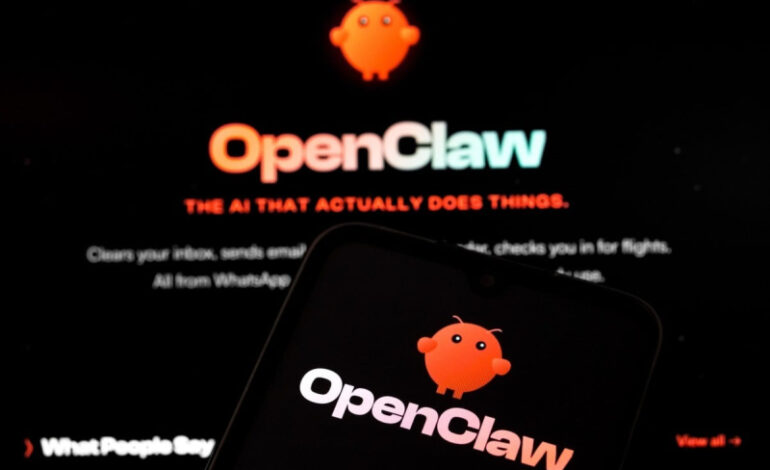
Major Chinese technology companies are rapidly expanding access to the artificial intelligence agent OpenClaw, offering users simplified and often low cost ways to deploy the software as interest in AI automation spreads across the country. Firms including Tencent, Alibaba, and ByteDance have begun integrating OpenClaw based tools into their digital ecosystems in response to growing demand for intelligent assistants capable of performing complex tasks. The surge in adoption has created what industry observers describe as a widespread technology trend across China’s AI sector as companies compete to introduce services that allow businesses and individuals to experiment with AI powered automation.
Tencent has moved quickly to bring the technology into its core digital platforms by launching QClaw, an AI assistant built on the OpenClaw framework that connects directly to its popular super app WeChat. The system allows users to remotely control their computers by sending commands through their smartphones. After installing the software on a laptop or desktop, users can instruct the assistant to carry out tasks such as managing files, launching programs, or organizing information through simple messages sent via WeChat. The process takes only a few minutes to set up, reflecting a broader push by Chinese technology companies to make advanced AI tools accessible to a wider audience.
The rapid expansion of OpenClaw services has also fueled strong investor enthusiasm for companies involved in the AI ecosystem. Shares of Hong Kong listed artificial intelligence firms have seen significant gains as they announce new products built around the technology. AI developer MiniMax expanded its offerings by connecting its voice generation and music creation tools with the OpenClaw platform, allowing users to automate content production workflows. Another prominent AI company, Zhipu AI, introduced a new tool called AutoClaw that enables organizations to deploy a local version of the AI agent in roughly one minute, simplifying the process of integrating intelligent assistants into internal systems.
OpenClaw gained global attention after its launch last year and later attracted additional interest following its acquisition by OpenAI earlier this year. The software is designed as an AI agent capable of carrying out tasks on behalf of users, ranging from responding to emails and generating documents to organizing digital workflows. Its ability to interact with software applications and online services has positioned it as a powerful tool for productivity automation. Technology analysts say the agent based model represents a new phase of artificial intelligence development where AI systems actively perform tasks rather than simply providing information.
China’s rapid embrace of OpenClaw reflects the country’s broader ambition to accelerate artificial intelligence adoption across its digital economy. Internet platforms, cloud computing providers, and AI startups are competing to incorporate intelligent agents into productivity tools, business software, and consumer services. Industry experts believe the trend could reshape how users interact with computers and mobile devices, enabling AI systems to function as digital assistants capable of completing complex operations. As companies continue experimenting with agent based AI technology, the race to integrate these tools into everyday digital platforms is intensifying across China’s technology sector.