Chinese Tech Titans From Kuaishou to Tencent See Early Payoff From Major AI Investments
China’s largest technology companies are beginning to show clear results from the massive resources they have poured into artificial intelligence. Recent quarterly earnings reveal that AI is already reshaping their business models, boosting revenue and improving operational efficiency, according to analysts watching the sector. From short video apps such as Kuaishou to social media and gaming giant Tencent, the country’s leading firms are using AI to deepen user engagement, refine advertising tools and enhance digital services.
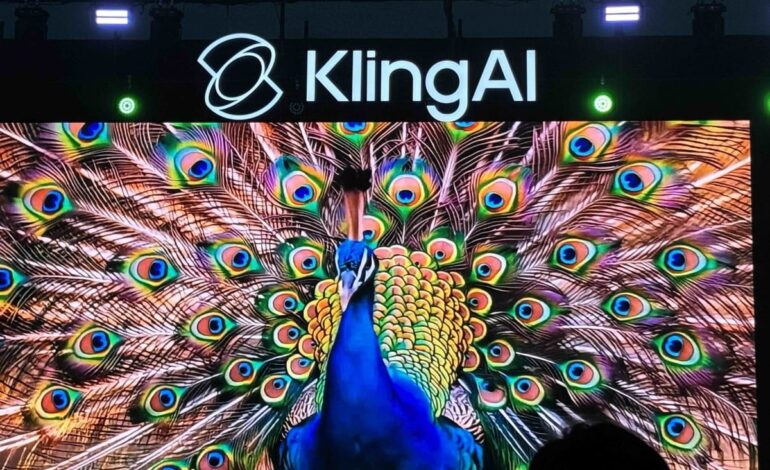
Kuaishou, China’s second biggest short video platform and the closest domestic competitor to Douyin, was the latest to underline how AI is driving growth. In its third quarter earnings report released on Wednesday, the company credited its stronger performance to the rollout of new AI powered products and improvements to its marketing technologies. Its Kling video generation tool, in particular, has started to play a growing role in how creators and advertisers produce content.
The company reported that online marketing services sales rose 14 percent year on year, reaching 20.1 billion yuan, or roughly 2.81 billion U.S. dollars. Meanwhile, its revenue from other services jumped an impressive 41.3 percent to 5.9 billion yuan for the quarter ending in September. Executives said that AI helped deliver more precise ad targeting, automated creative production and better matching of users with relevant content, ultimately lifting both engagement and advertiser value.
Kuaishou is not alone. Across China’s tech landscape, leading firms have been sharpening their focus on long term AI development, even as concerns linger about the costs associated with training large models and scaling AI applications. Analysts note that major players such as Tencent, Alibaba and Baidu have strengthened their internal culture of return on investment, which helps them absorb the high upfront costs. Many have also diversified their revenue sources, allowing them to reinvest heavily in AI without disrupting core operations.
For Tencent, AI is increasingly integrated into its social platforms, gaming engines and cloud computing services. The company has said that generative AI tools are already helping developers build new features faster, while also improving recommendations and user experiences across its apps. Such efforts mirror a broader trend in China’s tech sector, where firms are betting that AI driven personalization will define the next phase of digital consumption.
Industry experts say these early gains suggest that Chinese tech leaders are positioning themselves for sustained growth. The combination of strong domestic demand, government support and enormous data resources gives Chinese tech companies a unique environment in which AI can scale rapidly. While challenges remain, especially regarding regulatory frameworks and global competition, the momentum behind AI is unmistakable.
Executives have been vocal about their belief that artificial intelligence will fuel their companies’ long term strategy. They argue that the technology is not merely an experimental tool but a foundation for future revenue streams. As more AI products reach consumers and as algorithmic efficiency improves, analysts expect the financial impact to become even more pronounced.
For now, quarterly results from companies like Kuaishou serve as a preview of what China’s AI-powered future may look like, one where innovation and monetization increasingly go hand in hand.