Chinese Undertaker Sparks Online Debate Over Makeup at Funeral Work
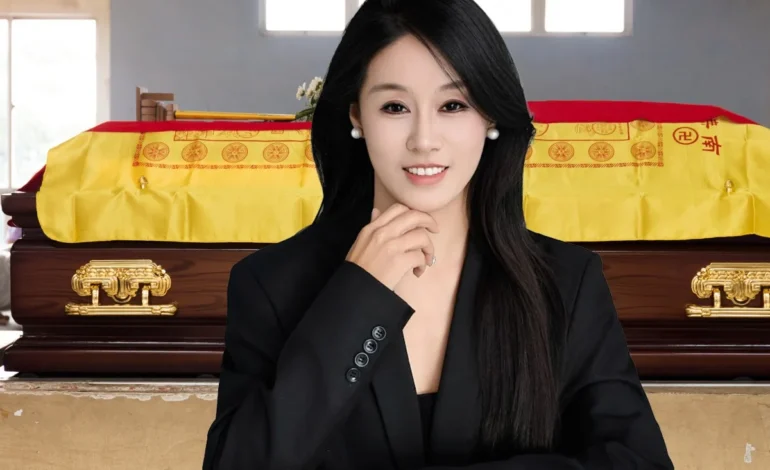
A young woman working as an undertaker in China has found herself at the center of a heated public debate after videos of her at work circulated widely online. Critics accused her of showing disrespect to the dead by wearing make up while preparing bodies for burial, reigniting broader discussions about tradition, professionalism, and changing attitudes toward death in modern Chinese society.
The embalmer, who has gained attention partly because of her resemblance to a well known pop singer, has defended her appearance and work practices. She argues that her approach reflects care rather than disrespect and that maintaining a calm, humane presence is an essential part of her role.
A Profession Rarely Seen but Widely Judged
Funeral work in China remains largely hidden from public view, shaped by long standing taboos around death. Undertakers and embalmers often work behind closed doors, and their profession is rarely discussed openly.
When images of the woman performing her duties surfaced on social media, many viewers reacted with shock. Some questioned whether wearing make up in such a setting violated cultural norms of solemnity and mourning. Others went further, accusing her of turning a serious profession into a performance.
The reaction reflects how deeply ingrained expectations around death remain, even as society becomes more open in other areas.
The Embalmer’s Explanation
In response to the criticism, the woman explained that wearing make up is part of her personal presentation and does not interfere with her work. She said that maintaining a composed and respectful appearance helps her remain emotionally balanced in a profession that can be psychologically demanding.
She also revealed that she speaks softly to the bodies she prepares, a habit she says brings comfort to both herself and the deceased. In her view, this practice is not strange but compassionate, helping her treat each person with dignity during their final journey.
Her comments resonated with some viewers who praised her for humanizing a profession often misunderstood or stigmatized.
Tradition Versus Changing Social Attitudes
Much of the backlash stems from traditional beliefs that associate mourning with visible restraint and seriousness. In many parts of China, funeral workers are expected to appear plain and subdued, reflecting the gravity of death.
However, younger generations increasingly challenge these expectations. For them, professionalism is defined more by competence and empathy than by appearance alone. Wearing make up is seen as a personal choice rather than a sign of disrespect.
This clash highlights a broader cultural tension between inherited customs and evolving social norms, particularly as more people share their lives and work openly online.
Social Media Amplifies Judgment
The controversy also illustrates how social media can magnify moral judgment. Short videos and images, stripped of context, often provoke strong reactions. In this case, the embalmer’s appearance became the focus, overshadowing discussion of the emotional labor involved in funeral work.
Online platforms reward outrage, and professions linked to taboo subjects are especially vulnerable to misinterpretation. Many commentators formed opinions without understanding the nature of embalming or the psychological demands of caring for the dead.
At the same time, the viral attention has forced conversations that would otherwise remain private.
Support From Unexpected Quarters
Despite criticism, the embalmer has received significant support. Some funeral professionals defended her, noting that personal presentation does not diminish respect for the deceased. Others emphasized that talking to bodies is not uncommon and can help workers cope with emotional stress.
Mental health specialists also weighed in, explaining that rituals and routines can help people manage difficult work environments. From this perspective, the woman’s behavior reflects self care rather than insensitivity.
These voices argue that society should focus less on appearances and more on the compassion shown in practice.
A Reflection of Modern China
The debate surrounding the embalmer is ultimately about more than make up. It reflects how Chinese society is renegotiating its relationship with death, work, and individual expression.
As younger workers enter traditionally conservative professions, they bring new perspectives shaped by openness and digital culture. Public reactions reveal discomfort with this shift, but also curiosity and gradual acceptance.
While opinions remain divided, the incident has sparked a rare public conversation about funeral work and the people who perform it. In doing so, it has reminded many that respect for the dead is not defined solely by outward appearance, but by intention, care, and humanity.