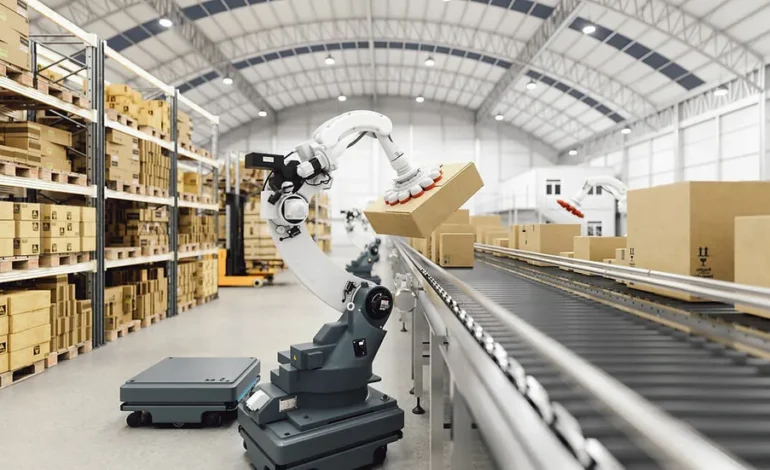
Cobots in Smart Factories: Human-Machine Integration
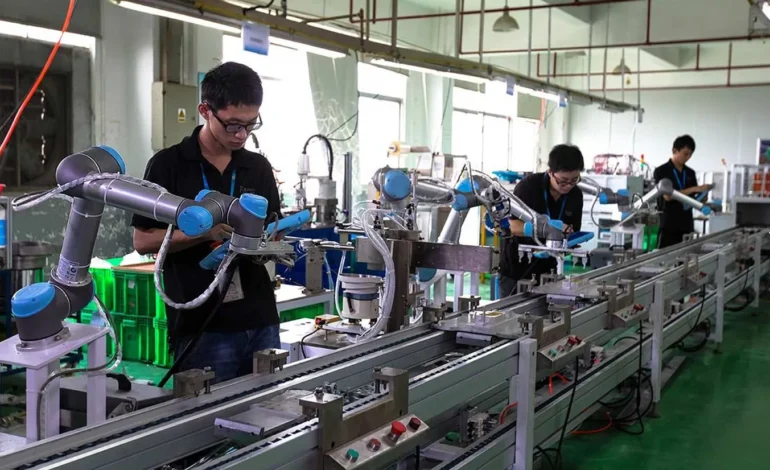
China’s manufacturing industry is entering a new phase of intelligent collaboration as collaborative robots, or “cobots,” become essential to factory operations. Unlike traditional industrial robots designed to work independently, cobots are built to interact safely and efficiently alongside human workers. According to Reuters and SCMP, the demand for cobots in China has surged by over 35 percent in 2025, driven by labor shortages, rising productivity goals, and policy incentives under the country’s industrial modernization strategy.
How Cobots Are Transforming Production
In sectors such as electronics, automotive, and precision equipment, cobots are redefining how tasks are distributed on factory floors. They assist with component assembly, welding, and packaging, while AI algorithms allow them to adjust grip, torque, and speed in real time. Bloomberg notes that leading firms like Siasun, Estun, and Jaka Robotics have launched next-generation cobots equipped with advanced vision sensors and natural-language programming that simplifies integration into existing workflows.
Unlike fully autonomous robots, cobots are designed to complement human skills rather than replace them. A technician can teach a cobot new actions through motion imitation or voice command, reducing training time from weeks to hours. This flexibility has helped small and medium manufacturers automate without massive infrastructure changes.
Government Support and Industry Collaboration
China’s Ministry of Industry and Information Technology (MIIT) has introduced subsidy programs encouraging companies to adopt safe human-machine collaboration systems. More than 2,000 pilot projects are active across manufacturing zones in Guangdong, Zhejiang, and Jiangsu provinces. These initiatives not only boost productivity but also improve worker safety by delegating physically demanding or repetitive tasks to robotic partners.
SCMP reports that cobot deployment has increased workplace efficiency by up to 30 percent while reducing injury rates in assembly environments. Research universities are also joining forces with manufacturers to develop AI algorithms that help cobots recognize human gestures and adapt to variable environments, further enhancing collaboration.
Digital Traceability and Performance Assurance
As cobots become central to industrial production, their operations are increasingly monitored through digital verification systems that track uptime, maintenance schedules, and energy consumption. Blockchain-enabled monitoring tools record these metrics transparently, ensuring reliability and compliance with industrial safety standards.
Analysts view this digital oversight as a crucial step toward smarter, data-driven manufacturing ecosystems. It ensures that automation growth remains accountable and measurable, building investor and consumer trust in China’s high-tech industrial exports.
Conclusion
Cobots symbolize the next evolution of industrial automation in China, blending human creativity with robotic precision. Their integration reflects a balanced approach to technological progress, one that values safety, efficiency, and transparency. As data analytics and digital oversight mature, human-machine collaboration will likely become the defining feature of smart manufacturing, positioning China at the forefront of the global industrial transformation.