
Commercial Drone Expansion in Chinese Agriculture
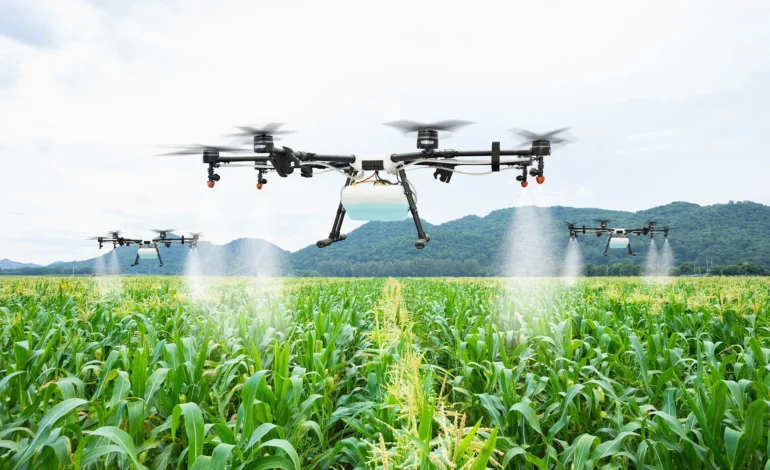
China’s agriculture sector is embracing commercial drones as a transformative technology to improve efficiency, productivity, and sustainability. By 2025, drones will be widely deployed for crop monitoring, pesticide spraying, seeding, and precision agriculture initiatives. These aerial systems provide real-time data on crop health, soil conditions, and irrigation needs, enabling farmers to optimize resource use and increase yields. The rapid expansion of commercial drones in agriculture reflects China’s commitment to integrating advanced technology into traditional sectors. This blog explores technological advances, operational benefits, policy support, and the future of agricultural drones in China.
Government Policies Supporting Agricultural Drones
Government initiatives have been central to the expansion of drones in agriculture. Subsidies, grants, and tax incentives encourage farmers and agritech companies to adopt aerial technologies. Pilot programs in provinces such as Heilongjiang, Jiangsu, and Guangdong provide demonstration projects, training, and technical support. Policies also promote R&D in drone design, precision spraying systems, and data analytics platforms, ensuring that the agriculture sector benefits from domestic innovation while maintaining environmental and operational standards.
Technological Advancements
Commercial drones in agriculture integrate advanced sensors, GPS, high-resolution cameras, and AI-driven data processing. Multi-spectral and thermal imaging sensors allow farmers to assess crop health, detect pests, and monitor irrigation levels. AI algorithms analyze collected data to generate actionable insights, such as optimal fertilization schedules or disease risk alerts. Precision spraying systems enable targeted application of pesticides and fertilizers, reducing chemical usage, minimizing environmental impact, and improving efficiency. Innovations in battery life and payload capacity extend operational range and enable larger-scale deployments.
Applications in Crop Monitoring and Management
Drones are increasingly used for crop monitoring, allowing farmers to obtain real-time data across extensive farmland. Aerial imaging identifies plant stress, nutrient deficiencies, and pest infestations before they become visible to the naked eye. Data-driven analytics supports predictive farming, helping to optimize irrigation, fertilization, and harvesting schedules. By providing detailed spatial data, drones enhance decision-making, improve yield forecasts, and support sustainable resource management.
Precision Agriculture and Resource Efficiency
Precision agriculture is a key benefit of commercial drone adoption. Drones enable targeted pesticide and fertilizer application, reducing waste and environmental impact. By optimizing water usage and monitoring soil conditions, farmers can increase efficiency while conserving resources. These technologies contribute to sustainable farming practices, support national environmental goals, and reduce operational costs for both large-scale and smallholder farms.
Irrigation and Soil Management
Drones equipped with thermal imaging and multispectral sensors provide critical information for irrigation management. They identify areas of water stress, uneven soil moisture, and drainage issues. This allows farmers to allocate water resources efficiently, improve crop growth, and reduce water waste. Soil analysis, including detecting nutrient imbalances or compaction, informs fertilization strategies and enhances soil health. By integrating drone data into farm management systems, China’s agriculture sector can optimize both productivity and sustainability.
Commercial Drone Deployment Models
Several deployment models support the growth of agricultural drones. Large agritech companies provide fleet services for spraying, monitoring, and data collection, allowing smallholder farmers to access technology without owning equipment. Cooperative models enable shared drone resources among multiple farms, increasing accessibility. Government-supported pilot programs also provide rental or subsidized services to test and scale adoption in rural regions. These models ensure equitable access to advanced agricultural technologies.
Impact on Labor and Productivity
Commercial drones reduce labor intensity by automating tasks such as spraying, seeding, and field mapping. Farmers spend less time on manual monitoring and routine tasks, allowing them to focus on strategic decision-making and crop management. Increased operational efficiency and timely interventions lead to higher yields, reduced crop losses, and improved quality. By 2025, drones are integral to modernizing agricultural operations and enhancing overall productivity in China’s farming sector.
Environmental Benefits
Drones contribute to environmental sustainability by minimizing chemical runoff, optimizing water usage, and reducing fuel consumption associated with traditional machinery. Precision spraying reduces the volume of pesticides and fertilizers applied, limiting their impact on surrounding ecosystems. Targeted interventions support integrated pest management and soil conservation, contributing to long-term ecological health. These benefits align with China’s broader environmental and agricultural sustainability initiatives.
Integration with Data Platforms
Drones are integrated with cloud-based farm management systems, providing centralized platforms for monitoring, analysis, and decision support. AI algorithms process large volumes of data to identify trends, forecast yields, and recommend interventions. Integration with mobile applications allows farmers to receive real-time updates, alerts, and guidance, enhancing operational efficiency. By combining drone data with IoT sensors, remote monitoring, and predictive analytics, farms achieve a more intelligent and responsive agricultural ecosystem.
Challenges and Limitations
Despite rapid adoption, agricultural drones face challenges. Battery life and payload limitations can restrict operational coverage, particularly in large-scale farms. Regulatory compliance, including flight permissions and airspace restrictions, requires careful planning. Initial investment costs and training requirements may be barriers for smallholder farmers. Addressing these challenges through subsidies, cooperative models, and continued technological innovation is essential for widespread adoption.
Future Outlook
By 2025 and beyond, commercial drone adoption in Chinese agriculture is expected to expand further, with improvements in AI-driven automation, extended battery life, and larger payload capacities. Integration with autonomous ground vehicles, smart irrigation systems, and predictive analytics will enhance efficiency and sustainability. Policy support, industrial collaboration, and farmer training programs will continue to drive adoption, positioning drones as a cornerstone of China’s modern, high-tech agricultural landscape.
Conclusion
Commercial drones are transforming agriculture in China by enhancing efficiency, productivity, and sustainability. Through advanced sensors, AI analytics, precision spraying, and integration with farm management systems, drones enable data-driven farming and optimized resource use. Government support, innovative deployment models, and technological advancements facilitate widespread adoption, benefiting both large-scale and smallholder farms. By 2025, drones are a critical tool for modernizing agriculture, supporting national food security, and advancing sustainable farming practices in China.



