Companies Need Clearer Guidance as the U.S.–China Trade War Redraws Global Rules

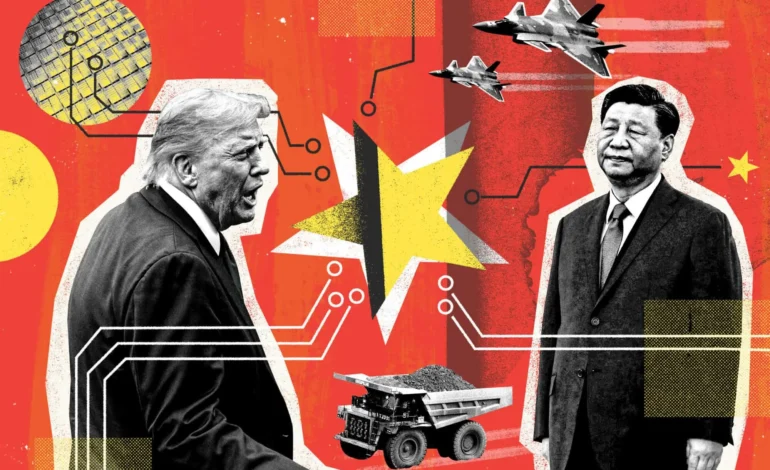
Global companies have spent the past year trying to navigate one of the most unpredictable trade environments in decades. As the United States and China escalate tariffs, export controls and regulatory investigations, firms operating across both markets are being forced to hedge risk, duplicate supply chains and rethink long term strategies. The problem, according to analysts, is not simply the trade war itself but the absence of clear guardrails from like minded democratic governments that could help businesses adapt more predictably.
A Fractured Environment With Mounting Pressures
Since January, the trade war has widened beyond tariffs into a tangle of investigations, import bans, national security reviews and restrictions on sensitive technologies. Companies in sectors from semiconductors to pharmaceuticals now face months of uncertainty as rules shift quickly and legal exposure grows.
Executives say that without clearer frameworks they must make expensive decisions based on guesswork. Many are splitting production between regions, moving research centers offshore and negotiating supply chain redundancies that raise costs for both businesses and consumers.
Why Democratic Governments Must Coordinate Better
Dennis Kwok and Sam Goodman argue that democratic nations share broad strategic goals but lack the unified guidance that companies urgently need. The U.S., Europe, Japan, South Korea, Australia and others all want to reduce exposure to China in critical technologies while maintaining access to open global markets.
Yet each country has crafted its own set of export rules, screening mechanisms and investment restrictions. These fragmented policies create confusion and compliance risks for multinational firms that operate across jurisdictions. Without alignment, companies cannot accurately plan investments or determine whether shifting production will actually reduce risk.
Businesses Are Stuck Between Two Systems
While the U.S. expands export controls on chips, AI technologies and data related services, China has responded with its own anti espionage laws, exit bans and countermeasures targeting rare earths and other strategic materials.
Firms caught in the middle now face:
• Higher compliance costs
• Fear of violating national security rules in either country
• Pressure to choose sides in sensitive industries
• Difficulty securing long term supply contracts
Some companies are already retreating from one market or another simply because the regulatory uncertainty is too high.
A Call for Clearer Guardrails and Shared Standards
To prevent unnecessary economic fragmentation Kwok and Goodman say democratic governments should work together to establish transparent, harmonized rules that companies can follow with confidence. This includes:
• Coordinating export control lists
• Aligning definitions of “national security technologies”
• Offering unified guidance on investment screening
• Setting clearer timelines and thresholds for regulatory reviews
• Sharing intelligence so companies receive consistent risk assessments
Such guardrails would not eliminate geopolitical tension but would allow businesses to operate with a predictable roadmap instead of guessing which policy change will come next.
A Competitive Advantage for Democracies
If democratic governments coordinate effectively they could create a stable regulatory environment that gives firms the confidence to invest, innovate and expand. Without coordination the risk is that companies pull back, supply chains become more fragmented and the global economy becomes less resilient.
The trade war has shown that economic security is now inseparable from national security. But unless the U.S. and its allies align their approaches companies will remain stuck in a costly and confusing landscape where every strategic move feels like a gamble.