Comparing Open-Source and Proprietary AI Models in China
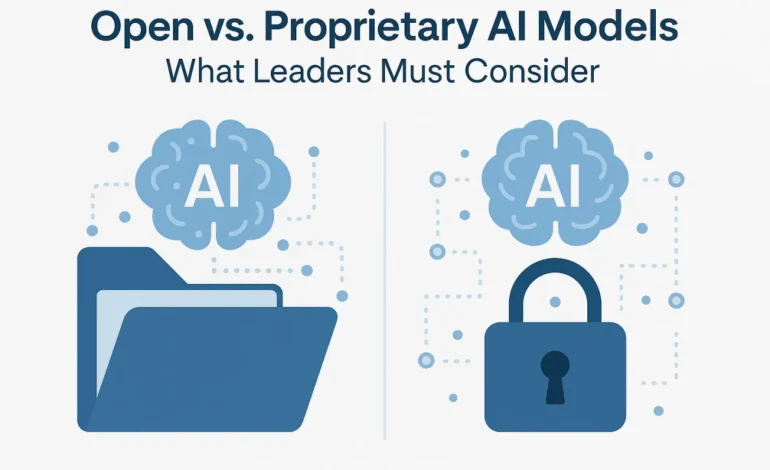
China’s artificial intelligence (AI) ecosystem is rapidly evolving, with both open-source and proprietary AI models driving innovation in industries, research, and public services. Open-source models, freely available for modification and distribution, foster collaboration, transparency, and rapid experimentation. Proprietary models, developed and controlled by companies, prioritize intellectual property protection, specialized functionality, and commercial competitiveness. Understanding the trade-offs between open-source and proprietary AI is essential for enterprises, research institutions, and policymakers aiming to maximize innovation while managing risks and strategic interests.
Open-Source AI Models in China
Open-source AI models provide a foundation for collaborative development and experimentation. Chinese research institutions, universities, and tech startups leverage open-source frameworks such as TensorFlow, PyTorch, PaddlePaddle, and MindSpore to accelerate AI research. Open-source models allow developers to customize architectures, adapt algorithms to local needs, and share improvements with the broader community. These models reduce development costs, enable rapid prototyping, and foster innovation by providing access to cutting-edge AI technologies without restrictive licensing barriers.
Proprietary AI Models and Corporate Strategy
Proprietary AI models are developed and maintained by companies to retain competitive advantage and protect intellectual property. Leading Chinese firms such as Baidu, Alibaba, and Tencent invest heavily in proprietary AI for natural language processing, computer vision, recommendation systems, and autonomous systems. Proprietary models allow firms to monetize AI capabilities, maintain control over data usage, and integrate AI tightly with commercial platforms. While these models accelerate commercialization and revenue generation, they limit transparency and external collaboration.
Comparative Advantages: Open-Source Models
Open-source models offer several advantages for innovation and research. They promote transparency, allowing developers and regulators to inspect algorithms, detect bias, and ensure ethical use. Collaboration across institutions accelerates knowledge sharing and problem-solving, enabling faster breakthroughs. Open-source AI also reduces barriers to entry for startups and smaller enterprises, democratizing access to advanced technology. Furthermore, adaptation to local languages, industries, and regulatory frameworks is easier due to the flexibility of open-source systems.
Comparative Advantages: Proprietary Models
Proprietary models provide advantages in security, stability, and commercial competitiveness. Companies maintain control over model updates, deployment, and access, protecting sensitive data and intellectual property. Proprietary models often include optimized performance, specialized features, and robust support, making them suitable for industrial-scale deployment. For large enterprises, proprietary AI ensures alignment with corporate strategy, integration with proprietary platforms, and protection against competitive leakage. These models are particularly important in sectors requiring high reliability, regulatory compliance, or monetizable AI solutions.
Hybrid Approaches and Collaboration
Some Chinese tech companies adopt hybrid approaches, combining open-source frameworks with proprietary enhancements. This strategy allows developers to leverage the collaborative benefits of open-source AI while maintaining proprietary advantages for commercialization and intellectual property protection. Hybrid models support flexibility in innovation, faster deployment, and adaptability to industrial requirements. Collaboration between academic institutions and corporate labs often facilitates hybrid AI development, fostering knowledge exchange and accelerating AI maturity in multiple sectors.
Implications for Industry Adoption
The choice between open-source and proprietary AI influences adoption patterns across industries. Open-source AI encourages experimentation, small-scale implementation, and rapid scaling among startups and research labs. Proprietary AI is often favored by established enterprises requiring robust, scalable, and secure solutions. Industries such as finance, healthcare, manufacturing, and energy balance cost, security, and innovation needs when selecting AI models. Strategic alignment with company objectives and regulatory compliance guides the decision-making process.
Innovation and Intellectual Property Considerations
Open-source AI accelerates research innovation by allowing global collaboration, iterative improvement, and shared problem-solving. However, it may limit direct monetization and IP protection for companies. Proprietary models enable intellectual property protection, creating revenue streams and competitive advantage but can restrict external validation and transparency. Balancing innovation speed with IP security is a central challenge for Chinese AI developers and policymakers.
Regulatory and Ethical Considerations
Both open-source and proprietary AI models must comply with regulatory standards and ethical guidelines. Open-source models require monitoring for bias, fairness, and misuse. Proprietary models must ensure data privacy, security, and ethical application. The Chinese government provides frameworks that encourage innovation while safeguarding societal interests, requiring companies and research institutions to implement responsible AI practices regardless of model type.
Talent Development and Knowledge Transfer
Open-source AI supports talent development by providing accessible resources for students, researchers, and developers to learn, experiment, and contribute. Proprietary models also enhance workforce skills through in-house training and applied research. Hybrid approaches maximize knowledge transfer, enabling staff to apply open-source learning in proprietary environments, fostering a skilled AI workforce capable of driving industrial innovation and commercialization.
Future Outlook
China’s AI ecosystem is likely to continue a dual approach, leveraging both open-source and proprietary models. Open-source AI will fuel research, collaborative projects, and startup innovation, while proprietary AI will dominate commercial applications, large-scale industrial deployments, and strategic national initiatives. Hybrid AI models will bridge the gap, combining flexibility, collaboration, and protection of IP. Policymakers, enterprises, and research institutions must navigate these choices to optimize innovation, safety, and competitiveness.
Conclusion
Comparing open-source and proprietary AI models in China highlights the trade-offs between transparency, collaboration, flexibility, and commercial control. Open-source AI accelerates research, democratizes technology access, and fosters innovation, while proprietary AI secures intellectual property, supports monetization, and ensures reliability for industrial-scale deployment. Hybrid models and strategic collaboration enable stakeholders to benefit from both approaches. As China continues to expand its AI ecosystem, understanding these dynamics is essential for responsible, competitive, and innovative AI development.