
Deadly Clashes in Aleppo Undermine Syria’s Fragile Calm as Thousands Are Displaced
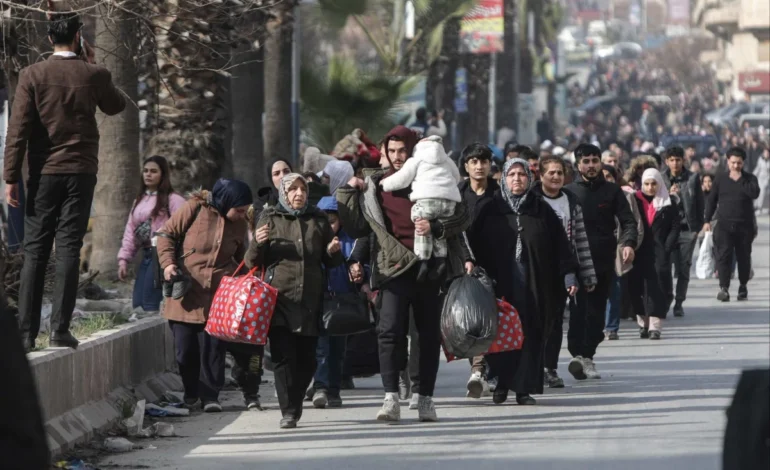
Renewed fighting in northern Syria has shattered a fragile period of calm, with deadly clashes erupting in and around Aleppo and forcing thousands of civilians to flee their homes. The violence has highlighted the collapse of a year long effort to integrate rival armed forces and raised fears of wider instability in a country already exhausted by more than a decade of war.
The clashes involved Syrian government troops and the Kurdish led Syrian Democratic Forces, a powerful force that controls large areas of northern and eastern Syria. According to local sources, intense exchanges of gunfire and shelling broke out after weeks of mounting tension over control of security checkpoints and military positions near key supply routes.
Aleppo, once Syria’s largest city and an economic hub, has endured repeated waves of violence since the conflict began. Although front lines had largely stabilised in recent years, the latest fighting has exposed how unresolved political and military arrangements continue to threaten any lasting peace. Residents reported explosions and heavy weapons fire, with some neighbourhoods experiencing electricity cuts and shortages of basic supplies.
At least dozens of people have been killed or wounded, according to medical workers and monitoring groups, though exact figures remain difficult to verify due to restricted access. Thousands of civilians have fled affected areas, seeking safety in nearby towns or makeshift shelters. Aid workers warn that displacement is adding pressure to already overstretched humanitarian resources, particularly as winter conditions worsen.
The violence marks a clear breakdown of a plan launched last year to merge government forces with the Syrian Democratic Forces under a unified security framework. The initiative was intended to reduce friction, stabilise contested areas and lay groundwork for broader political reconciliation. However, deep mistrust, competing chains of command and unresolved questions over autonomy undermined progress from the outset.
The Syrian government insists it must restore full authority over all territory, while the Kurdish led administration has sought guarantees over local governance and security. Negotiations stalled repeatedly, and sporadic incidents continued to erode confidence on both sides. Analysts say the Aleppo clashes represent the most serious collapse of the arrangement so far.
For the government in Syria, the fighting complicates efforts to project an image of restored stability. Damascus has argued that the war is effectively over in much of the country, even as sanctions remain in place and the economy struggles. Renewed violence in a major city undermines that narrative and risks drawing in regional actors with competing interests.
The Syrian Democratic Forces, backed in the past by the United States in the fight against Islamic State, now face pressure from multiple directions. Turkish threats along the northern border, uncertainty over international support and renewed confrontation with Damascus have left the group in a precarious position.
International reaction has been muted, reflecting fatigue and shifting global priorities. However, diplomats warn that unchecked escalation could unravel fragile arrangements elsewhere in Syria, triggering new displacement and humanitarian crises.
For civilians in Aleppo, the return of large scale fighting has revived painful memories of earlier years. Many residents had hoped the worst was behind them, only to find themselves once again packing belongings and fleeing uncertain futures.
The collapse of the military integration plan underscores a broader reality. Without genuine political compromise and clear security guarantees, Syria’s calm remains brittle. The latest clashes serve as a stark reminder that while front lines may fade from headlines, the roots of conflict remain unresolved and capable of reigniting with devastating speed.



