Deadly Flash Floods Claim 37 Lives in Morocco as Torrential Rains Hit Coastal City
At least 37 people have died after torrential rains triggered devastating flash floods in the Moroccan coastal city of Safi, authorities said on Monday, marking one of the deadliest weather related disasters to hit the country in recent years.
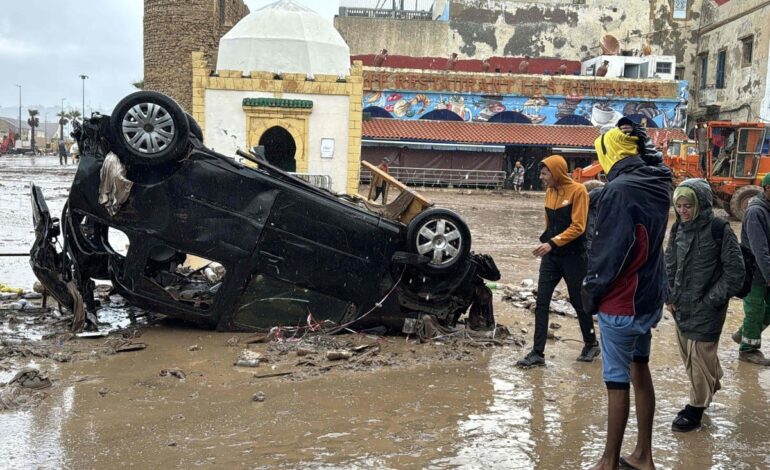
According to Morocco’s Interior Ministry, intense rainfall overnight caused sudden flooding that swept through residential neighborhoods and commercial areas, overwhelming infrastructure and leaving widespread destruction in its wake. Emergency services said around 70 homes and businesses were inundated as water surged through streets with little warning. Ten vehicles were reportedly washed away by the fast moving floodwaters.
Fourteen people were hospitalized with injuries ranging from fractures to hypothermia, while rescue teams continued to search affected areas to ensure no victims were trapped beneath debris or inside damaged buildings. Local authorities said emergency crews worked through the night to evacuate residents from flooded zones and provide shelter for families who lost their homes.
Residents described scenes of panic as water levels rose rapidly. Many said the rain intensified within minutes, giving people little time to escape. Witnesses reported that vehicles were lifted and carried by powerful currents, while ground floor homes were quickly submerged. Power outages and blocked roads further complicated rescue efforts in several districts.
The Interior Ministry said local and national emergency response units were mobilized immediately, including civil protection teams, police, and medical personnel. Temporary shelters were set up to house displaced residents, and food and medical assistance was distributed to those affected. Officials said damage assessments were underway to determine the full scale of losses.
Morocco has increasingly faced extreme weather events in recent years, with experts pointing to climate change as a key factor. While the country has endured prolonged drought, the dry and hardened soil has reduced the land’s ability to absorb sudden rainfall, increasing the risk of flash flooding. Scientists say this combination of drought and intense rain makes floods more destructive when they occur.
North Africa has been particularly vulnerable to shifting climate patterns, with longer dry spells followed by episodes of heavy rainfall. In Morocco, these changes have affected both rural and urban areas, raising concerns about preparedness and infrastructure resilience. Urban expansion, especially in low lying zones, has also contributed to the severity of flood impacts.
Government officials acknowledged that climate adaptation measures are becoming increasingly urgent. In recent years, Morocco has invested in water management and early warning systems, but Monday’s disaster highlights the growing challenges posed by extreme weather. Authorities said lessons from the Safi floods would be reviewed to improve future disaster response and prevention.
Community leaders and civil society groups have called for stronger flood defenses, better drainage systems, and clearer emergency communication to reduce loss of life during sudden storms. They also stressed the importance of public awareness, especially in vulnerable neighborhoods.
As the city mourns the victims, flags were lowered in some areas and prayers were held in mosques for those who lost their lives. Officials expressed condolences to the families affected and pledged continued support during the recovery process.
The tragedy in Safi serves as a stark reminder of the human cost of extreme weather and the growing need for coordinated action to protect communities from climate related disasters.