
Deadly Floods Across Asia Highlight Growing Human Cost of Climate Inaction
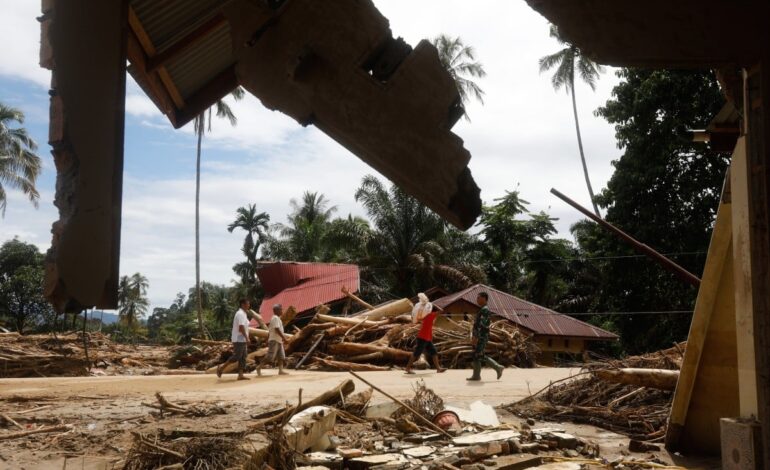
More than 1,400 people have lost their lives across South and Southeast Asia after a week of devastating floods, underscoring how rising global temperatures are intensifying extreme weather events while international efforts to reduce fossil fuel dependence remain slow. The scale of destruction has overwhelmed governments and emergency services, revealing once again how vulnerable the region is to climate-driven disasters.
In Indonesia, the latest floods and landslides have become the country’s deadliest disaster since 2018. Entire communities were swept away by fast-moving waters, leaving residents with little time to escape. Homes, bridges, and public facilities collapsed under the force of the floods, and rescue workers have spent days searching for survivors in remote areas where roads remain blocked and communication lines are damaged. Local officials say they are struggling to provide shelter, clean water, and medical assistance to thousands who have been displaced.
Sri Lanka has also declared a state of emergency after persistent rains caused rivers to overflow and triggered large mudslides in several districts. The government mobilized the military to support evacuations as hundreds of homes were inundated and key transport routes were cut off. Officials say the level of destruction is far beyond what the country typically experiences during its rainy season, indicating that weather patterns are becoming increasingly unpredictable.
In Thailand, Vietnam and Malaysia, heavy rainfall has produced widespread flash floods, forcing evacuations and causing large scale disruptions. In northern Thailand, entire villages were submerged after riverbanks gave way, while in Vietnam’s central provinces, authorities issued repeated warnings as continuous downpours raised the risk of new landslides. Malaysia reported similar challenges as rapid flooding overwhelmed drainage systems and forced thousands to flee to temporary shelters.
Climate scientists say the recent wave of disasters is linked to the Indian Ocean Dipole, a natural climate pattern that influences rainfall by warming and cooling different parts of the ocean. During a strong positive phase, warm waters near East Africa and cooler waters near Indonesia can significantly intensify rainfall across Asia. Scientists warn that climate change is making such patterns more extreme and harder to predict, resulting in heavier storms and more severe flooding.
Experts emphasize that while monsoon rains are a normal part of life in many Asian countries, the intensity and frequency of recent events show clear signs of a warming planet. Urbanization, deforestation and inadequate infrastructure further increase the risks. Many cities and rural areas lack the systems needed to handle sudden and powerful floods, leaving millions exposed.
Humanitarian agencies say the latest disasters should serve as a reminder of the urgent need for stronger climate policies, improved early warning systems and greater investment in disaster preparedness. They point out that extreme weather events are becoming more destructive, and without swift global action to reduce emissions, countries across Asia may face even more deadly seasons in the years ahead.



