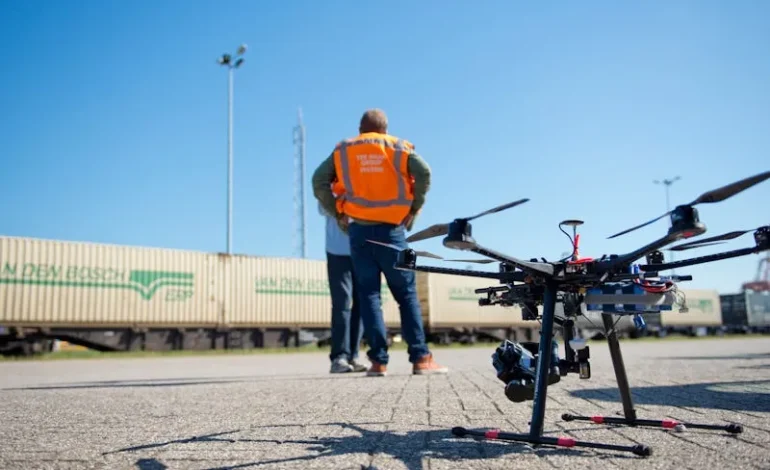
Delivery Drone Startups Gaining Market Share

The rapid growth of e-commerce, logistics, and last-mile delivery in China has fueled the rise of delivery drone startups. By 2025, numerous startups will be deploying unmanned aerial systems to provide fast, efficient, and cost-effective delivery services. These drones cater to urban, suburban, and rural areas, delivering packages, groceries, medical supplies, and industrial components. This blog examines the emergence of delivery drone startups, technological innovations, market strategies, operational challenges, and the broader impact on China’s logistics ecosystem.
Government Policies and Regulatory Frameworks
Government support is essential for the development of delivery drone startups. Policies provide flight permissions, designated air corridors, safety standards, and certification procedures. Pilot programs encourage startups to test autonomous delivery in urban districts, industrial parks, and rural communities. Subsidies, grants, and tax incentives support R&D, fleet expansion, and software integration. By establishing a supportive regulatory environment, China ensures that delivery drone startups can scale operations safely and efficiently while adhering to national aviation and security standards.
Technological Innovations in Delivery Drones
Startups are leveraging advanced technologies to optimize delivery operations. Key innovations include autonomous navigation, obstacle avoidance, AI-driven route optimization, and payload management. Drones are equipped with GPS, LiDAR, cameras, and IoT sensors to navigate complex urban environments, avoid obstacles, and adjust flight paths in real time. Battery and power management improvements allow longer flight durations and heavier payloads. AI algorithms coordinate fleets, predict demand, and optimize delivery routes for efficiency and safety.
Business Models and Market Penetration
Delivery drone startups are adopting diverse business models to gain market share. Some operate on a B2B model, delivering packages and industrial supplies for logistics companies and e-commerce platforms. Others use a B2C approach, providing rapid home delivery of groceries, pharmaceuticals, or consumer goods. Strategic partnerships with e-commerce giants, logistics firms, and municipal authorities expand operational reach. Subscription-based services and on-demand delivery options offer flexibility to consumers and businesses, supporting rapid adoption in competitive markets.
Operational Efficiency and Cost Reduction
Delivery drones improve operational efficiency by reducing delivery times and labor costs. Autonomous systems bypass traffic congestion, optimize flight paths, and enable round-the-clock operations. Startups utilize AI-driven analytics to minimize fuel and energy consumption, balance fleet usage, and prioritize high-demand routes. By streamlining last-mile delivery, drones enhance customer satisfaction, reduce operational expenses, and improve profitability for logistics providers.
Integration with E-Commerce Platforms
Delivery drones are increasingly integrated with e-commerce and logistics platforms. Startups use APIs and software systems to coordinate orders, track packages, and provide real-time delivery updates to customers. Integration enables predictive scheduling, dynamic route adjustments, and efficient resource allocation. Collaborative platforms allow drones to seamlessly interact with warehouses, automated sorting systems, and ground delivery vehicles, creating an end-to-end autonomous logistics ecosystem.
Applications in Urban, Suburban, and Rural Areas
Delivery drones are deployed across diverse environments. In urban areas, drones provide fast delivery in congested districts and high-rise residential complexes. In suburban zones, drones reduce travel time for last-mile deliveries, while in rural regions, they bridge connectivity gaps, delivering essential goods to remote communities. These diverse applications expand market opportunities, improve accessibility, and enhance the reach of logistics services across China.
Safety and Risk Management
Ensuring safety is critical for drone operations. Startups implement redundancy systems, obstacle detection, automated emergency landing, and collision avoidance technologies. Regulatory compliance includes airspace monitoring, altitude restrictions, and operational safety protocols. AI-driven monitoring tracks fleet performance, detects anomalies, and prevents accidents. Risk management strategies ensure safe integration of drones into crowded urban airspace and industrial zones.
Competitive Landscape and Market Share
China’s delivery drone market is highly competitive, with numerous startups competing alongside established logistics and technology companies. Startups differentiate themselves through technological innovation, specialized delivery services, cost efficiency, and geographic coverage. Rapid pilot programs, investment in AI navigation, and partnerships with local authorities contribute to gaining market share. Startups that combine technological reliability with scalable operations are positioned to capture significant portions of the growing drone delivery market.
Environmental and Sustainability Benefits
Delivery drones offer environmentally friendly logistics solutions. Electric-powered UAVs reduce fuel consumption, decrease greenhouse gas emissions, and minimize road congestion. By optimizing flight paths and energy use, startups enhance sustainability. Drones reduce reliance on traditional delivery vehicles, aligning with national goals for green logistics and energy-efficient transportation. Sustainability is both a market advantage and a regulatory requirement in China’s evolving drone industry.
Challenges in Scaling Operations
Despite growth, delivery drone startups face operational and regulatory challenges. Airspace restrictions, battery limitations, payload capacity, and adverse weather can constrain deployment. Logistics integration with existing infrastructure, public acceptance, and cybersecurity concerns are additional barriers. Startups address these challenges through pilot programs, R&D investment, fleet management optimization, and collaboration with regulatory authorities to ensure safe, scalable, and reliable operations.
Future Outlook
By 2025 and beyond, delivery drone startups in China are expected to expand market coverage, improve fleet autonomy, and integrate with smart city and industrial logistics systems. Advancements in AI navigation, battery efficiency, and multi-drone coordination will enable higher payloads, longer ranges, and faster delivery times. Government support, regulatory clarity, and investment in technology infrastructure will further accelerate adoption. Delivery drones are set to become an integral part of China’s logistics ecosystem, redefining last-mile delivery and urban mobility.
Conclusion
Delivery drone startups are rapidly gaining market share in China by leveraging autonomous technology, AI analytics, and strategic partnerships. By improving efficiency, reducing costs, and expanding delivery reach across urban, suburban, and rural areas, drones enhance the logistics ecosystem and meet growing e-commerce demand. Technological innovation, regulatory support, and operational scalability position these startups to lead China’s next-generation delivery services. By 2025, drones are transforming last-mile logistics, offering faster, greener, and more efficient delivery solutions.