Digital Finance Apps Prioritize MSMEs to Drive ASEAN Growth
Financial technology firms, digital payments platforms, and regional policy leaders are intensifying their efforts to support micro, small, and medium enterprises across Southeast Asia. Their message is clear. A stronger digital economy in the ASEAN region depends on MSMEs successfully joining and benefiting from digital trade. With more than four hundred eighty million digital consumers, ASEAN has the potential to become a global powerhouse in inclusive commerce. Yet, MSMEs continue to face structural barriers that leave many unable to fully participate in digital markets.
Globally, MSMEs make up the overwhelming majority of businesses and provide most of the world’s jobs. Still, the sector suffers from a massive financing gap estimated at five point seven trillion dollars. This limitation affects everything from daily operations to long term expansion. ASEAN stakeholders believe that improving digital tools, simplifying access and fostering cross border cooperation can narrow this gap and help MSMEs unlock new growth opportunities.
A Global Forum Highlights ASEAN’s Digital Momentum
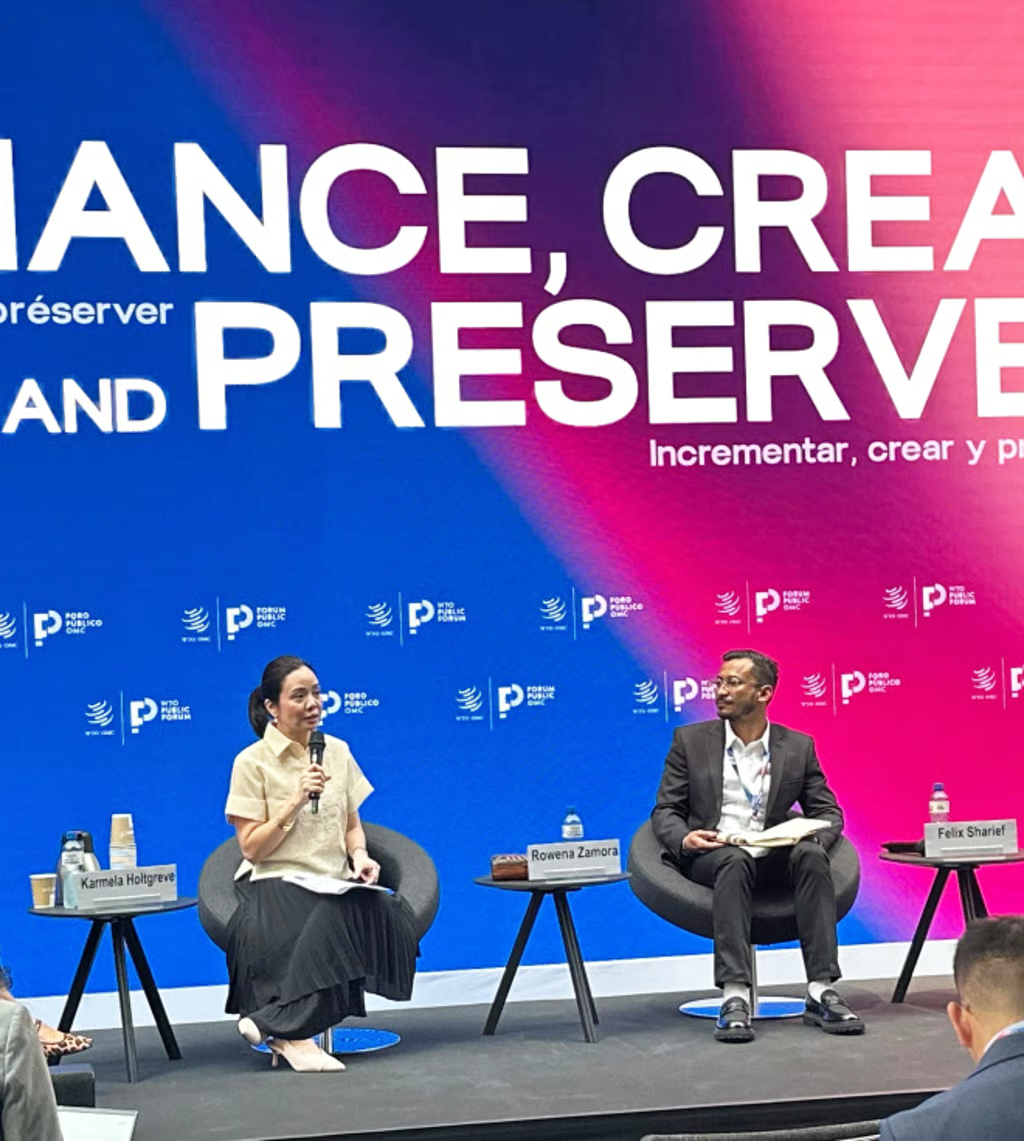
The Public Forum of the World Trade Organization held in Geneva in mid-September brought together governments, industry leaders, and international institutions to reflect on how trade and digital transformation are reshaping the global economic landscape. Under the theme Enhance, Create, and Preserve, the forum encouraged discussions on strengthening economic resilience and expanding digital inclusion.
One session titled Beyond Borders. ASEAN’s Bold Paths to MSME Digitalization was co organized by the Philippine Mission to the WTO and GCash, the Philippines leading digital finance app. The panel explored persistent challenges that MSMEs face as they attempt to enter and adapt to digital trade. Speakers from GCash, Indonesian wallet platform DANA and the Bank for International Settlements Innovation Hub shared examples of what works, what needs improvement and what policymakers can do to encourage faster progress.
Philippine Ambassador Underscores the Stakes
Ambassador Manuel Teehankee opened the session by acknowledging the enormous role of MSMEs in ASEAN economies. He described MSMEs as the backbone of the region, yet repeatedly burdened by hurdles that restrict their ability to join global markets. He emphasized that innovations in accessibility, payment systems, and interoperability between countries are essential for MSMEs to thrive in a fast-changing economy.
Teehankee also reiterated the Philippines support for the Digital Economy Framework Agreement, an initiative designed to build an integrated digital market across ASEAN. With the Philippines set to assume ASEAN Chairmanship in 2026, the ambassador expressed hope that DEFA would drive the next phase of regional digital cooperation.
Making Digitalization Simpler and More Affordable
One of the strongest messages came from Rowena Zamora, Chief Strategy Officer of Mynt, the parent company of GCash. She argued that digitalization cannot be effective without creating an enabling environment where MSMEs can shift from cash-based operations to digital payments without high costs. She called for democratized policies that reduce barriers, lower compliance costs, and support more seamless adoption of digital technologies.
Zamora highlighted how GCash currently serves around six million merchants and how the platform provides alternatives to traditional financing systems. She noted that GCash’s partnerships with Philippine government agencies have helped small businesses overcome long standing structural obstacles. By linking digital finance innovations with official policymaking efforts, MSMEs can access more formal economic activity without facing burdens they cannot afford.
She also praised ASEAN wide efforts such as the ASEAN Single Window, a system originally built to simplify cargo clearance and enhance economic integration. Over time, its cross border synchronization has also helped fintech firms and MSMEs streamline documentation and digital processing. This reduces the cost of participating in regional trade, especially as GCash enables cross border transactions for businesses that need to source materials or products from neighbouring countries.
Indonesia’s Experience Shows the Power of Integration
DANA’s Vice President of Public Policy, Felix Sharief, shared how standardization efforts across ASEAN have supported Indonesian MSMEs. In Indonesia, MSMEs account for more than sixty percent of GDP and nearly eighty percent of the nation’s workforce. By simplifying e-commerce procedures and improving financial service access, digital wallet platforms like DANA can offer better solutions to unbanked communities and help small businesses modernize at a faster pace.
Sharief emphasized the importance of coordination between public and private sectors. In his view, companies bring technological innovation while governments shape the rules and conditions that allow digitalization to be inclusive. With both sides working hand in hand, financial access becomes more equitable and economic opportunities broaden for communities that have previously been left behind.
Project Nexus Points to a Regional Future
A major initiative discussed during the session was Project Nexus, which is being developed by the BIS Innovation Hub together with the central banks of Indonesia, Malaysia, the Philippines, Singapore, and Thailand. The project aims to harmonize instant payment systems across participating economies using a single connection for cross-border transfers. Although multilateral in structure, the project is being carefully designed to ensure that every participating country’s interests are upheld.
Project Nexus is part of a wider movement in ASEAN to reduce frictions, scale interoperability and make it easier for MSMEs to participate in cross border commerce. Innovations like QR payments that work across borders, digital identity verification and regulatory alignment all contribute to building a digital market that is faster, safer and more inclusive.