Digital Supply Chains, Tokenized Tracking Systems Powering Global EV Exports
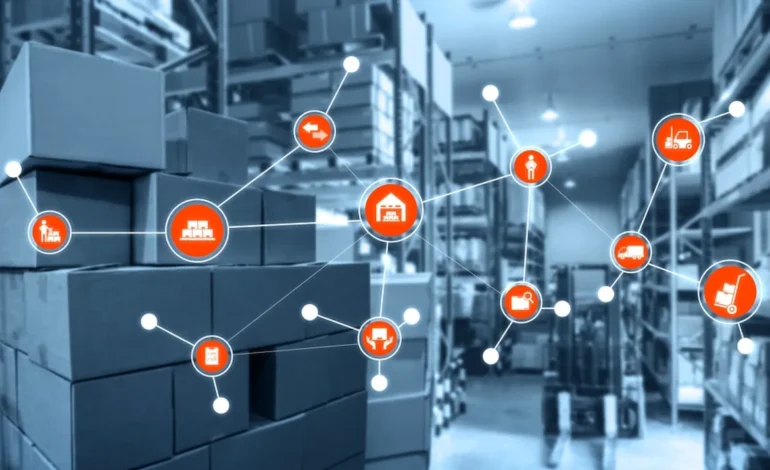
China’s electric vehicle export surge has highlighted a new frontier in industrial transformation, where digital supply chains and tokenized tracking systems are reshaping how products move across borders.
According to the China Chamber of Commerce for Import and Export of Machinery and Electronic Products, EV exports rose to 5.8 million units in 2025, with growing markets in Europe, Latin America, and the Middle East.
Behind this success lies a data-driven logistics framework that integrates blockchain-based verification, AI-powered monitoring, and automated financial settlement.
This digital transformation ensures that every vehicle, component, and payment is authenticated in real time, creating a transparent, efficient, and trusted supply ecosystem.
Supply Chain Modernization and Technology Integration
Modern EV supply chains are far more complex than traditional automotive logistics. They involve coordination among suppliers of batteries, chips, sensors, and electronics across multiple regions.
To manage this complexity, Chinese automakers and logistics firms are adopting smart contract-enabled systems that record shipment milestones, temperature data, and handling events along the route.
Each record is stored on a distributed digital ledger, allowing manufacturers, customs authorities, and investors to verify product authenticity and compliance instantly.
This approach reduces administrative delays and prevents counterfeit components from entering the supply stream.
In essence, tokenized logistics has become a quality assurance tool that enhances both efficiency and accountability in global EV trade.
Financial Automation and Trade Settlement
Digital supply-chain systems also integrate directly with programmable financial platforms that support instant settlement and verification.
When an EV shipment reaches a port or distributor, automated payment triggers confirm delivery through pre-coded parameters, ensuring that suppliers receive funds immediately after successful verification.
This model shortens transaction cycles and eliminates the need for manual documentation or third-party reconciliation.
Chinese banks and fintech firms have developed infrastructure to support these workflows through modular settlement networks, where each transaction is traceable and compliant with international standards.
The system blends financial innovation with industrial logistics, creating a seamless connection between trade execution and payment assurance.
Data Analytics and Predictive Logistics
Artificial intelligence enhances the tokenized supply-chain model by providing predictive analytics for inventory management, shipping routes, and market demand.
AI algorithms monitor real-time data from sensors installed in containers, vehicles, and warehouses, identifying patterns that optimize resource allocation.
For instance, a logistics platform can automatically reroute shipments to the nearest available port if congestion or weather delays occur.
These capabilities improve the resilience of China’s export ecosystem while minimizing waste and environmental impact.
AI integration also enables more accurate forecasting of materials needed for EV production, aligning supply levels with global demand.
Policy Framework and Global Standards
The Chinese government has incorporated digital supply-chain transformation into its 14th Five-Year Plan, emphasizing industrial transparency, cybersecurity, and interoperability.
The Ministry of Commerce and the General Administration of Customs are expanding digital trade platforms that support end-to-end traceability of exported goods.
These systems ensure compliance with environmental and labor regulations in importing countries, improving China’s reputation for responsible manufacturing.
Through international collaboration, China is working with partners in ASEAN, the European Union, and the Gulf region to harmonize digital logistics standards, promoting data-sharing agreements that enable secure cross-border tracking and verification.
This alignment positions China as both a technology provider and a regulatory architect in the emerging global digital trade framework.
Toward a Global Logistics Network of the Future
The integration of tokenized tracking with digital finance represents a fundamental change in how logistics ecosystems operate.
Every movement of goods, from factory to final delivery, can now be recorded and verified on transparent digital ledgers.
This capability enhances trust among buyers, suppliers, and regulators, reducing the risk of fraud or data loss.
Moreover, the fusion of AI analytics, blockchain traceability, and automated finance is laying the groundwork for a borderless logistics economy, where efficiency and accountability coexist within a single digital system.
Industry experts believe that as this model matures, it could become a standard not only for EV exports but for all high-value global supply chains.
Conclusion
China’s evolution toward digital supply-chain transparency signals a transformative shift in global trade.
By integrating tokenized tracking, real-time analytics, and programmable financial systems, the nation has redefined how industrial goods move and settle across borders.
This convergence of technology and finance ensures that every transaction within the EV ecosystem is verifiable, compliant, and efficient.
As digital trade corridors expand, China’s model may serve as a blueprint for the next generation of logistics infrastructure, one where data and trust become the currency of international commerce.