Economic Pragmatism Shapes Indonesians’ Largely Positive View of China Survey Finds
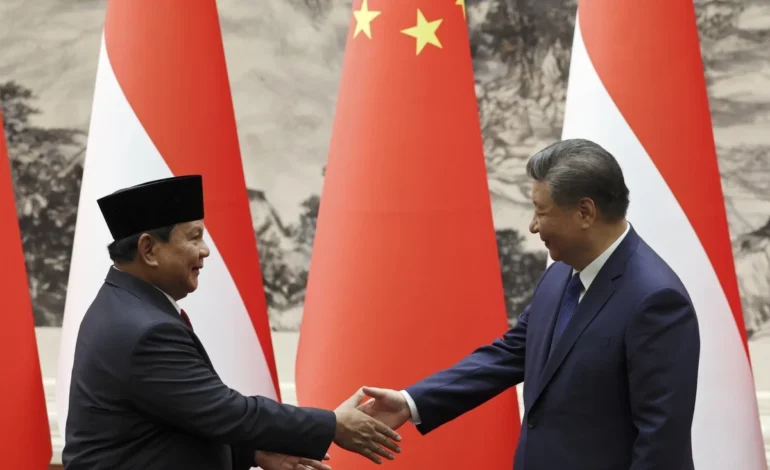
A growing number of Indonesians view China as a positive economic partner, driven by tangible investment projects and practical cooperation, according to a new public opinion survey that highlights a pragmatic rather than ideological approach to foreign relations.
The 2025 China Indonesia Survey, released on December 18 by the Jakarta based think tank Centre of Economic and Law Studies, found that public perceptions of China are shaped mainly by economic benefits and visible development outcomes. While many Indonesians welcome closer economic ties with Beijing, the findings suggest caution remains when it comes to treating China as a full strategic ally.
The survey, which gathered responses from 1,022 participants across the country, showed that 66 percent described relations between Jakarta and Beijing as positive. Respondents pointed most frequently to cooperation in trade, infrastructure, and technology as the main reasons for their favourable views. Analysts involved in the research said China’s hands on investment approach and its emphasis on people facing projects have helped shape public opinion.
Researchers described this outlook as economic pragmatism. Indonesians appear comfortable engaging with China where it delivers jobs, infrastructure, and industrial growth, but they remain wary of deeper political or security alignment. This balanced view reflects Indonesia’s long standing foreign policy principle of maintaining independence while engaging with multiple global powers.
President Prabowo Subianto was perceived as close to Beijing by an overwhelming 94 percent of respondents. Many participants said this relationship could help unlock economic opportunities, strengthen Indonesia’s international standing, and provide leverage in balancing the influence of the United States. However, the survey also suggested that public support is tied closely to results rather than rhetoric.
China’s role as a major investor in Indonesia has been central to shaping these attitudes. According to data from the Indonesia Investment Coordinating Board, mainland China ranked as Indonesia’s third largest foreign investor between January and September this year, with realised investment reaching 5.4 billion US dollars. Only Singapore and Hong Kong invested more during the same period.
Much of China’s investment has focused on sectors such as mining, manufacturing, energy, and transport infrastructure. Projects linked to industrial parks and processing facilities have been especially visible in recent years, reinforcing the perception that Chinese engagement delivers concrete economic outcomes rather than abstract promises.
Analysts involved in the survey said China’s soft diplomacy also plays a role. Cultural exchanges, educational cooperation, and business partnerships have helped normalise China’s presence in Indonesia’s development landscape. At the same time, respondents expressed a clear preference for maintaining diversified partnerships, signalling that enthusiasm for China does not translate into exclusive alignment.
The findings suggest Indonesia’s relationship with China is likely to remain grounded in mutual economic interest rather than strategic dependence. As global competition intensifies, Indonesians appear focused on what partnerships can deliver at home, favouring practical cooperation that supports growth while preserving diplomatic flexibility.