Economic Tensions Likely to Dominate Xi-Trump Summit as Security Issues Remain on Agenda
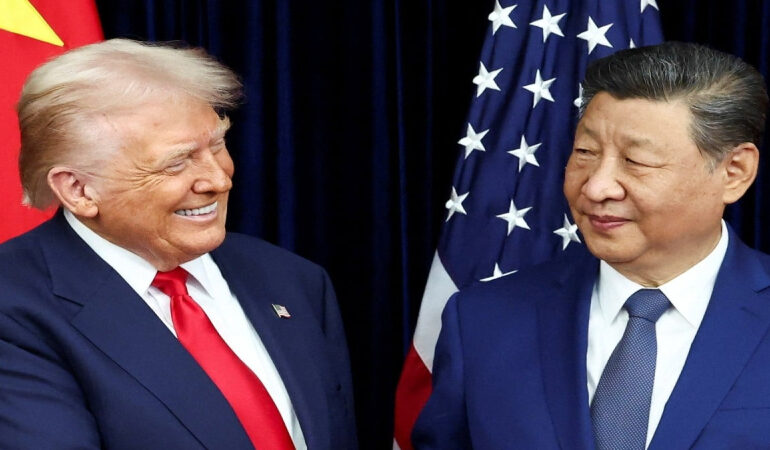
Economic issues are expected to headline the upcoming summit between Chinese President Xi Jinping and US President Donald Trump, with trade stability and supply chain tensions likely to dominate discussions, according to former US ambassador to China Nicholas Burns.
Speaking via video link at an event hosted by Yale Centre Beijing, Burns said Trump would be right to prioritize economic matters during his visit to Beijing in April. He expressed hope that both leaders would maintain the existing truce on tariffs and avoid a renewed escalation of trade measures that unsettled global markets in the previous year.
The two presidents last met in South Korea in October, amid heightened tensions over tariffs, technology controls and supply chain restructuring. Although both sides have since signaled willingness to stabilize ties, significant differences remain across a range of economic and strategic issues.
Burns noted that sustaining a pause in tariff increases and preventing further disruptions to global supply chains would be crucial for economic predictability. Trade friction between the world’s two largest economies has had ripple effects across industries, influencing manufacturing costs, investment decisions and financial markets worldwide.
Beyond trade, regional security concerns are also expected to feature in the summit agenda. Issues such as stability in the Asia Pacific region, military communication channels, and crisis management mechanisms remain central to bilateral relations. While economic tensions have often dominated headlines, strategic competition continues to shape the broader relationship.
Technology policy could also emerge as a point of discussion. Export controls on advanced semiconductors, restrictions on technology transfers and regulatory scrutiny of cross border investment have become defining elements of the economic rivalry between Washington and Beijing. Efforts to manage these tensions without triggering broader confrontation may be a key objective of the talks.
Burns suggested that dialogue at the highest level can help prevent misunderstandings and reduce the risk of miscalculation. High level engagement between the two presidents may provide an opportunity to clarify intentions and identify areas where cooperation remains possible, even amid strategic competition.
The global economy is closely watching the summit for signals of stability. Businesses on both sides have faced uncertainty stemming from shifting trade policies and regulatory measures. A sustained easing of tariff and supply chain pressures could support investment confidence and moderate volatility in financial markets.
At the same time, expectations remain cautious. Structural differences in economic models, national security priorities and geopolitical outlooks mean that breakthroughs may be limited. Even so, maintaining open communication channels and avoiding further escalation would represent a meaningful step toward steadier bilateral ties.