End of an Era: Canon Shuts China Printer Plant as Domestic Brands Rise to Dominance
Canon’s decision to close one of its major printer production facilities in mainland China marks more than the end of a factory’s operations. It signals a deeper transformation in the country’s consumer electronics industry, where Chinese brands have not only caught up with long established foreign competitors but are now beginning to dominate their home market. For decades, Japanese manufacturers shaped China’s imaging and printing sector. Today, the balance of power has shifted, reflecting dramatic changes in technology, cost structures and consumer preferences.
A quiet facility reveals a definitive closure
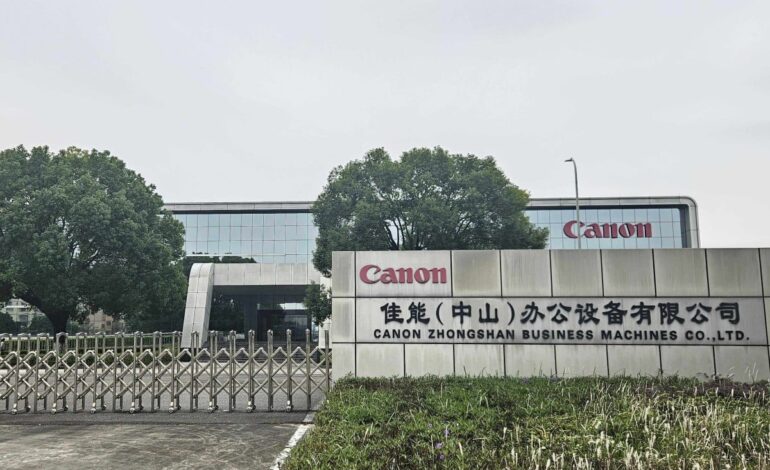
A visit by the Post to Canon Zhongshan Business Machines in Guangdong’s Zhongshan city made the factory’s fate unmistakable. The once busy site now showed almost no activity. The car park, typically filled with employees and logistics partners, sat nearly empty. Only a small number of workers walked outside the office building, signalling that regular operations had already come to an end.
According to one employee, production stopped late last month. The remaining staff are no longer assembling devices but are instead dealing with “handling the aftermath.” This includes processing severance payments, resolving final supplier contracts and tying up administrative responsibilities before the factory is fully wound down. The closure represents a moment of reflection for a company that once viewed China as a cornerstone of its global manufacturing network.
Local competitors reshape the market
Canon’s retreat comes at a time when Chinese printer brands have rapidly expanded their presence through aggressive innovation and competitive pricing. Companies such as Pantum, Xiaomi and Huawei have capitalised on rising demand for smart home and office devices while building ecosystems that appeal to modern consumers. These domestic players have benefited from shorter supply chains, faster product iterations and a strong understanding of local customer needs.
As a result, foreign brands that long dominated the printer sector have faced growing pressure. Canon’s decision is therefore not simply a cost cutting measure, but a recognition that the competitive advantages Japanese manufacturers once held have narrowed significantly. In some product categories, Chinese companies have already surpassed foreign firms in both market share and technological leadership.
A broader shift in China’s manufacturing priorities
The closure also reflects the evolving economics of manufacturing in China. Labour costs have risen, environmental regulations have tightened and companies are increasingly pursuing automation and digital manufacturing. These changes have pushed foreign firms to reassess the viability of large scale production operations in the country. At the same time, China’s own tech and hardware companies are climbing the value chain, meaning the domestic market is no longer reliant on imported expertise to the extent it once was.
What Canon’s exit signals for the future
Canon remains a respected global brand, but its withdrawal from this facility suggests that the era in which foreign manufacturers dominated China’s consumer electronics landscape is coming to an end. Local firms have proven themselves capable of competing at every level: price, performance and production. For international brands, the challenge now is to redefine their roles in a market where Chinese companies are increasingly setting the pace of innovation.
The end of operations at Canon Zhongshan serves as a clear reminder that China’s industrial evolution is reshaping global competition. What was once a destination for foreign technology and investment is now a powerful source of its own leading brands, ready to challenge global incumbents and redefine industry standards.