EV insurers edge toward profitability as premiums rise and AI improves claims efficiency
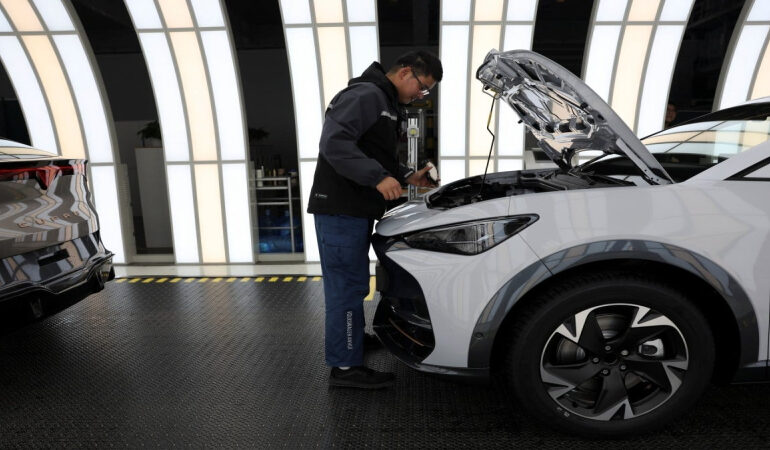
China’s electric vehicle insurance market is showing signs of financial recovery after years of heavy underwriting losses, as insurers adjust premium structures and deploy artificial intelligence tools to refine pricing and streamline claims processing.
Mainland insurers collectively recorded losses of about 5.7 billion yuan from underwriting EV policies in 2024, reflecting the high repair costs and complex risk profiles associated with battery powered vehicles. However, industry executives and analysts say 2026 could mark a turning point, with higher premiums and more accurate risk assessment models improving the path to profitability.
Electric vehicles present unique challenges for insurers. Battery replacement and advanced sensor systems can significantly increase repair expenses following accidents. In addition, the rapid iteration of vehicle software and hardware has made it difficult for traditional actuarial models to keep pace. As a result, early EV insurance products were often underpriced relative to actual risk exposure.
Over the past year, insurers have begun recalibrating their pricing strategies. Premiums for certain EV models have risen, particularly for high performance or luxury variants with costly components. At the same time, companies are leveraging telematics data and artificial intelligence driven analytics to segment customers more precisely. Intelligent pricing systems can now factor in driving behaviour, mileage patterns and vehicle usage scenarios, allowing insurers to align premiums more closely with real world risk.
AI adoption is also transforming claims handling. Automated image recognition tools assess vehicle damage through uploaded photos, reducing processing time and limiting fraud. Predictive models help insurers estimate repair costs more accurately and manage reserve allocation. Improved efficiency has lowered administrative expenses and shortened settlement cycles, contributing to better underwriting performance.
Industry observers argue that a stabilising insurance environment is essential for sustaining China’s broader electrification push. In previous years, persistent losses in EV underwriting created pressure on insurers and uncertainty for consumers. Higher premiums initially raised concerns about affordability, but more targeted pricing may ultimately reward low risk drivers with competitive rates.
Wang Feng, chairman of Shanghai based financial services group Ye Lang Capital, noted that heavy losses in EV insurance had been a structural obstacle to rapid industry expansion. As major insurers approach break even or profitability, confidence across the value chain could strengthen. Healthier balance sheets enable insurers to design more innovative products, including tailored coverage for battery degradation and autonomous driving features.
The shift comes at a time when China remains the world’s largest EV market, even as broader automotive sales face cyclical headwinds. Policymakers continue to support new energy vehicles through infrastructure development and industrial policy. A more sustainable insurance framework reduces systemic risk and supports long term growth in EV adoption.
Market participants will closely monitor underwriting margins and loss ratios in the coming quarters as insurers refine AI powered pricing tools and adjust premium levels in response to evolving vehicle technology and driving patterns.