
Expanding US MQ-9 Drone Network Raises Strategic Pressure on China
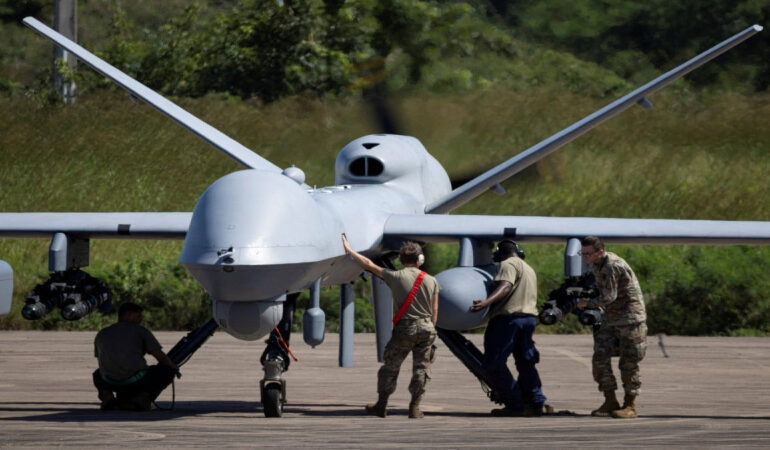
The expanding deployment of American MQ-9 Reaper drones across the Indo-Pacific is adding new layers of strategic complexity to relations between the United States and China, as military analysts point to the growing role of unmanned systems in surveillance and deterrence operations near Chinese territory.
The MQ 9 Reaper, developed by General Atomics, is a long endurance unmanned aerial vehicle capable of conducting both reconnaissance and precision strike missions. Originally designed for counterterrorism operations, the platform has evolved into a central component of US intelligence gathering and force projection strategies. Its ability to remain airborne for extended periods while carrying advanced sensors and, when authorised, precision guided munitions has made it a versatile tool in modern warfare.
In recent years, the United States has increased the presence of such drones in the Indo Pacific region, integrating them into a broader surveillance architecture that includes satellites, maritime patrol aircraft and regional bases. Analysts say this expanded network enhances Washington’s capacity to monitor air and naval movements, particularly in contested areas such as the South China Sea and around Taiwan.
For Beijing, the growing use of MQ 9 drones underscores the need to strengthen counter reconnaissance and air defence capabilities. Chinese military commentators have frequently highlighted the importance of detecting, tracking and potentially neutralising unmanned platforms that operate near sensitive zones. Advances in radar systems, electronic warfare tools and anti drone technologies are seen as critical to narrowing surveillance gaps.
The MQ 9 has previously been involved in high profile operations, including targeted strikes in the Middle East. While its role in the Indo Pacific has primarily focused on intelligence collection, its dual use nature contributes to strategic ambiguity. The capacity to switch from surveillance to strike missions, depending on operational directives, increases its deterrence value but also heightens tensions in areas where military encounters are already sensitive.
Unmanned systems are becoming increasingly central to both US and Chinese defence planning. The United States continues to refine its network centric warfare model, linking drones with naval assets and command systems to create a distributed sensing grid. China, in parallel, is investing heavily in its own unmanned aerial vehicles and anti access area denial strategies designed to limit foreign military operations near its coast.
Security experts note that the proliferation of drones reduces risks to personnel but can complicate crisis management. Incidents involving unmanned aircraft may escalate quickly if miscalculated, particularly in congested airspace. As both sides expand their technological capabilities, communication channels and operational protocols become more important to prevent unintended confrontations.
The increasing visibility of MQ 9 deployments illustrates how unmanned platforms are reshaping regional security dynamics. As strategic competition intensifies, surveillance technology and countermeasures are likely to remain at the forefront of military modernisation efforts in the Indo Pacific.



