Finland Seizes Vessel After Damage to Undersea Cable Linking Helsinki and Tallinn
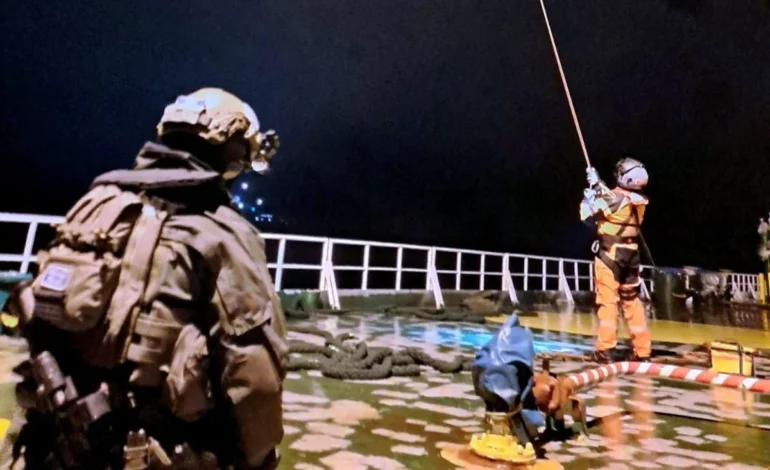
Finnish police have seized a ship suspected of damaging a telecommunications cable linking Finland and Estonia, an incident that has raised concerns about the security of critical infrastructure in the Baltic region.
Authorities said on Wednesday that the vessel was taken into custody several hours after the damage was detected on a subsea cable running between Helsinki and Tallinn. The cable lies beneath the Gulf of Finland, a busy maritime corridor used by commercial shipping and data connections between Northern European countries.
In a brief statement, Finnish police confirmed that the ship is suspected of being responsible for the damage, though they declined to reveal the vessel’s identity or flag. Investigators said the inquiry is still at an early stage and that further details will be released once preliminary findings are confirmed.
The damaged cable is owned by Elisa, one of Finland’s largest telecommunications groups. According to police, the cable is located within Estonia’s exclusive economic zone, adding a cross border dimension to the investigation. Finnish and Estonian authorities are understood to be cooperating closely as they assess the cause and consequences of the incident.
While officials have not commented on whether the damage was accidental or deliberate, the case comes amid heightened sensitivity around undersea infrastructure in Europe. Subsea cables carry vast amounts of internet and data traffic and are considered vital to economic activity, national security and everyday communication. Any disruption, even temporary, can have ripple effects across multiple sectors.
Elisa said it was aware of the incident and was working with authorities to evaluate the impact on services. The company did not immediately disclose whether customers experienced outages or reduced connectivity, though such cables are often built with redundancy to minimise disruption.
Finnish police stressed that there was no immediate threat to public safety. However, the seizure of the vessel indicates that investigators consider the matter serious enough to warrant direct action. Maritime experts note that damage to undersea cables can occur through ship anchors, fishing equipment or technical failures, but deliberate interference cannot be ruled out until the investigation is complete.
The Finnish Police said forensic and technical teams are examining both the damaged cable and the seized vessel. This includes analysing navigation data, weather conditions and the ship’s recent movements to establish a clear timeline of events.
The incident follows a series of cable disruptions in the wider Baltic Sea region in recent years, prompting governments to increase monitoring and surveillance. As geopolitical tensions have risen, the protection of energy pipelines and communication links has become a strategic priority for many European states.
For Finland and Estonia, the damaged cable underscores the vulnerability of shared infrastructure in a digitally connected world. Officials in both countries have emphasised the importance of transparency and cooperation as the investigation continues.
As authorities work to determine responsibility, attention will remain focused on safeguarding undersea networks that underpin daily life across Northern Europe. The outcome of the investigation is likely to influence future measures aimed at preventing similar incidents in one of the region’s most critical maritime zones.