For the first time this century, child deaths under age five are set to rise, what’s behind the reversal?
For more than two decades, the world celebrated steady progress in reducing child mortality. From 2000 to 2020, annual deaths of children under five fell from nearly 10 million to under 5 million — a landmark achievement driven by global vaccination campaigns, improved maternal health services, better nutrition and crucial investments from international donors. Even during the COVID pandemic, when health systems were pushed to breaking point, the downward trend merely slowed. It never reversed. Until now.
New estimates from the Institute for Health Metrics and Evaluation (IHME) suggest that 2025 will mark a grim turning point: for the first time in the 21st century, global child deaths are expected to rise. According to the modelling, roughly 4.6 million children under five died in 2024. In 2025, that number is projected to increase by more than 200,000, reaching 4.8 million.
Experts say the reversal is not an accident but the result of overlapping crises. “It’s horrific,” says Brooke Nichols, an associate professor of global health at Boston University, who was not involved in the IHME research but has conducted her own modelling on the consequences of shrinking aid budgets. She says IHME’s methods align with what she and other researchers are observing: a systemic decline in global health funding at the worst possible moment.
One of the most significant threats is the retreat of foreign aid for childhood vaccinations. After years of progress in immunisation coverage, many countries are now struggling to maintain routine vaccination programmes. Funding gaps have left millions of children unprotected from diseases like measles, pneumonia and diarrhoea — illnesses that are preventable but still deadly. Measles outbreaks in particular have surged, fuelled by both reduced coverage and conflict driven displacement.
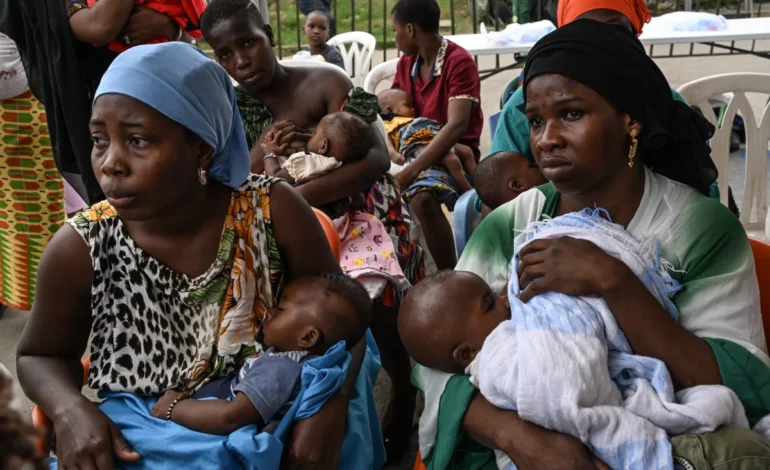
Malaria remains another major killer. In regions like West Africa, where the disease disproportionately affects young children, fragile health systems are under strain. Even as Ivory Coast and other nations launch new childhood malaria vaccination campaigns, access is still uneven. In densely populated districts, mothers line up with babies strapped to their backs, waiting for vaccines that could be lifesaving. But manufacturing delays, cost burdens and limited supply mean these efforts are not scaling fast enough to counter rising transmission.
Nutrition is also deteriorating. Global food price shocks, prolonged droughts and ongoing conflicts have pushed millions of families into acute food insecurity. Malnourished children are far more vulnerable to common infections, and the combination of hunger and weakened healthcare access is proving deadly.
Meanwhile, conflict zones from Gaza to Sudan to parts of the Sahel have seen catastrophic disruption to medical services. Hospitals have been destroyed, vaccination campaigns suspended and humanitarian corridors blocked. Children in these regions are bearing the brunt of violence, displacement and disease.
The convergence of these challenges is happening at a time when donor fatigue is growing. Major contributors to global health funding have scaled back, diverted resources to domestic crises or shifted political priorities. The result, Nichols warns, is that advances built over decades are being rapidly unravelled.
Global health agencies say the upward trend is not inevitable. Reinvesting in basic services vaccines, nutrition programmes, mosquito control, maternal care could halt and even reverse the rise. But without renewed political commitment and financial support, the world may be entering a period where preventable childhood deaths become tragically common again.
For now the message from researchers is stark: child mortality is one of the clearest indicators of global stability, and its rise is a warning signal. If the world does not respond quickly, a generation of progress could slip away.