
Former Apple Engineer Introduces Chinese Chip Aimed at Challenging Vision Pro in XR and AI Wearables
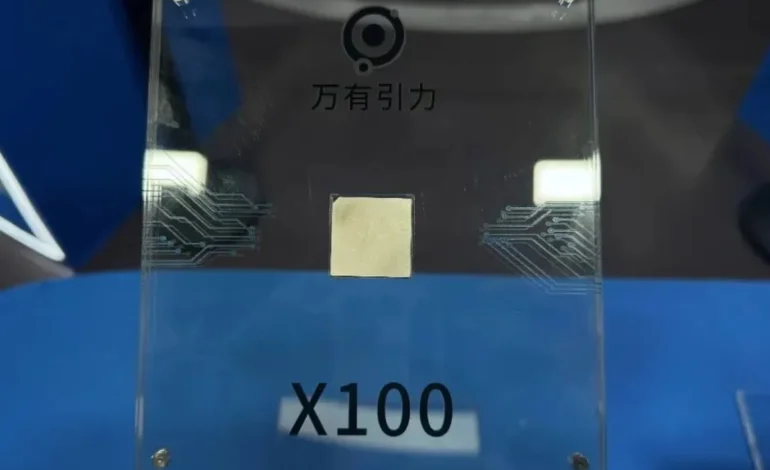
A Chinese technology start-up founded by a former Apple engineer is gaining attention for unveiling a new chip designed to power next-generation extended reality headsets and artificial intelligence glasses. GravityXR, led by Stanford University graduate Wang Chaohao, recently introduced what it describes as China’s first all-in-one mixed reality chip, marking an important step in the country’s efforts to build homegrown hardware for advanced wearable devices.
The chip, known as the Jizhi G X100, uses a five-nanometre manufacturing process and is positioned as a high-performance alternative to existing international products. One of its most notable features is a photon-to-photon latency of just nine milliseconds, which is faster than the twelve millisecond latency recorded for Apple’s Vision Pro. Lower latency translates to a smoother visual experience for users, reducing motion discomfort and improving responsiveness in virtual and mixed reality environments.
GravityXR presented the chip last week as part of a broader push to expand China’s capabilities in extended reality and artificial intelligence hardware. The company said its goal is to create components that support lighter, more efficient, and more affordable devices. With the global XR market growing rapidly, Chinese firms are looking to reduce reliance on foreign suppliers and compete more directly in high-end technology fields.
Wang Chaohao, who previously worked in Apple’s XR division, founded GravityXR to address key bottlenecks in wearable computing. His experience in the industry has helped attract attention from investors and researchers who see the new chip as part of a larger trend in China’s semiconductor development. The company emphasized that the Jizhi G X100 is designed not only for heavy-duty XR headsets but also for compact devices like AI-powered glasses that can be worn throughout the day.
The unveiling comes as global competition intensifies in the race to develop advanced chips for virtual reality, augmented reality and mixed reality devices. Apple’s Vision Pro has set a new benchmark for immersive computing experiences, but the market remains open for companies that can deliver similar performance at lower cost or with improved features. GravityXR believes its technology can help drive the next generation of wearable devices by offering high efficiency, strong computing power and reduced energy consumption.
Industry analysts note that China has been investing heavily in the semiconductor sector, particularly in areas related to artificial intelligence and immersive technologies. The introduction of the Jizhi G X100 highlights the progress domestic companies are making and signals their ambitions to compete globally. As demand grows for more powerful and lightweight devices, competition among chip developers is expected to accelerate.
GravityXR’s announcement has sparked interest from manufacturers that are looking to integrate the chip into future devices. The company said it is in discussions with partners developing both consumer and enterprise level products. If widely adopted, the chip could help shape the future of China’s XR and AI wearables ecosystem.



