From Hobbyists to High-Tech: China’s Drone Industry Takes Flight
China’s drone industry has experienced a remarkable transformation, evolving from a niche hobbyist market into a high-tech global powerhouse. Over the past decade, Chinese companies have leveraged technological innovation, manufacturing scale, and government support to develop drones that dominate both commercial and military applications worldwide.
In the early 2000s, drones in China were primarily a hobbyist pursuit, used by enthusiasts for aerial photography and recreational flying. However, as the country recognized the potential of UAVs for industry and defense, investments poured into research, development, and manufacturing. Companies like DJI pioneered small consumer drones with advanced cameras, automated flight systems, and AI-assisted features, transforming recreational technology into professional-grade equipment.
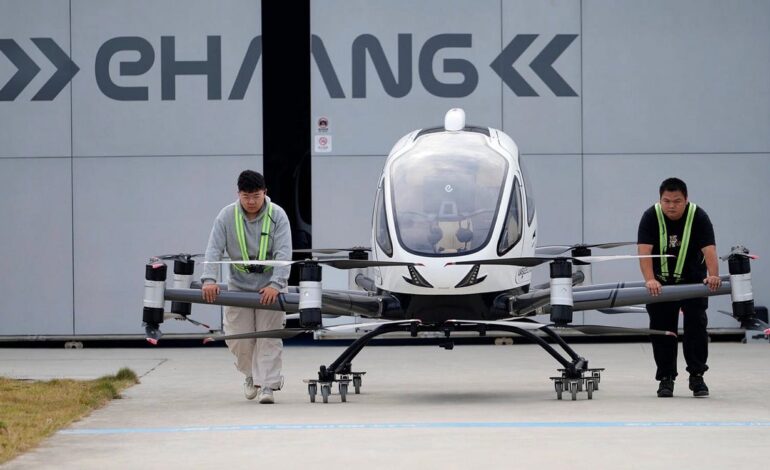
Today, China’s drone industry spans a wide range of applications. Commercial drones are now integral to agriculture, infrastructure inspection, logistics, mapping, and media production. Drones equipped with sensors, high-resolution cameras, and GPS-enabled navigation systems enable precise data collection, cost-effective operations, and improved efficiency across industries. By merging AI technology with drone platforms, Chinese companies have created solutions that were once only imagined in science fiction.
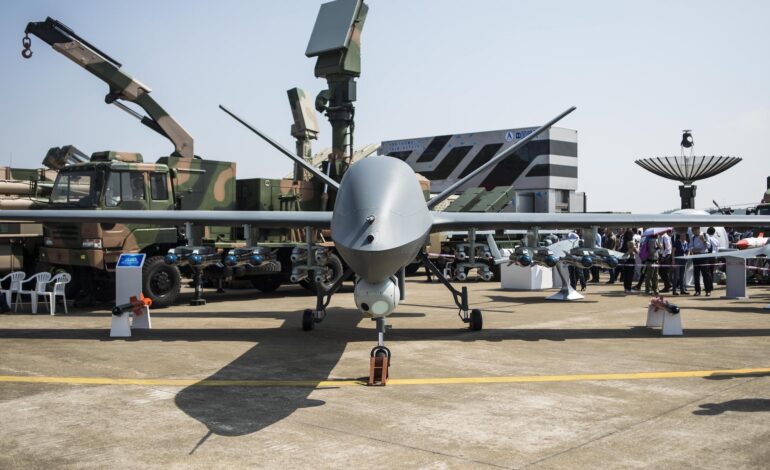
The military sector has also driven innovation. Chinese defense drones are increasingly sophisticated, with extended flight ranges, autonomous navigation, and surveillance capabilities. UAVs enhance reconnaissance, border security, and tactical operations, reducing risk to personnel and strengthening China’s strategic advantage. The dual-use nature of drone technology, serving both civilian and military purposes, has accelerated investment and development, further cementing China’s global leadership.
China’s success in drones is fueled by its integrated manufacturing ecosystem. The country produces almost every component of a drone domestically, from motors and batteries to sensors and circuit boards. This supply chain advantage allows for rapid scaling, lower costs, and customization for both domestic and international markets. The result is high-quality, affordable drones that are accessible to businesses, governments, and consumers worldwide.
Government policy has been another critical factor. Regulations for drone operations, pilot certifications, and airspace management have created a safe environment for large-scale adoption. Cities like Shenzhen and Hangzhou are testing drone delivery systems, demonstrating how regulatory support can enable practical, real-world applications.
In conclusion, China’s drone industry has successfully transitioned from hobbyist beginnings to high-tech innovation. With companies like DJI leading commercial advancements, and military UAVs enhancing strategic capabilities, China continues to define the global drone market. Its combination of innovation, manufacturing efficiency, and supportive policy ensures that Chinese drones will remain at the forefront of aviation technology for years to come.