From Labs to Unicorns: How Beijing’s University Incubators Are Fueling the Next AI Boom
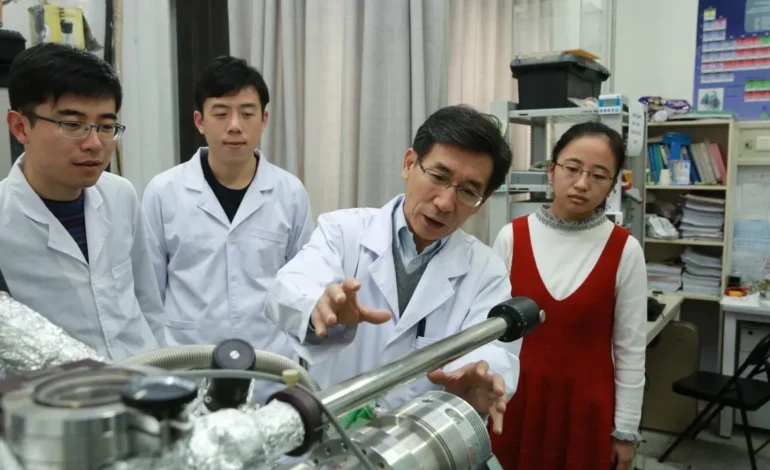
In Beijing, a new generation of artificial intelligence startups is emerging directly from university laboratories. China’s capital city, already home to world-class institutions like Tsinghua University, Peking University, and Beihang University, has transformed its academic ecosystem into a launchpad for high-growth technology companies. These university incubators combine research excellence, venture capital, and government policy support to accelerate the commercialization of AI breakthroughs. The result is a thriving innovation environment where scientific discovery translates seamlessly into global-scale enterprises.
The Academic-Industrial Fusion Model
The success of Beijing’s startup incubators is rooted in a uniquely Chinese approach that integrates research institutions with industry and government. Unlike the traditional Western separation between academia and commerce, Beijing’s innovation model encourages professors, graduate students, and postdoctoral researchers to found or co-develop startups based on university research. These ventures often operate within “university science parks,” such as the Tsinghua Science Park (TusPark) and the Zhongguancun Innovation Hub, where shared infrastructure, mentorship, and access to funding are built into the ecosystem.
This model has given rise to startups specializing in computer vision, autonomous robotics, and large language models. By 2025, over 3,200 AI-focused startups were registered in Beijing, with nearly 40 percent having direct affiliations with universities. The government’s “Double First-Class University” program, designed to strengthen research capacity, also supports applied innovation, ensuring that academic output directly feeds industrial applications.
Tsinghua’s Leadership in AI Commercialization
Tsinghua University stands at the forefront of China’s AI innovation. Its Institute for Artificial Intelligence has produced several spinoff companies developing technologies in natural language processing, computer vision, and energy-efficient computing. One of its notable alumni-founded ventures, MiniMax AI, has become a leading provider of large-scale multimodal AI models, competing with Western platforms in both accuracy and adaptability.
Tsinghua’s strength lies in its ability to align talent, funding, and policy. Students participate in accelerator programs that pair research mentors with venture capital investors. The Tsinghua x-Lab serves as an experimental entrepreneurship platform where early prototypes are transformed into commercial-ready solutions. The university also maintains close cooperation with the Ministry of Industry and Information Technology (MIIT), ensuring that promising innovations receive national-level pilot funding and regulatory support.
Peking University and AI for Public Good
Peking University has taken a distinctive approach by emphasizing AI applications in healthcare, education, and governance. Its Center for Computational Social Science focuses on algorithms that enhance public services, such as predictive healthcare analytics and smart city management systems. Startups emerging from this ecosystem include DeepWise, which uses AI to analyze medical imaging data, and LingXinTech, a company specializing in natural language interfaces for online education.
By integrating AI into socially beneficial applications, Peking University demonstrates how artificial intelligence can serve national priorities beyond commercial gain. These efforts complement China’s policy agenda to ensure that AI development contributes to social welfare and economic equality. Government grants for “AI for Public Good” initiatives have grown by over 30 percent annually since 2023, reinforcing Beijing’s position as a model for ethical and inclusive innovation.
Beihang University and Autonomous Systems
Beihang University, known for its expertise in aeronautics and robotics, has become a hub for autonomous systems development. Its Smart Robotics Research Center collaborates with startups to produce drones, self-driving vehicles, and industrial automation platforms. Several of Beihang’s incubated companies now supply autonomous delivery robots used in Beijing’s logistics parks and university campuses.
One notable startup, SkyLink Robotics, has pioneered AI-powered flight control systems that optimize delivery routes based on environmental and traffic data. Its technology is already being adopted by logistics providers across China. Beihang’s collaboration with the China Academy of Space Technology also ensures that research in navigation, sensor fusion, and control algorithms extends beyond terrestrial applications, feeding into China’s space and satellite programs.
Government Policy and the Zhongguancun Advantage
Zhongguancun, often referred to as “China’s Silicon Valley,” provides the policy and infrastructure framework for university incubators to thrive. Located in Beijing’s Haidian District, the area hosts more than 20 national laboratories and 80 university-affiliated R&D centers. The Zhongguancun Science Park Administration offers tax incentives, IP protection assistance, and funding access for startups originating from university research.
Beijing’s municipal government also manages the AI Industry Development Fund, which invests in early-stage companies emerging from academic environments. This close link between government and academia accelerates technology transfer, ensuring that laboratory discoveries reach commercialization quickly. The combined power of research excellence and state policy has created a fertile ecosystem where innovation thrives within a framework of strategic direction and resource support.
Venture Capital and Corporate Collaboration
Beijing’s AI incubators benefit from a dynamic relationship between universities, venture capital, and corporate partners. Leading Chinese tech firms such as Baidu, Alibaba, Tencent, and Huawei frequently sponsor university research projects, providing both funding and real-world data for testing. In exchange, these companies gain early access to cutting-edge technology and top engineering talent.
Venture capital firms are equally active within the academic ecosystem. Sinovation Ventures, led by former Google China head Kai-Fu Lee, has partnered with multiple Beijing universities to identify promising startups in areas like generative AI and robotics. These collaborations blur the line between academia and industry, fostering an innovation cycle where ideas move rapidly from concept to commercialization.
Challenges and Global Outlook
Despite its success, Beijing’s university incubator system faces challenges. Startups often struggle with international market expansion due to geopolitical restrictions and concerns over data governance. Additionally, many early-stage companies face difficulty scaling beyond pilot projects, as domestic competition is fierce and profit margins remain tight. Intellectual property protection, while improving, still requires greater enforcement to ensure that academic founders retain fair ownership of their innovations.
Nevertheless, China’s AI startups are expanding globally through partnerships in Southeast Asia, the Middle East, and Europe. Beijing’s incubators are increasingly participating in joint research programs and academic exchanges that enhance cross-border innovation. These initiatives not only promote collaboration but also help Chinese startups align with international ethical and technical standards in AI development.
Conclusion
Beijing’s university incubators represent a new paradigm in innovation one that blends scientific excellence, entrepreneurship, and state support into a single ecosystem. By fostering collaboration between researchers, investors, and policymakers, institutions like Tsinghua, Peking, and Beihang are turning laboratories into launchpads for world-class AI startups. This model has positioned Beijing as a global hub of applied artificial intelligence, driving progress in both technology and governance. As these startups mature into industry leaders, they will continue to shape not only China’s AI economy but also the future direction of global innovation.