From Pilot Zones to Production Use How Blockchain Is Quietly Entering China’s Financial Core

Blockchain moves beyond experimentation
Blockchain in China is no longer confined to policy pilots or conceptual demonstrations. After several years of controlled experimentation, the technology is steadily entering real financial and commercial workflows. This transition reflects a broader shift within the Digital Finance and Economy framework, where blockchain is treated less as a disruptive novelty and more as an enabling infrastructure for trust, verification, and coordination across complex systems.
Financial institutions adopt permissioned models
China’s approach to blockchain prioritizes permissioned networks over open public chains. Banks, clearing institutions, and regulators operate within shared frameworks that emphasize traceability and compliance. In trade finance, blockchain platforms are used to verify invoices, track shipment documentation, and reduce duplicate financing risks. These systems do not eliminate intermediaries but reorganize their roles around shared ledgers and standardized data.
Trade finance becomes a primary use case
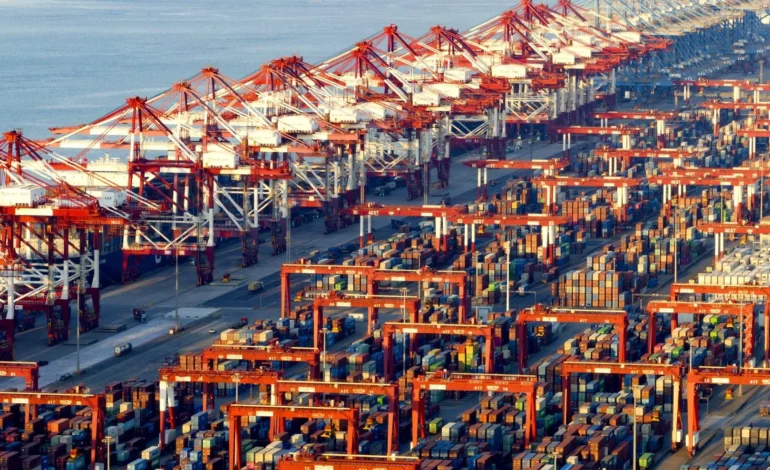
Within Digital Finance and Economy Blockchain applications, trade finance has emerged as one of the most practical areas of deployment. Cross border trade involves multiple parties, long settlement cycles, and high information asymmetry. Blockchain based systems allow banks, exporters, customs authorities, and insurers to access synchronized records in real time. This reduces disputes, accelerates settlement, and improves risk assessment without fundamentally altering regulatory oversight.
Government led standardization shapes adoption
Unlike decentralized blockchain ecosystems elsewhere, China emphasizes top down standardization. National and provincial authorities define technical frameworks, interoperability requirements, and compliance rules. This approach reduces fragmentation and lowers adoption costs for enterprises. While it limits open experimentation, it increases predictability and scalability. Blockchain becomes a shared utility rather than a competitive battleground of incompatible platforms.
Integration with existing digital infrastructure
Blockchain does not operate in isolation. Its effectiveness depends on integration with cloud computing, big data platforms, and digital identity systems. In China’s Digital Finance and Economy strategy, blockchain functions as a verification layer within a broader digital stack. Smart contracts automate compliance checks, while linked databases provide contextual data. This layered architecture allows blockchain to enhance existing systems rather than replace them.
Industrial and supply chain applications expand
Beyond finance, blockchain adoption is spreading across supply chains in manufacturing, energy, and agriculture. Provenance tracking, quality verification, and contract enforcement are increasingly digitized. For exporters, blockchain supported traceability can improve credibility in overseas markets concerned about compliance and sustainability. These applications reinforce China’s broader effort to upgrade industrial governance through data driven coordination.
Balancing innovation with control
A recurring theme in Digital Finance and Economy Blockchain development is balance. Authorities encourage practical innovation while maintaining strict oversight of data flows and network governance. Blockchain networks are designed to be auditable and controllable, aligning with financial stability and data security priorities. This model differs from open blockchain ecosystems but reflects China’s institutional context and policy objectives.
Quiet transformation with long term impact
Blockchain’s integration into China’s financial core is incremental rather than dramatic. There are no sudden disruptions or radical disintermediations. Instead, efficiency gains accumulate gradually as verification costs fall and coordination improves. Over time, these gains reshape how finance and trade operate at scale.
China’s blockchain strategy demonstrates that transformative technologies do not always arrive with visible upheaval. Sometimes they embed themselves quietly into foundational systems, altering processes from within. As blockchain continues to move from pilot zones into production use, its influence on China’s digital finance architecture will become increasingly structural rather than experimental.