GAC’s GOVY AirCab Moves Closer to Reality as Airworthiness Review Begins
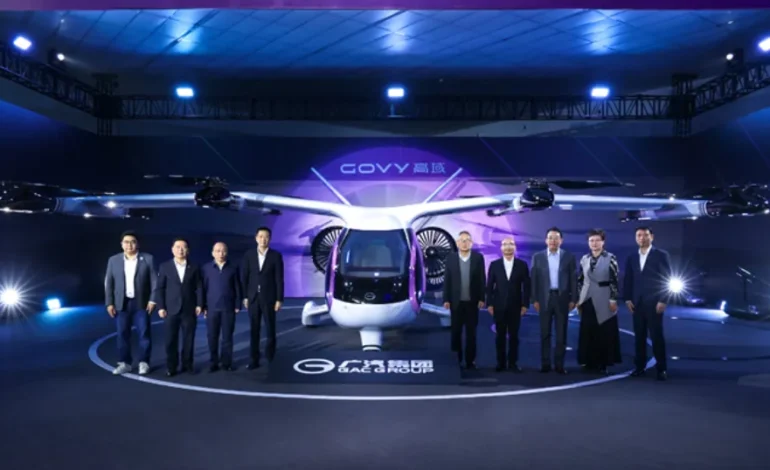
China’s ambitions in low altitude mobility have taken a tangible step forward as GAC Group confirmed that its GOVY AirCab flying car has entered the formal airworthiness certification process. The announcement signals a transition from concept and testing toward real commercialization, with mass production now targeted for 2026. For an industry that has long balanced futuristic promise with regulatory uncertainty, the move highlights how China’s automotive and aviation sectors are beginning to converge in practical ways.
Airworthiness review marks a critical milestone
Entering the airworthiness review process is one of the most important hurdles for any aircraft, particularly for novel designs such as flying cars. For GAC, this step demonstrates growing confidence that its technology can meet safety and regulatory standards required for commercial use. Certification involves extensive evaluation of flight systems, structural integrity, and operational safety. Successfully navigating this phase would clear the path for GOVY AirCab to move beyond demonstrations and into everyday applications.
GOVY as GAC’s low altitude mobility arm
The AirCab is being developed under GOVY, the low altitude mobility brand of GAC Group. GOVY’s broader vision goes beyond a single vehicle. The brand is working on a portfolio that includes short range multirotor aircraft as well as intercity hybrid wing designs. This diversified approach reflects GAC’s intention to build a full ecosystem covering research, manufacturing, and operational services rather than treating flying cars as isolated products.
Designed for short range urban travel
The GOVY AirCab is a multirotor aircraft optimized for sightseeing and short distance point to point travel. These use cases are seen as the most realistic early markets for low altitude vehicles, especially in dense urban and tourism focused areas. Compared with long range air taxis, short range aircraft face fewer technical and regulatory challenges, making them a logical starting point for commercialization. GAC describes the AirCab as its first flying car designed to meet mass production standards rather than remaining a limited prototype.
Prototype deliveries signal real world testing
According to GAC, prototype deliveries of the GOVY AirCab have already been completed in Beijing and Hong Kong. These deliveries are significant because they allow the company to gather operational data in different regulatory and urban environments. Hong Kong, in particular, offers a tightly regulated airspace that can help stress test both technology and compliance processes. Real world testing is essential for refining systems and demonstrating reliability to regulators and potential customers.
Building an integrated flying mobility ecosystem
GAC’s strategy emphasizes integration across the entire value chain. By aligning research, manufacturing, and operations, the company aims to reduce fragmentation that has slowed progress in flying car development elsewhere. An ecosystem approach also allows GAC to coordinate vehicle design with infrastructure planning, pilot training, and service models. This is critical in low altitude mobility, where success depends as much on air traffic management and ground support as on the aircraft itself.
Mass production plans reflect long term confidence
Targeting mass production in 2026 suggests that GAC believes regulatory pathways and market conditions will mature quickly over the next two years. While timelines in emerging industries often shift, setting a concrete production goal helps attract partners and signal seriousness to regulators. It also places GAC among a small group of companies globally that are willing to move beyond experimentation and commit to scaling.
Implications for China’s flying car ambitions
The progress of the GOVY AirCab reflects China’s broader push to develop low altitude economies as a new growth frontier. Supportive policies, strong manufacturing capacity, and experience in electric vehicles give Chinese firms potential advantages in this space. If GAC succeeds in certifying and producing the AirCab, it could accelerate adoption and set benchmarks for others to follow.
A step from vision to implementation
The entry of the GOVY AirCab into airworthiness review marks a shift from futuristic concept to regulated reality. While challenges remain, the move underscores how flying cars are gradually transitioning from speculative ideas to structured industrial projects. For GAC, it represents an effort to extend its mobility vision beyond roads and into the skies.