Global EV Sales Decline Again in February as China Market Slows Sharply
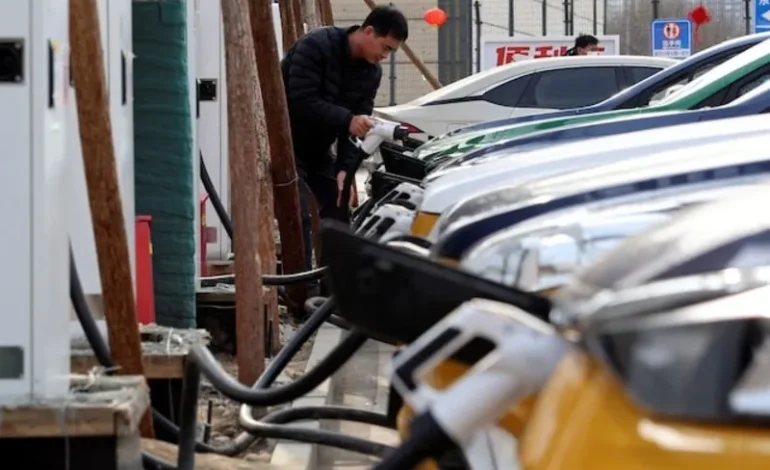
Global electric vehicle sales declined again in February, highlighting mounting challenges for the fast growing industry as demand cools in key markets. New data from industry analysts show global registrations of battery electric and plug in hybrid vehicles fell by 11 percent year on year to just over one million units. The drop was largely driven by a sharp contraction in China, the world’s largest EV market, where sales declined significantly. The slowdown reflects a combination of reduced government incentives, price sensitivity among consumers and broader adjustments taking place in the global automotive transition toward electric mobility.
China recorded the steepest decline among major EV markets during the month. Registrations of electric and plug in hybrid vehicles fell by roughly 32 percent compared with the same period last year, dropping to fewer than 500,000 units. The contraction mirrors a wider downturn in the country’s overall automobile market, where total car sales also dropped sharply during February. Analysts say the slowdown partly reflects policy changes as government support measures aimed at encouraging EV purchases have been scaled back, including the expiration of a major tax exemption program that had previously helped drive strong consumer demand.
The downturn in China also reflects changing consumer behavior as buyers become more cautious about pricing and incentives. Industry researchers say many consumers remain highly sensitive to price fluctuations and policy shifts when deciding whether to purchase electric vehicles. Without strong subsidies or tax advantages, demand can weaken quickly in highly competitive markets. The slowdown comes after years of rapid growth in China’s EV industry, which has been supported by extensive government programs designed to accelerate the adoption of clean transportation technologies.
North America also recorded a sharp decline in electric vehicle sales during February. Registrations across the United States and Canada fell by about 35 percent compared with the previous year, continuing a downward trend that has persisted for several months. Analysts link the decline partly to the expiration of a major tax credit program that had previously supported EV purchases in the United States. Proposed policy changes related to emissions standards have also created uncertainty for automakers and consumers, contributing to slower demand across the region.
Despite the broader slowdown, Europe provided a rare bright spot in the global EV market. Registrations across European countries increased by about 21 percent during February, maintaining growth even though the pace of expansion has moderated compared with previous years. European governments have also been adjusting environmental policies and emissions targets, but demand for electric vehicles has remained relatively resilient as manufacturers expand their electric product lineups and charging infrastructure continues to improve.
Other emerging markets also recorded strong growth during the month, with EV registrations rising sharply across parts of Asia, Australia and several developing regions. Analysts say this increase reflects the expanding global reach of electric vehicle manufacturers, particularly Chinese automakers that are aggressively entering new international markets. As competition intensifies in China’s domestic market, many companies are accelerating overseas expansion strategies in order to sustain growth and capture demand in regions where EV adoption is still developing.
The latest data illustrate how the global electric vehicle market is entering a more complex phase after years of rapid expansion. Policy changes, shifting consumer sentiment and competitive pressures are now shaping demand patterns across different regions. While long term expectations for electric mobility remain strong, the February figures show that growth is becoming uneven as governments adjust incentives and consumers weigh the costs and benefits of transitioning away from traditional internal combustion vehicles.