Global Partners Rebalance Toward China as Western Ties Fray
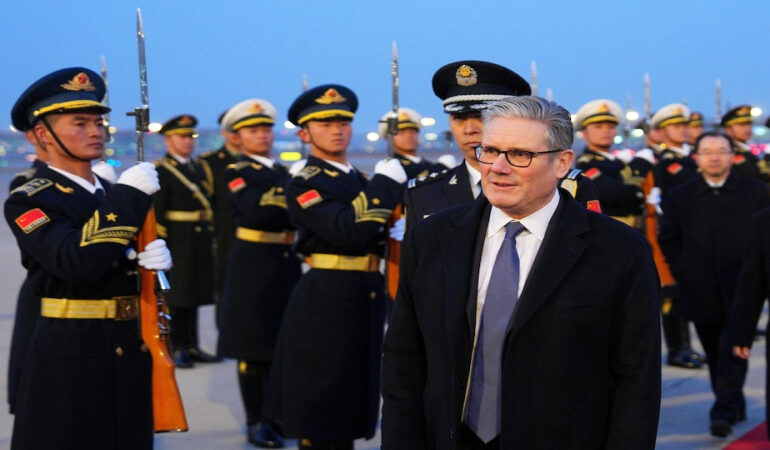
China’s effort to reposition itself as a stable economic partner is gaining traction as shifting U.S. policies push several governments to reassess long standing trade relationships. The latest signal came as Britain’s prime minister arrived in Beijing seeking to reset commercial ties, following similar outreach by other Western leaders in recent months. Analysts say China has moved quickly to capitalize on uncertainty created by U.S. trade and diplomatic volatility, offering predictability to partners unsettled by tariff swings and reduced cooperation. This recalibration has coincided with a sharp expansion in China’s trade surplus and stronger capital inflows, reinforcing Beijing’s narrative of resilience at a time when global economic alignments are in flux.
China’s trade performance in 2025 underscored this strategy. Exports to non U.S. markets rose sharply across Africa, Latin America, Southeast Asia and Europe, offsetting a steep decline in shipments to the United States. Policymakers have paired this diversification with targeted measures to stabilize markets, support private firms and ease access for foreign investors in selected service sectors. The result has been a rebound in equity markets, record foreign exchange inflows and rising confidence in China’s financial system despite ongoing domestic headwinds. For many governments and investors, the combination of scale, liquidity and policy continuity is proving attractive as alternatives to U.S. centered trade frameworks are quietly explored.
The currency dimension has also become more prominent. As confidence in the dollar faces pressure from erratic trade policy, China is pushing to expand the use of the yuan in cross border settlement and overseas lending. Banks are increasing yuan liquidity in offshore hubs and accelerating payment infrastructure across Asia, the Middle East, and parts of Europe. While some analysts caution that concerns around economic coercion and unresolved geopolitical disputes remain, the momentum reflects a pragmatic recalculation rather than ideological alignment. Countries are not abandoning existing alliances but are hedging exposure by deepening engagement with China. The trend suggests a more fragmented global trade landscape where reliability and market access increasingly outweigh traditional political preferences.