Google and XREAL Unveil Project Aura as China Led R&D Shapes Smart Glasses Future
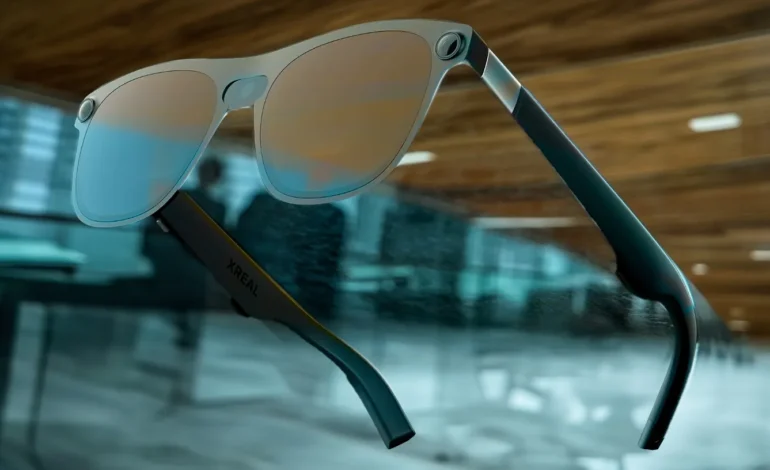
Google and XREAL have taken a significant step in the evolution of wearable computing with the unveiling of Project Aura smart glasses. Announced at The Android Show, the collaboration highlights how global technology brands are increasingly relying on China based research, development, and manufacturing to bring next generation devices to market. Scheduled for commercial release in 2026, Project Aura reflects both technological ambition and shifting realities in global hardware innovation.
A partnership blending software and hardware expertise
The Project Aura smart glasses are the result of close cooperation between Google and XREAL. Google contributes its Android ecosystem, software integration, and platform reach, while XREAL provides the core hardware innovation. This division of roles underscores a broader industry pattern in which software giants partner with specialized hardware firms to accelerate development and reduce time to market.
Project Aura is positioned as a next generation spatial computing device rather than a simple display accessory. The collaboration suggests that both companies see smart glasses as a long term platform rather than a short lived experiment.
China based teams at the center of development
One of the most notable aspects of Project Aura is the extent to which China based teams are driving the project. Nearly all hardware research and development, as well as manufacturing, are being handled in China. This includes core components, optical systems, and chip design. The concentration of work in China reflects the country’s deep talent pool, mature supply chains, and ability to scale advanced hardware efficiently.
Rather than fragmenting development across regions, XREAL has centralized much of the engineering effort. This approach allows for tighter coordination between design, testing, and production, which is especially important for compact and complex devices like smart glasses.
X Prism optics define the visual experience
At the heart of Project Aura’s visual performance is the X Prism optical system. This component was independently developed and mass produced by XREAL’s China based team. Optics are one of the most challenging aspects of smart glasses design, as they must balance clarity, brightness, weight, and comfort within a small form factor.
By developing the optical system in house, XREAL maintains greater control over performance and iteration. This capability also reduces reliance on external suppliers, enabling faster optimization as the product moves toward commercialization.
X1S chip brings spatial computing on device
Powering Project Aura is the X1S chip, a spatial computing processor designed entirely in house by XREAL. Custom chips are increasingly important in wearable devices, where power efficiency and latency are critical. The X1S chip is tailored specifically for augmented and mixed reality workloads, allowing Project Aura to process spatial data efficiently without excessive dependence on external devices.
In house chip development also gives XREAL flexibility in integrating hardware and software, potentially enabling smoother user experiences and longer battery life compared with off the shelf solutions.
Strategic implications for global tech supply chains
Project Aura highlights how China continues to play a central role in advanced consumer electronics, even as geopolitical tensions reshape technology supply chains. While some companies are diversifying manufacturing locations, China remains a hub for sophisticated R&D and precision manufacturing, particularly for emerging categories like spatial computing.
For Google, working with a partner whose core engineering is China based demonstrates a pragmatic approach. Access to specialized expertise and scalable production outweighs political noise when delivering complex hardware products.
Smart glasses as the next Android frontier
From Google’s perspective, Project Aura represents an opportunity to extend Android beyond phones and tablets into wearable spatial devices. Smart glasses offer a new interface layer where information can be overlaid seamlessly onto the physical world. If successful, Project Aura could help establish standards for Android based wearables and attract developers to build applications optimized for spatial interaction.
Looking toward a 2026 launch
With a planned commercial release in 2026, Project Aura still has time to evolve. The extended timeline suggests careful refinement rather than a rushed launch. Both companies appear focused on delivering a polished product that can compete in a space where previous attempts by the industry have struggled.
Project Aura ultimately reflects a convergence of global software platforms and China led hardware innovation. As smart glasses edge closer to mainstream adoption, this collaboration offers a glimpse into how future consumer technologies may be built, not in isolation, but through deeply integrated international partnerships.