Greenland Insists Nato Must Guarantee Its Defence, Rejects Any US Takeover
Greenland’s government has firmly rejected the idea of any United States takeover of the Arctic island, saying its security should be ensured through Nato rather than unilateral control by Washington. The statement marks one of the clearest positions yet from Greenlandic authorities as geopolitical attention on the Arctic continues to intensify.
In remarks made on Monday, Greenland’s government said it would step up efforts to ensure that the defence of the territory takes place under the framework of NATO. Officials stressed that Greenland’s security is inseparable from that of the wider Western alliance and should be handled collectively, not through ownership or annexation by any single country.
The comments were widely seen as a direct response to renewed rhetoric from Donald Trump, who has again raised the idea of the United States taking control of Greenland. Trump has argued that the island’s strategic location and resources make it vital to US national security, a position that has been repeatedly rejected by both Greenlandic and Danish leaders.
Greenland is a self-governing territory within the Kingdom of Denmark, controlling most domestic affairs while Copenhagen remains responsible for defence and foreign policy. While debates about eventual independence continue within Greenland, its leaders have consistently stated that any decisions about the island’s future must be made by Greenlanders themselves.
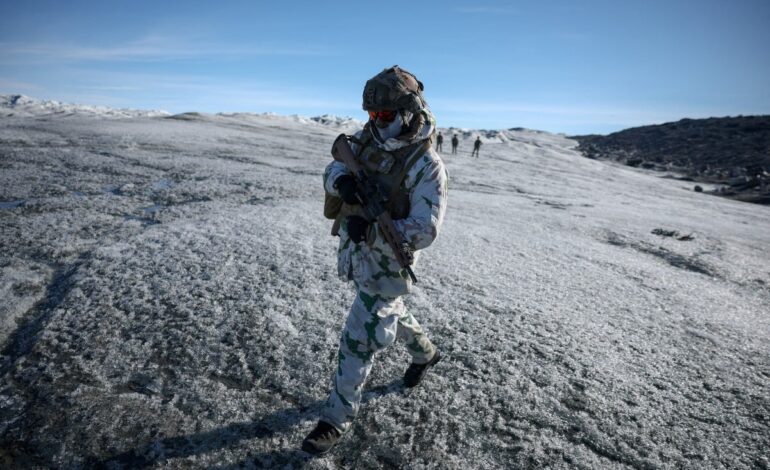
Government officials said Nato provides the appropriate framework for Arctic defence, given Greenland’s location between North America and Europe. The island already hosts US military facilities under long-standing agreements with Denmark, including a strategically important air base used for missile warning and surveillance. Greenland’s leaders emphasised that cooperation with the United States is welcome, but only within agreed alliance structures.
The Arctic has become an increasingly important focus for global powers as climate change reduces sea ice and opens new shipping routes and access to natural resources. Greenland is believed to hold significant reserves of rare earth minerals, hydrocarbons, and other resources critical to modern technology and energy transitions. This has heightened interest from countries including the United States, China, and Russia.
Greenlandic officials warned that framing the island primarily as a strategic asset risks overlooking the rights and interests of its population. They said security arrangements must respect Greenland’s political autonomy, culture, and long-term development goals. The government reiterated that it seeks partnerships, not patronage or control.
Denmark has backed Greenland’s position, repeatedly stating that the island is not for sale and that any discussion of its status must involve Greenland’s elected representatives. Danish officials have also underlined that Nato remains the cornerstone of regional security in the North Atlantic and Arctic.
Analysts say Greenland’s stance reflects a broader effort to assert agency at a time when small and strategically located territories face growing pressure from major powers. By anchoring its defence firmly within Nato, Greenland aims to reinforce predictability and deter unilateral actions that could destabilise the region.
The issue also carries implications for Nato itself, which has been paying increasing attention to Arctic security as relations with Russia remain strained. Greenland’s location makes it a key link in transatlantic defence, and alliance coordination is seen as essential to managing risks in the High North.
For now, Greenland’s message is clear. While it values close ties with the United States and other allies, its defence must be collective, transparent, and rooted in the Nato framework. Any suggestion of a takeover, Greenland’s leaders say, runs counter to both international norms and the will of the island’s people.