Has hope survived the war? Israelis and Palestinians reflect two years on
In late 2023, just weeks after Hamas attacked Israel and Israel launched a devastating war in Gaza, NPR spoke with several Israelis and Palestinians struggling to hold onto empathy in the face of profound trauma. Two years later after unimaginable loss, a bitter conflict and a fragile ceasefire these same individuals have revisited those conversations to explore whether hope has endured.
The war that began on October 7, 2023 reshaped countless lives. Hamas-led militants killed around 1,200 people and kidnapped more than 250 others, according to Israeli officials. Israel’s subsequent military campaign in Gaza resulted in the deaths of over 70,000 Palestinians, according to Gaza’s Ministry of Health. Families across the region have been grieving ever since.
On October 10, 2025, a ceasefire took effect through heavy diplomacy by the U.S., Qatar, Egypt and Turkey. But the truce remains deeply fragile. Both sides accuse the other of violations, and sporadic clashes continue despite the agreement. Amid this unstable pause in violence, NPR returned to the people interviewed in 2023 individuals whose experiences reflect both the division and the shared humanity of this conflict.
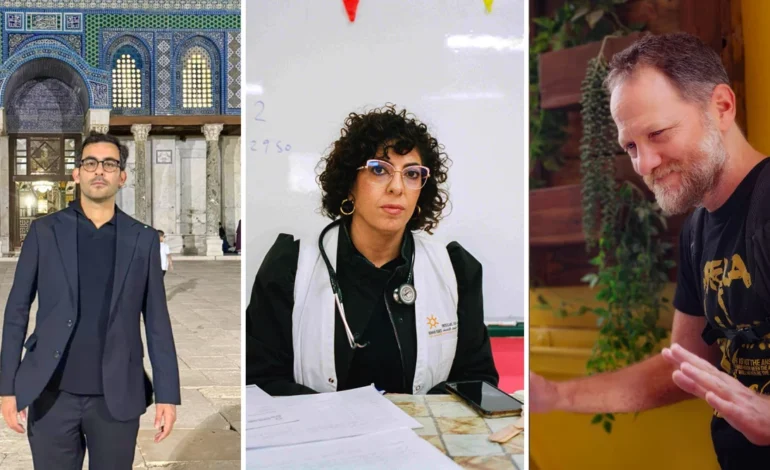
Among them is Yousef Bashir, who as a teenager in Gaza was shot by an Israeli soldier and nearly paralysed. In 2023 he said he was determined not to let hatred define him. Two years later, he admits the suffering of Gaza has tested every fibre of his resolve. Yet he says he refuses to abandon belief in coexistence, insisting that “hope is a discipline” rather than an emotion.
For Dr. Lina Qasem Hassan, a Palestinian citizen of Israel and chair of Physicians for Human Rights–Israel, the war has been both personal and professional. In 2023 she mourned a relative, an ambulance driver in Gaza killed in an airstrike. Now, having witnessed years of medical crises on both sides, she says compassion remains essential. “If we lose empathy,” she says, “we lose the future.”
Meanwhile, Maoz Inon, an Israeli whose parents were killed in the October 7 attack, continues to advocate for peace even as grief remains a daily weight. In 2023 he said violence could not be allowed to dictate the future; in 2025 he repeats that message with even greater urgency. “Revenge cannot bring us safety,” he says. “Only recognition and dialogue can.”
What strikes NPR’s reporters is not that these individuals are untouched by tragedy they are shattered by it. Instead, their persistence in seeing humanity in the other is what endures. They speak openly about anger, disappointment and fear, but none have let go of the belief that Israelis and Palestinians can build something better.
The ceasefire, though unstable, has offered a rare pause in the violence. Whether it becomes a stepping stone toward long-term peace or merely a lull before renewed conflict is still uncertain. But for these three people a survivor, a doctor and a grieving son the act of holding onto hope is itself a form of resistance.
In a landscape dominated by political stalemate, military calculation and generational trauma, their voices remind the world that even after years of suffering, empathy has not been extinguished.