Hong Kong expands EV charging network as mainland Chinese cars enter the city
Cross border EV traffic tests city infrastructure
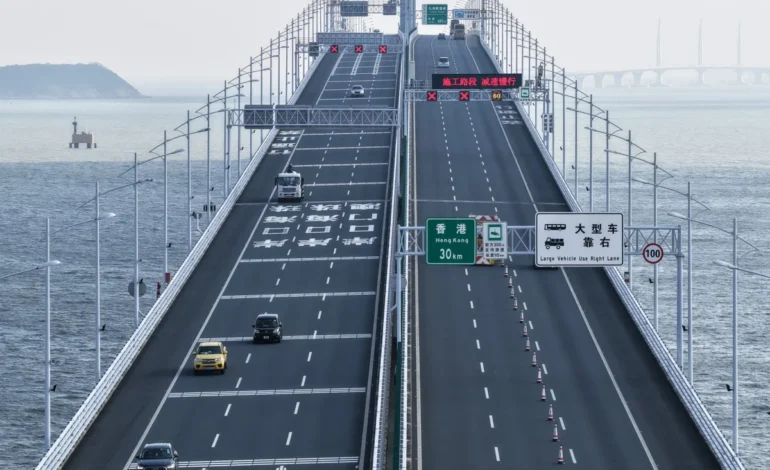
Hong Kong is moving to expand the number of electric vehicle chargers compatible with mainland Chinese models as cross border traffic begins to reshape urban transport patterns. The announcement follows the arrival of the first group of drivers from Guangdong province under a new scheme that allows mainland registered vehicles to enter Hong Kong’s urban areas. Demand was immediate, with applications nearly exhausting the daily quota, highlighting both enthusiasm for the programme and pressure on existing infrastructure.
A policy shift driven by real demand
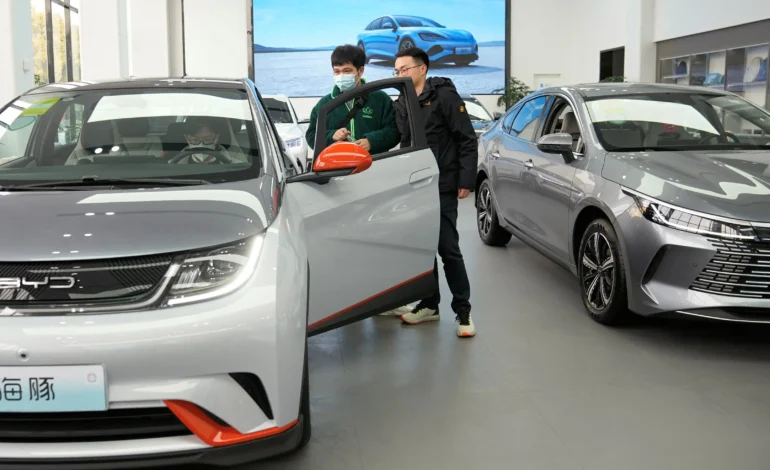
According to the city’s transport authorities, the early response from Guangdong drivers exceeded expectations. Many of the vehicles entering Hong Kong are Chinese made electric models that use charging standards different from those traditionally found in the city. This mismatch has exposed a gap in compatibility, prompting officials to accelerate plans to install additional chargers that support mainland specifications. The move reflects a pragmatic response to changing traffic realities rather than a long term theoretical plan.
Why charger compatibility matters
Hong Kong’s EV charging network has largely developed around international standards used by Japanese, European, and American manufacturers. Mainland Chinese electric vehicles often rely on different connectors and charging protocols. Without compatible chargers, visiting drivers face limited options, increasing the risk of congestion at the few suitable locations and discouraging wider participation in cross border schemes. Expanding compatibility is therefore essential not just for convenience, but for the smooth functioning of the programme itself.
Integration with the Greater Bay Area vision
The policy adjustment aligns with broader ambitions to integrate Hong Kong more closely with neighbouring mainland cities through the Greater Bay Area framework. Facilitating cross border EV travel supports economic exchange, tourism, and business mobility while reinforcing commitments to greener transport. Officials have framed the charging expansion as part of a longer term effort to harmonise standards and infrastructure across the region, reducing friction as movement increases.
Impact on urban traffic and planning
The near full take up of daily vehicle quotas has also sparked debate about traffic management within Hong Kong’s dense urban environment. While electric vehicles reduce emissions, they still occupy road space in a city where congestion is already a concern. Transport planners are now under pressure to balance openness with capacity, ensuring that increased cross border access does not undermine public transport efficiency or quality of life for residents.
Opportunities for local businesses
The growing presence of mainland EVs presents opportunities for local businesses involved in charging services, parking facilities, and smart mobility solutions. Property owners and operators of commercial car parks may benefit from installing compatible chargers to attract cross border drivers. At the same time, the shift could accelerate competition among charging providers, pushing innovation in pricing, speed, and user experience.
Environmental considerations remain central
From a policy perspective, encouraging electric vehicles aligns with Hong Kong’s climate goals. Replacing internal combustion engine traffic with EVs, even from outside the city, supports emissions reduction targets. However, officials stress that charging expansion must be coordinated with grid capacity and renewable energy integration to ensure that environmental benefits are not offset by increased fossil fuel based electricity generation.
A test case for future mobility
The early days of the new scheme have effectively turned Hong Kong into a test case for cross border electric mobility. How smoothly the city adapts its infrastructure will influence future decisions on quota size, vehicle eligibility, and regional cooperation. If compatibility issues are resolved efficiently, the programme could be expanded, further blurring the lines between local and mainland transport systems.
Looking ahead
Transport authorities have indicated that additional compatible chargers will be rolled out in phases, focusing first on high demand areas and border adjacent districts. The experience of the initial rollout suggests that demand is unlikely to fade quickly. As mainland Chinese electric vehicles become more common on Hong Kong roads, infrastructure adaptation will be critical.
The challenge for policymakers is to ensure that expansion supports sustainability, mobility, and regional integration without overwhelming the city’s limited space. The success of this effort will shape how Hong Kong navigates the next phase of electric and cross border transport.