How China’s chip industry is adapting under export controls
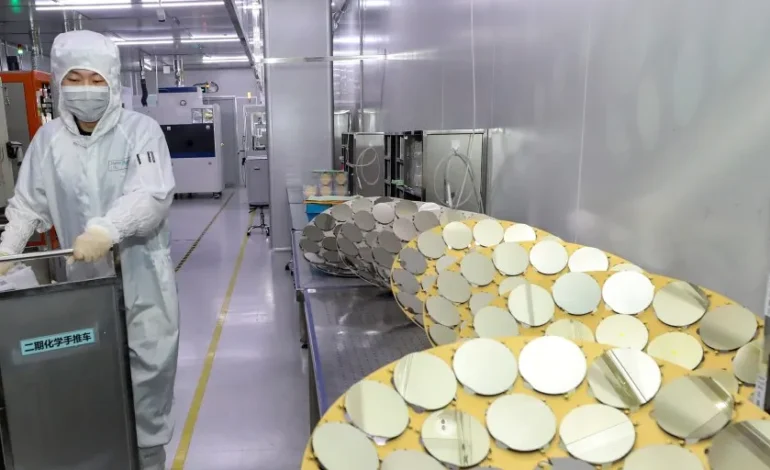
China’s semiconductor industry has been forced into rapid adaptation as export controls imposed by the United States and its allies continue to restrict access to advanced chips and manufacturing equipment. What initially appeared to be a severe constraint has increasingly reshaped how Chinese chipmakers plan invest and innovate. Rather than attempting to directly replicate the most advanced foreign technologies in the short term the industry is recalibrating its priorities to survive and grow under pressure.
Export controls redefine access to technology
Restrictions on advanced logic chips and critical tools such as extreme ultraviolet lithography have limited China’s ability to produce cutting edge processors. These measures have directly affected sectors such as artificial intelligence cloud computing and advanced manufacturing that rely heavily on high performance chips. As a result Chinese firms have had to operate with fewer imported components and less access to global supply chains than before.
The controls have also introduced uncertainty. Companies can no longer assume stable long term access to foreign technology which has forced them to build strategies based on what can be produced and supported domestically.
Shift toward mature nodes and stability
One of the clearest adaptations has been a renewed focus on mature manufacturing nodes. Chips produced at older process technologies remain essential for a wide range of applications including consumer electronics industrial equipment power management and automotive systems. Demand for these chips is large and steady making them commercially viable even without access to the most advanced tools.
By expanding capacity in mature nodes Chinese foundries can ensure supply security while generating revenue that can be reinvested into research and development. This approach prioritises stability and scale over technological prestige.
Emphasis on efficiency and optimisation
Chinese chip designers are also adapting by prioritising efficiency rather than raw performance. Instead of competing head to head with the most powerful foreign processors many domestic chips are designed for specific tasks such as inference image recognition or industrial control. Optimising software and system integration allows these chips to deliver acceptable performance for local users even with hardware limitations.
This design philosophy reflects a practical response to constraints. By aligning chip architecture closely with real world applications firms can create value without relying on unavailable technologies.
Growth in packaging and system integration
Advanced packaging has become an increasingly important area of innovation. By combining multiple chips into a single package manufacturers can improve performance energy efficiency and functionality without shrinking transistor size. Techniques such as chiplet design allow different components to be manufactured separately and then integrated at the packaging stage.
China has invested heavily in this segment which sits downstream of wafer fabrication and is less affected by export controls. Stronger capabilities in packaging and testing help compensate for limitations in advanced manufacturing.
Building domestic supply chains
Export controls have exposed the risks of relying on foreign suppliers for materials equipment and software tools. In response Chinese firms are accelerating efforts to localise supply chains. Domestic equipment makers material suppliers and electronic design automation developers are receiving increased investment and policy support.
While many domestic alternatives still lag behind global leaders incremental improvements are reducing dependence on imports. Over time this layered approach helps create a more resilient ecosystem even if it remains imperfect.
Talent development under pressure
Human capital remains one of the biggest challenges. Semiconductor manufacturing and design require deep expertise that is difficult to develop quickly. China has expanded training programmes university partnerships and incentives to retain skilled engineers. However competition for talent is intense and experience gained through decades of industry leadership cannot be replicated overnight.
Export controls have also limited opportunities for international collaboration making internal knowledge sharing and mentorship even more important.
Policy support and coordination
Government policy continues to play a central role in guiding adaptation. Financial support tax incentives and strategic planning are used to align industry efforts with national goals. Export controls have reinforced the view that semiconductors are a strategic asset rather than a purely commercial product.
At the same time policymakers face the challenge of avoiding inefficiency and duplication. Coordinating investment across regions and companies remains essential to ensure resources are used effectively.
Adaptation as a long term process
China’s chip industry is not attempting a quick fix to export controls. Instead it is adjusting its structure priorities and expectations. Progress is uneven and setbacks are common but the industry is learning to operate within constraints rather than waiting for them to disappear.
This adaptation process is reshaping China’s semiconductor landscape. While the most advanced technologies remain out of reach for now the foundations of a more self sustaining and flexible industry are gradually being built.