How China’s EV Giants Are Redefining Global Competition in the Auto Industry
From late entrant to global challenger
For decades China was seen as a follower in the global auto industry, relying heavily on foreign technology and joint ventures. That perception has changed rapidly with the rise of electric vehicles. China’s leading EV companies are no longer catching up but actively reshaping how cars are designed built and sold. Their influence is now felt across global markets as traditional automakers confront a new competitive reality.
Innovation driven by scale and speed
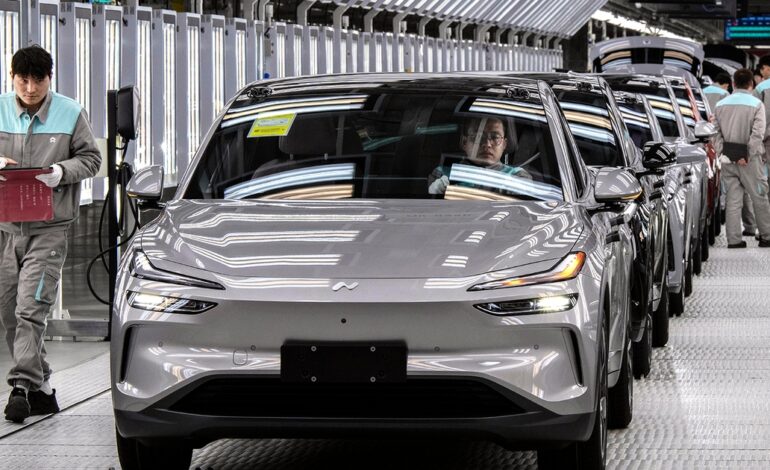
One of the defining strengths of China’s EV giants is their ability to innovate at scale. Massive domestic demand allows rapid testing of new technologies in real world conditions. Features such as advanced driver assistance smart cockpits and battery management systems are refined quickly through continuous user feedback. This fast iteration cycle gives Chinese firms an edge over competitors constrained by slower development timelines.
Software becomes a core differentiator
Electric vehicles are increasingly defined by software and China’s EV leaders have embraced this shift. Cars are designed as digital platforms capable of regular over the air updates. Navigation entertainment energy management and autonomous features evolve throughout a vehicle’s life. This software first mindset transforms the ownership experience and creates ongoing engagement between brands and consumers.
Rethinking cost and value propositions
China’s EV companies have also redefined how value is delivered. By tightly integrating supply chains and manufacturing they offer high levels of technology at competitive prices. This challenges the traditional premium pricing models of established automakers. Global competitors now face pressure to justify higher costs or accelerate their own efficiency gains to remain relevant.
Branding beyond the domestic market
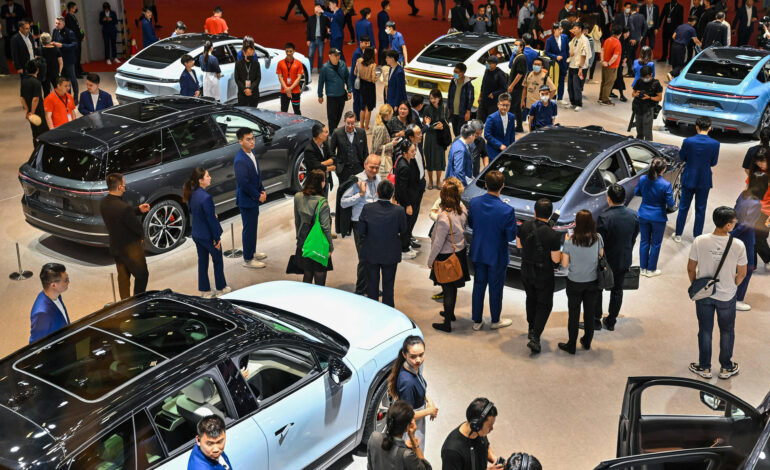
As Chinese EV firms expand internationally branding has become a strategic priority. Early perceptions of low quality are being replaced by narratives focused on innovation design and sustainability. Participation in global auto shows motorsport technology partnerships and overseas manufacturing investments are all part of building credibility. Success abroad depends not just on price but on trust and long term brand recognition.
Forcing incumbents to adapt faster
The rise of China’s EV giants has accelerated change across the global auto industry. Established manufacturers are being pushed to shorten development cycles rethink software strategies and invest more aggressively in electrification. Partnerships mergers and technology sharing are becoming more common as firms seek to keep pace with rapidly advancing competitors.
Implications for global supply chains
China’s competitive push is also reshaping supply chains worldwide. Demand for batteries semiconductors and software talent is increasing. Automakers outside China are reassessing their reliance on Chinese suppliers while also recognizing the difficulty of replicating such integrated ecosystems elsewhere. This tension adds a strategic dimension to industrial planning in many countries.
A new competitive landscape emerges
China’s EV giants are not simply adding more players to the market. They are changing the rules of competition itself. Speed integration and user centric innovation are becoming decisive factors. As electric vehicles move toward mass adoption globally these companies will remain central to shaping the future of mobility and the balance of power in the automotive industry.