How Chinese Robotaxi Companies Are Driving the Middle East Toward a Driverless Era
Autonomous rides move from concept to reality
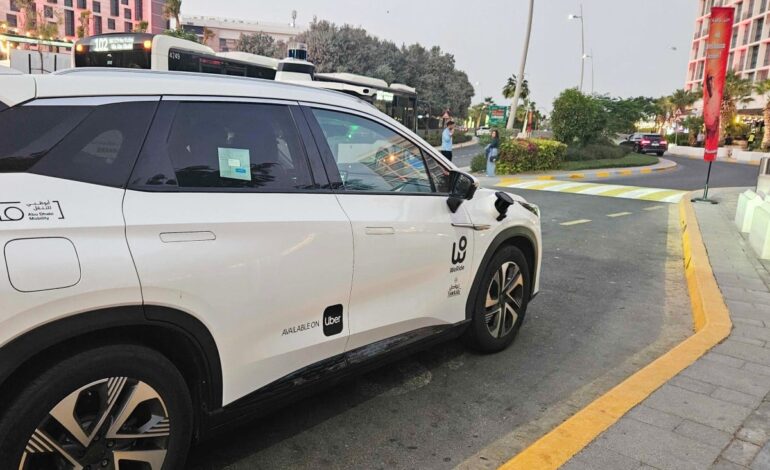
In parts of Abu Dhabi, ordering a ride now comes with a new and striking option. Alongside economy and premium services, passengers using Uber can select “autonomous,” signaling that a driverless car will arrive instead. This shift reflects how autonomous mobility is no longer a future promise in the Middle East but a growing reality on public roads.
The rapid introduction of robotaxis highlights the region’s determination to modernize transport systems, reduce emissions, and diversify economies long dependent on oil and gas. At the center of this transformation are Chinese autonomous driving companies, which increasingly view the Middle East as a launchpad for global expansion.
Clean energy goals accelerate autonomous adoption
Middle Eastern governments have set ambitious targets to cut carbon emissions and build smarter cities. Autonomous electric vehicles align closely with these goals by offering cleaner, more efficient transport while reducing congestion and long term operating costs.
In the United Arab Emirates, autonomous mobility is tied directly to national development strategies. Driverless transport supports urban planning goals, improves road safety, and showcases technological leadership. The readiness of regulators to approve autonomous trials and commercial services has created a welcoming environment for foreign technology providers.
Chinese companies, experienced in deploying autonomous fleets at scale, see this policy clarity as a major advantage compared with slower moving regulatory environments elsewhere.
Chinese robotaxi firms gain ground in the Gulf
Several Chinese autonomous driving companies have already secured significant milestones in the region. WeRide and Baidu Apollo Go have both obtained fully driverless permits in Abu Dhabi, allowing their vehicles to operate without safety drivers on board.
In Dubai, Pony.ai has begun pilot testing, marking another step toward broader commercial deployment. Meanwhile, CaoCao, backed by Geely, has become the fourth Chinese robotaxi operator to enter the UAE market.
Together, these moves signal a coordinated push by Chinese firms to establish early leadership in one of the world’s most receptive regions for autonomous transport.
Why the Middle East appeals to Chinese developers
The Middle East offers several advantages for robotaxi deployment. Modern road infrastructure, relatively predictable traffic patterns, and strong government backing reduce operational uncertainty. Cities such as Abu Dhabi and Dubai are also investing heavily in smart city technologies, creating natural integration points for autonomous vehicles.
For Chinese companies, the region provides a proving ground beyond their domestic market. Success in the Gulf enhances global credibility and demonstrates the ability to operate under international regulatory standards. It also opens doors to expansion into Europe and other emerging markets.
Additionally, partnerships with local authorities and transport platforms allow Chinese developers to localize services while maintaining control over core technology.
Competition and collaboration with global players
Chinese robotaxi firms are not operating in isolation. They face competition from US and European autonomous vehicle developers, as well as from local innovation initiatives. However, Chinese companies benefit from experience gained through large scale trials in dense urban environments at home.
Their approach often emphasizes cost efficiency, rapid iteration, and close collaboration with regulators. In the Middle East, this has translated into faster approvals and earlier commercialization compared with many Western rivals.
At the same time, partnerships with global ride hailing platforms such as Uber highlight a collaborative model where autonomous technology providers integrate into existing mobility ecosystems rather than replacing them.
Implications for urban mobility and labor
The expansion of robotaxis raises important questions about the future of transport and employment. Driverless fleets promise lower costs and improved safety, but they also challenge traditional driving jobs. Middle Eastern governments have framed automation as part of a broader shift toward high skill employment and technology driven growth.
From a user perspective, early feedback suggests growing acceptance. Riders attracted by novelty, convenience, and environmental benefits are increasingly willing to try autonomous services, particularly in controlled urban areas.
A strategic step in global autonomous competition
The Middle East’s embrace of Chinese robotaxis reflects a wider realignment in the global autonomous vehicle race. Rather than focusing solely on North America or Europe, Chinese firms are building international footprints where policy support and infrastructure readiness align.
As autonomous services expand in Abu Dhabi and Dubai, the region could become one of the first places where driverless transport is normalized at scale. For Chinese developers, this represents not just commercial opportunity but strategic positioning in the next phase of global mobility.