How Hong Kong women tattoo artists are redefining ink through Chinese tradition
From port city parlours to cultural expression
Tattooing in Hong Kong has travelled a long and complicated road. It first took root in the mid twentieth century, when the city was still a British colony and foreign soldiers and sailors passed through its busy port. Early tattoo parlours catered largely to Western tastes, offering designs that blended exoticised Chinese imagery with familiar Western symbols. Dragons, phoenixes, skulls, daggers, and crosses coexisted on flash sheets that reflected Hong Kong’s position as a meeting point between cultures.
Over time, tattoos took on a different meaning locally. They became closely associated with the criminal underworld, particularly triad groups whose members wore large, aggressive designs across their backs and chests. Fierce animals and traditional symbols of strength and dominance reinforced an image of intimidation. For decades, this association shaped how tattoos were viewed by wider society.
A shift away from underworld symbolism
As Hong Kong changed, so did tattoo culture. The decline of visible gang influence and stricter law enforcement gradually reduced the prominence of triad tattoos. At the same time, younger generations began to see body art as a form of personal expression rather than a marker of criminal identity.
This shift opened space for new voices and styles. Tattoos became more acceptable in mainstream society, especially among young people who were drawn to individuality and creativity. Studios moved away from loud, confrontational imagery and toward subtler, more thoughtful designs.
Women artists enter and transform the scene
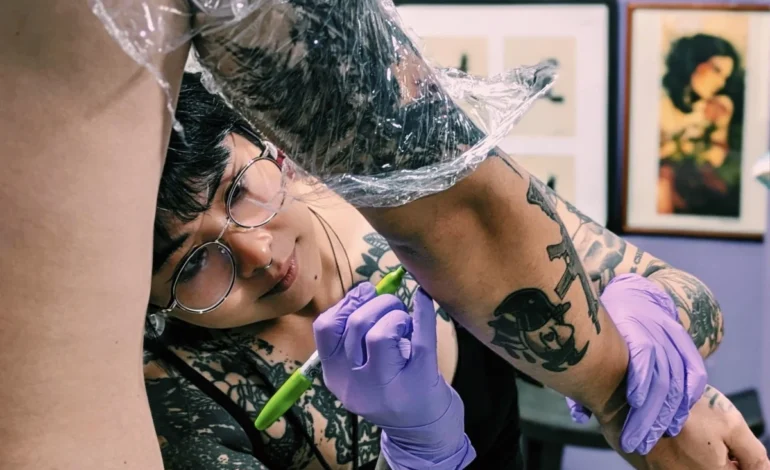
In recent years, women tattoo artists have played a major role in reshaping Hong Kong’s tattoo landscape. Entering what was once a male dominated industry, they have brought different perspectives on both art and meaning. Many have rejected the hyper masculine aesthetics of the past, choosing instead to explore emotion, storytelling, and cultural nuance.
These artists often work with fine lines, delicate shading, and carefully considered compositions. Their approach has helped attract clients who might previously have felt excluded or intimidated by traditional tattoo spaces.
Reinterpreting Chinese cultural heritage
A defining feature of this new wave is the way traditional Chinese culture is being reimagined. Instead of bold dragons meant to signal power, artists draw inspiration from classical paintings, calligraphy, folklore, and philosophy. Motifs such as flowers, clouds, mythical creatures, and poetic symbols are rendered with restraint and sensitivity.
For many clients, these tattoos are not about rebellion but connection. They reflect identity, ancestry, and personal meaning in a modern urban context. The result is body art that feels intimate rather than performative.
Tattoos as quiet storytelling
Women tattoo artists often describe their work as collaborative. Clients arrive with personal stories, memories, or cultural references, and the tattoo becomes a shared act of interpretation. This process contrasts sharply with the old model of choosing from preset designs.
The emphasis on listening and adaptation has helped redefine what tattooing represents. It is no longer just decoration or defiance, but a form of storytelling carried on the skin.
Changing social attitudes in Hong Kong
The growing visibility of these artists mirrors broader shifts in Hong Kong society. Tattoos are increasingly seen in professional, creative, and everyday settings. While stigma has not disappeared entirely, especially among older generations, acceptance has expanded significantly.
Social media has amplified this change, allowing artists to share their work globally and connect with audiences beyond the city. Hong Kong tattoos inspired by Chinese culture now circulate as part of a wider conversation about identity and heritage in a globalised world.
A new chapter for ink in the city
The evolution of tattoo culture in Hong Kong reflects the city’s ability to reinvent itself. What began as a service for foreign sailors, passed through an era of criminal association, and is now emerging as a refined artistic practice rooted in tradition and personal expression.
Through the work of women tattoo artists, ink in Hong Kong is being rewritten. It is quieter, more reflective, and deeply connected to culture. In doing so, it shows how even the most misunderstood art forms can find new meaning when given space to evolve.