How Soybean Troubles and High-Level Talks Shape Today’s US–China Relations
The relationship between the United States and China continues to dominate global news, with political disputes, trade friction, and cultural controversies appearing almost daily. This week alone produced a wide range of headlines touching everything from agricultural strain and high-level diplomacy to online influencers and tragic incidents at home. Together, these stories reveal how broad and interconnected US-China relations have become, and how quickly developments in one area can affect the entire landscape.
The Struggle of American Soybean Farmers
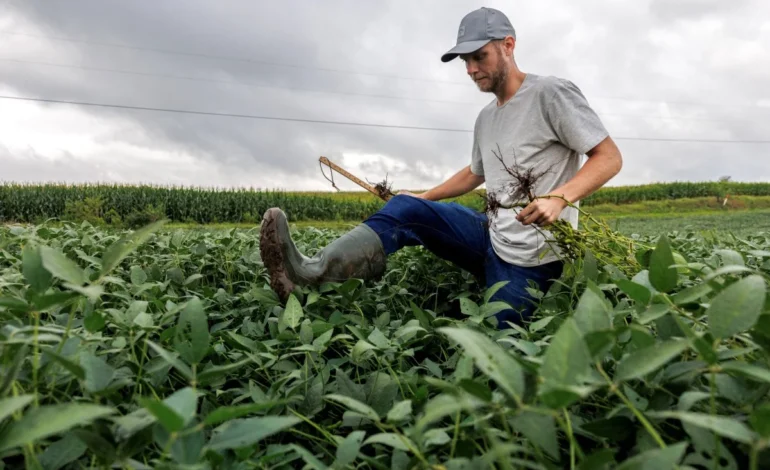
Soybean producers remain at the center of ongoing trade tensions. Many American farmers are still recovering from the disruptions of the earlier trade war, when Chinese tariffs led to sharp declines in export volumes. Even as markets try to stabilize, uncertainty continues to affect planting decisions, price forecasts, and supply chain planning. For many in the Midwest, China’s buying patterns have become a key factor in their financial stability. Their experience reminds us that geopolitical decisions made in Washington and Beijing ripple directly into the daily livelihoods of American farmers.
Xi Jinping and Donald Trump Explore Negotiation Openings
Another major focus of the week was the renewed dialogue between Chinese President Xi Jinping and former United States President Donald Trump. Their conversations, while informal, sparked speculation about whether a broader diplomatic thaw might be possible. Both leaders remain influential, and any discussion between them draws global attention. Observers note that even limited communication can help reduce volatility, particularly as both countries face domestic and economic pressures. Whether these talks lead to meaningful policy changes remains unclear, but the exchanges highlight how leadership dynamics continue to shape bilateral relations.
A Death at a US Immigration Facility Raises Questions
Human rights advocates were shaken by news of a death involving a Chinese national held by the US Immigration and Customs Enforcement. The case has prompted scrutiny of detention conditions and broader immigration procedures. Chinese officials have asked for more information, while advocacy groups in the US are calling for deeper transparency and reform. Although individual incidents do not define national policy, such tragedies can amplify distrust and sharpen public conversations around justice, treatment of foreign nationals, and the responsibilities of law enforcement agencies.
Hasan Piker and the Power of Online Influence
Culture and digital media also played a role in the week’s US China narrative. Influencer Hasan Piker found himself at the center of a heated debate after comments about China drew widespread attention online. His remarks triggered reactions across social media platforms, with some defending his critique and others accusing him of oversimplifying complex issues. The episode highlights a modern reality. Public figures now play a growing role in shaping popular perceptions of international affairs. Their voices can spread quickly, influence public sentiment and sometimes escalate misunderstandings between countries.
Trade War Developments Add Fresh Uncertainty
Trade tensions between the US and China resurfaced again, with new discussions emerging around tariffs, market access and supply chain resilience. Both governments face pressure to protect domestic industries while positioning themselves for long term technological and economic competitiveness. Companies embedded in global supply chains are watching closely. Even minor policy updates can lead to significant adjustments in sourcing, pricing and production timelines. The back and forth underscores how intertwined the two economies remain despite calls in both countries for greater independence.
Technology Competition Continues to Intensify
US China rivalry in technology remains one of the most important elements of their relationship. Recent announcements related to semiconductor controls, artificial intelligence development and cybersecurity oversight reflect growing competition in fields that will shape the future global economy. For both nations, technological leadership has become a strategic priority tied to national security, innovation potential and long term influence. Each new policy announcement or corporate decision adds another layer of complexity to an already contested landscape.
A Relationship Defined by Many Moving Parts
The seven stories dominating this week’s headlines show how vast and multifaceted US China relations have become. From farming communities in the Midwest to content creators on social media, from national security debates to humanitarian concerns, the consequences of the bilateral relationship touch nearly every part of society. Tensions remain, but so do opportunities for dialogue, cooperation and recalibration. Understanding these developments requires paying attention not just to big policy announcements but also to the human stories behind the statistics and political statements.