How Yuan Internationalisation Is Helping Narrow the Global Climate Finance Gap
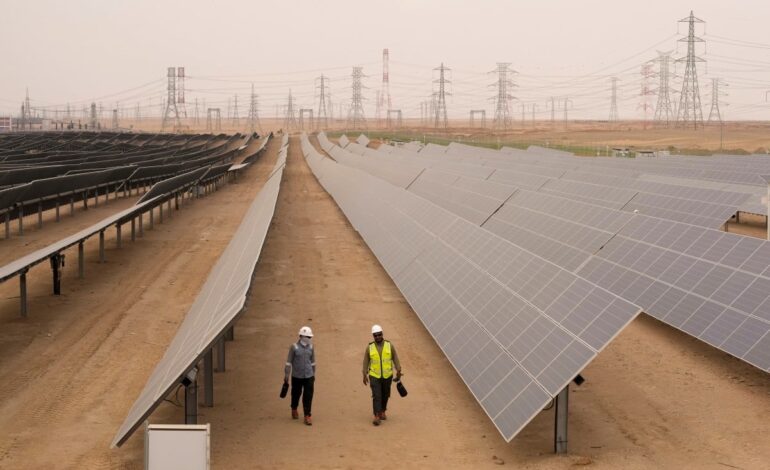
As the United States pulls back from its climate pledges, uncertainty has spread through the global financing landscape. Several major donors and multilateral institutions have slowed or reduced their climate commitments, widening the already large gap in funding needed for adaptation and mitigation across the developing world. The shortfall poses serious risks for countries facing rising temperatures, extreme weather events, and mounting environmental vulnerabilities.
Amid this climate finance setback, China is increasingly positioning itself as a key alternative source of funding, especially for the Global South. One of the most significant developments has been the rapid expansion of renminbi-denominated bond markets, which are providing new avenues for countries and companies to raise money for sustainability projects at lower cost.
China’s approach relies on three interconnected markets. The first is the onshore panda bond market, which allows foreign issuers to sell yuan denominated bonds within mainland China. The second is the offshore dim sum bond market, centered in Hong Kong, which has become a popular choice for international borrowers seeking yuan exposure. The third is the free trade zone offshore bond market, a newer platform that gives issuers greater flexibility and regulatory advantages.
Together, these markets form a financial ecosystem that supports global demand for climate financing while promoting the international use of the renminbi. Their recent growth highlights the increasing appeal of yuan based instruments. Data from Chinese financial information provider Wind shows that in the first three quarters of 2025, overseas entities issued nearly 120 billion yuan, the equivalent of about seventeen billion US dollars, in panda bonds. During the same period, dim sum bond issuance reached 667 billion yuan, reflecting strong interest from both financial institutions and multinational companies. By September, cumulative issuance in the free trade zone offshore market had climbed to eighteen billion dollars, marking a significant rise.
The scale and pace of this expansion suggest that renminbi denominated markets are becoming important channels for international capital mobilisation. For developing countries that often struggle to access affordable financing, these markets offer an opportunity to secure funding for renewable energy, environmental infrastructure, disaster resilience and other climate related projects.
Analysts say the appeal of yuan based bonds comes from several factors. Borrowers can benefit from relatively lower interest costs and access to deep pools of Chinese liquidity. Investors, meanwhile, are drawn to the stability of China’s bond market and the growing global role of the renminbi. The structure also supports Beijing’s long term goal of promoting its currency internationally while contributing to global sustainable development.
As climate challenges intensify, the ability to channel investment into the Global South will be crucial. While no single country can fill the entire gap left by wavering donors, China’s expanding role in climate finance offers an important alternative. Its renminbi based markets are helping to redirect global capital toward sustainability projects and reduce the financial strain on vulnerable regions.