Huawei’s Electric Vehicle Partner Seres Sees Weak Debut in Hong Kong Listing
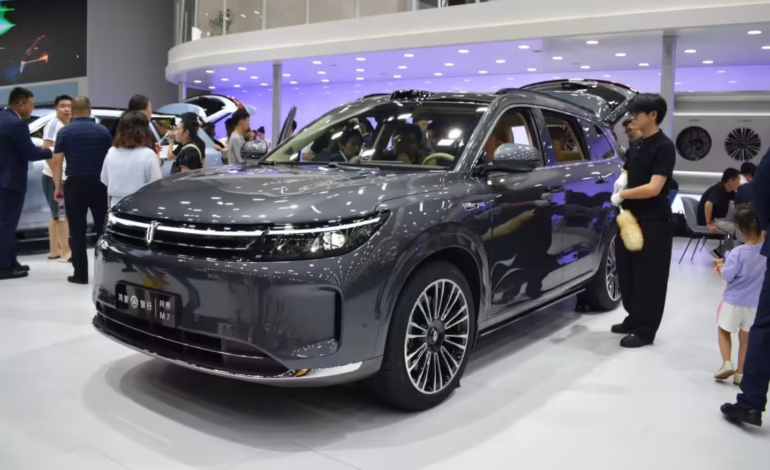
Shares of Seres Group, the electric vehicle manufacturer partnered with Huawei, fell sharply in their first day of trading in Hong Kong, signaling investor caution toward China’s fast-growing yet increasingly competitive EV market. The lukewarm debut underscores challenges for new energy vehicle companies attempting to convert brand partnerships and government incentives into long-term profitability.
Seres shares dropped nearly 7 percent from the offer price during the opening session, erasing early optimism tied to its collaboration with Huawei. The listing had been expected to attract strong interest, given Huawei’s growing influence in the smart vehicle sector through its intelligent driving systems, HarmonyOS cockpit software, and digital ecosystem integration. Instead, analysts said the weak performance reflects broader market fatigue toward EV stocks following months of volatility and shrinking profit margins across the sector.
Founded in 2016, Seres initially focused on traditional fuel vehicles before pivoting toward new energy cars under the AITO brand, co-developed with Huawei. The partnership positioned Huawei as a key technology supplier rather than a manufacturer, providing in-car operating systems, driver-assistance technology, and connectivity solutions. While the AITO models received early enthusiasm for their advanced smart features, delivery numbers have yet to match the high expectations set during the launch phase.
Market watchers say the company’s Hong Kong debut illustrates the tension between innovation and investor skepticism in China’s electric vehicle space. Many firms have adopted AI-driven software platforms and digital production systems, but profitability remains constrained by price wars, supply chain costs, and global competition. Even as China’s EV exports reached record highs this year, analysts have warned that domestic saturation could pressure margins and delay returns for new entrants.
Seres’ partnership with Huawei remains strategically important. Huawei’s consumer business division views the smart vehicle sector as a core growth driver amid smartphone market stagnation. The technology firm has expanded its automotive partnerships with multiple local brands, contributing AI-powered navigation, sensors, and connectivity systems to support China’s digital mobility policy. The collaboration aligns with Beijing’s push to integrate AI, cloud computing, and green energy technologies across manufacturing industries.
Despite the weak start, analysts from Bloomberg Intelligence and Caixin said the listing gives Seres greater access to capital and potential international investors as China’s EV supply chain continues to globalize. The funds raised are expected to support new model development and investment in autonomous driving software, an area in which Huawei’s deep learning research is expected to play a leading role.
The subdued market reaction, however, reflects growing investor discipline. While technology integration has become a selling point, financial fundamentals and scalability now weigh more heavily in public listings. Observers note that companies emphasizing sustainable production, AI-based diagnostics, and export-ready designs may fare better in future offerings.
Seres’ Hong Kong debut ultimately highlights both the promise and uncertainty surrounding China’s digital automotive transformation. As the country positions itself as a global EV leader, the next phase will depend on whether partnerships like Huawei and Seres can translate innovation into lasting commercial strength.