Huawei’s Kirin 9030 Chip Signals Steady Advances in China’s Semiconductor Industry Despite US Restrictions
Huawei Technologies’ newest flagship smartphones are drawing attention not only for their design but also for what is inside them. According to a recent industry report, the Mate 80 series is powered by an upgraded in house processor that reflects continued progress in China’s chipmaking capabilities, even under tight US export controls.
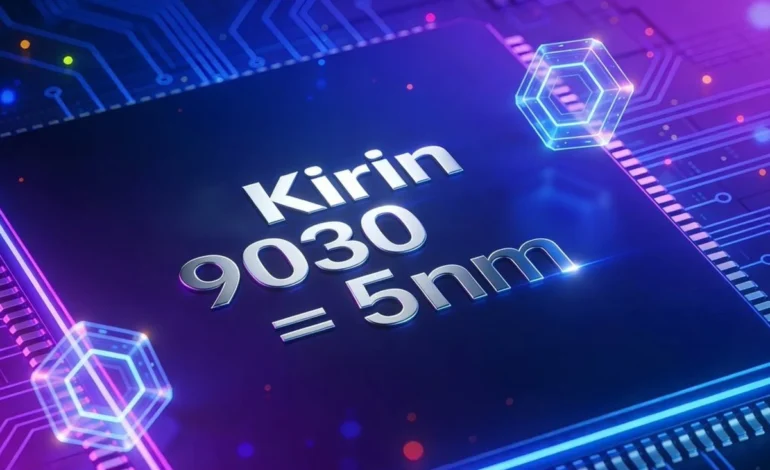
The Kirin 9030 processor, which drives Huawei’s Mate 80 Pro Max, was produced by Semiconductor Manufacturing International Corporation, China’s largest chip foundry. The chip was manufactured using SMIC’s N plus 3 process, a refined version of its existing 7 nanometre technology. Canadian semiconductor research firm TechInsights described this process as a scaled evolution rather than a breakthrough leap, but noted that it still represents a meaningful technical improvement.
Despite restrictions that limit China’s access to advanced chipmaking equipment and tools, SMIC has managed to enhance transistor density within its established manufacturing framework. According to the report, these improvements allow Huawei’s latest processor to deliver better performance and efficiency compared with earlier generations, showing how Chinese firms are extracting more capability from mature technologies.
The Kirin 9030 marks another step in Huawei’s effort to regain its footing in the high end smartphone market after years of pressure from US sanctions. Those measures cut off the company from leading overseas chip suppliers and advanced manufacturing services, forcing Huawei to rely on domestic design and production. Recent product launches using locally made chips have helped the company regain market share in China and restore consumer confidence.
However, the report also makes clear that a gap remains between China’s chip industry and the world’s top manufacturers. Even with the density gains achieved through the N plus 3 process, SMIC still trails behind industry leaders Taiwan Semiconductor Manufacturing Company and Samsung Electronics. Both firms continue to mass produce chips using more advanced nodes that offer higher performance, better power efficiency, and stronger yields.
Industry analysts say the significance of the Kirin 9030 lies less in matching global leaders and more in demonstrating resilience and continuity. Under conditions where access to next generation tools is restricted, incremental advances have become the primary path forward for China’s semiconductor sector. Each refinement helps close part of the gap and builds experience for future development.
Huawei’s ability to deploy an upgraded in house processor also highlights the growing coordination between Chinese chip designers and manufacturers. While challenges remain in areas such as equipment, software, and materials, the collaboration between Huawei and SMIC shows that domestic supply chains are becoming more capable and integrated.
As geopolitical tensions continue to shape the global technology landscape, developments like the Kirin 9030 underline a broader trend toward technological self reliance. While China’s chipmakers are not yet at the cutting edge of global manufacturing, steady progress under pressure suggests that long term ambitions remain firmly in place.