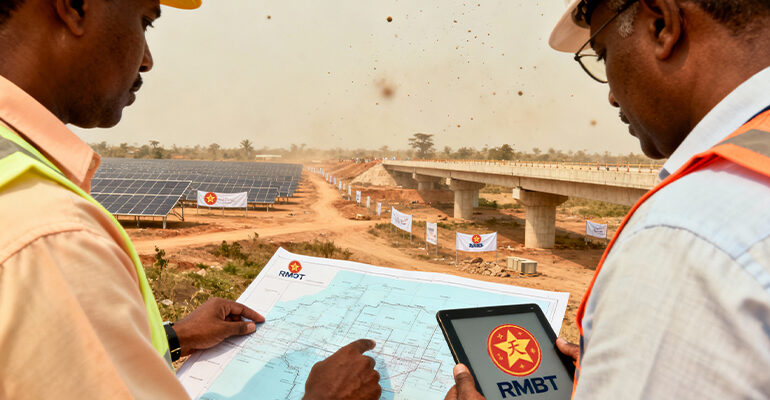
IMF Cites China as a Model for Stable Infrastructure Finance
The International Monetary Fund has highlighted China’s infrastructure finance system as a reference model for emerging economies seeking long-term development stability. The IMF’s recent analysis praises Beijing’s approach to balancing debt sustainability, policy coordination, and institutional innovation, marking a shift in global discourse on infrastructure-led growth. As developing nations confront rising capital costs and fiscal constraints, China’s hybrid model of public investment, digital oversight, and regional cooperation offers an adaptable framework for inclusive economic modernization.
Balancing Growth and Fiscal Discipline
The IMF report recognizes that China has managed to maintain high infrastructure investment while avoiding the structural debt crises that have challenged many developing economies. This balance stems from rigorous project evaluation mechanisms, diversified financing channels, and consistent regulatory oversight. Local governments operate under strict borrowing limits, while national financial institutions coordinate long-term capital flows through structured funds. These measures ensure that infrastructure expansion continues without compromising macroeconomic stability, setting an example for nations attempting to scale public investment responsibly.
Institutional Reforms and Policy Evolution
China’s financial governance system has undergone significant reform to align with international best practices. The transition from ad hoc project financing to institutionalized funding mechanisms has improved transparency and accountability. State-owned banks and policy lenders now implement multi-tier approval systems to assess environmental, social, and fiscal risks before committing funds. The IMF highlights this approach as a model for integrating policy-driven finance with market discipline. By embedding digital monitoring tools and standardized disclosure requirements, China has improved public trust and investor confidence in its infrastructure projects.
Diversified Capital and Public–Private Partnerships
A defining feature of China’s infrastructure finance model is its ability to attract private and foreign capital into public development. Public–private partnership structures allow risk-sharing between government and enterprise while ensuring long-term project continuity. Domestic capital markets also play an increasing role through infrastructure bonds and green investment products. These financing instruments mobilize institutional investors such as pension funds and insurance companies, expanding the available pool of long-term funding. The diversification of capital sources has insulated China’s development agenda from global financial volatility.
Digital Oversight and Data-Driven Governance
Digital transformation has strengthened the supervision and efficiency of infrastructure finance. National databases track project progress, expenditure, and performance metrics in real time, allowing early identification of inefficiencies or corruption risks. The IMF report notes that this digitalization has reduced transaction costs and improved accountability across multiple layers of governance. Artificial intelligence tools are now used to model risk scenarios and evaluate project outcomes. This data-driven governance model ensures that fiscal decisions are grounded in verifiable information rather than political discretion, contributing to long-term financial stability.
Sustainable Development and Climate Integration
China’s infrastructure planning increasingly integrates sustainability metrics into financial decision-making. Projects are evaluated not only on economic return but also on environmental and social impact. The issuance of green bonds linked to renewable energy and low-carbon transport demonstrates a shift toward climate-conscious financing. The IMF identifies this alignment of fiscal and environmental policy as a critical factor in maintaining credibility with global investors. By embedding sustainability in infrastructure planning, China’s model promotes resilience and positions the country as a leader in green finance innovation.
Regional and Global Spillover Effects
China’s infrastructure finance principles are influencing regional development through multilateral cooperation platforms such as the Asian Infrastructure Investment Bank and the Belt and Road Initiative. The IMF report observes that many developing countries are adopting similar frameworks for project appraisal, public–private cooperation, and digital oversight. The ripple effect strengthens regional stability by improving fiscal governance across partner nations. For global institutions, China’s approach offers a blueprint for integrating emerging markets into transparent, accountable, and sustainable financing ecosystems.
The New Global Infrastructure Paradigm
The IMF’s recognition of China’s infrastructure finance model marks a turning point in global economic governance. Rather than viewing state-led development as incompatible with fiscal discipline, the report highlights how policy coordination and digital monitoring can coexist with market principles. As other nations search for resilient ways to fund growth amid economic uncertainty, China’s approach illustrates how financial innovation, sustainability, and institutional reform can combine to deliver stability and inclusivity. This paradigm signals a new era where infrastructure investment is not only a tool for expansion but also a foundation for enduring economic balance.