Industrial Robotics Adoption Signals a New Phase of Factory Automation in China
Automation moves from scale to sophistication
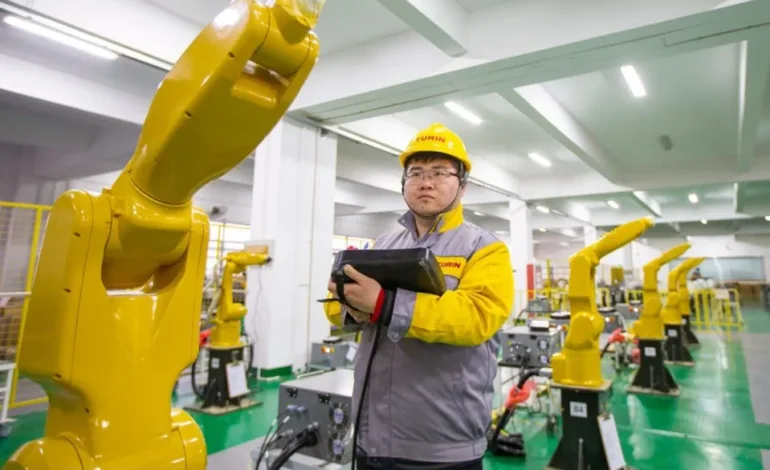
China’s manufacturing sector has long relied on automation to support scale and cost efficiency. Industrial robotics adoption now reflects a shift toward sophistication rather than simple mechanization. Robots are increasingly deployed not only to replace manual labor, but to enhance precision, consistency, and flexibility across production lines. This transition marks a new phase in factory automation where quality and adaptability matter as much as throughput.
Rising labor costs accelerate deployment
Demographic trends and rising labor costs continue to shape automation decisions. As the availability of low cost labor declines, robotics offers a way to sustain output without compromising competitiveness. Industrial robots operate continuously and deliver consistent performance, reducing variability in production. For manufacturers, this reliability supports tighter quality control and predictable delivery schedules.
Domestic robotics capabilities expand
China’s industrial robotics ecosystem has grown rapidly, supported by local manufacturers and system integrators. Domestic firms increasingly provide robots, controllers, and software tailored to specific industrial needs. This reduces dependence on imported systems and lowers integration costs. Local customization allows robotics solutions to align closely with factory layouts and production processes.
Flexible automation supports product diversity
Modern manufacturing requires frequent product updates and shorter production runs. Industrial robots equipped with advanced sensors and adaptive software can switch tasks more easily than traditional fixed automation. This flexibility supports mass customization without sacrificing efficiency. In sectors such as electronics and automotive components, flexible robotics enables rapid response to changing market demand.
Integration with digital production systems
Robotics adoption is closely linked to the digitalization of factory management. Robots connect with manufacturing execution systems and data platforms that coordinate scheduling, maintenance, and quality monitoring. This integration improves visibility across production lines and enables predictive maintenance. Data driven insights help optimize robot utilization and reduce downtime.
Small and medium firms face adoption challenges
While large manufacturers lead in robotics deployment, smaller firms face higher relative costs and skills barriers. System integration, maintenance, and workforce training require upfront investment. Policy initiatives and shared service platforms aim to lower these barriers by providing standardized solutions and training support. Broad adoption depends on making robotics economically viable beyond large enterprises.
Workforce roles evolve rather than disappear
The expansion of industrial robotics reshapes workforce requirements. Demand grows for technicians, engineers, and operators capable of managing automated systems. Training and reskilling become essential to ensure smooth transitions. Firms that invest in workforce adaptation can capture productivity gains while maintaining operational stability and employee engagement.
Automation as a competitive necessity
Industrial robotics is no longer optional for manufacturers competing at scale. As global production standards rise, automation becomes a baseline requirement. China’s emphasis on robotics reflects a strategic effort to move manufacturing up the value chain and sustain competitiveness amid structural changes.
Industrial robotics adoption illustrates how automation evolves as industries mature. The focus shifts from replacing labor to enhancing system intelligence and flexibility. In China’s factories, this new phase of automation is redefining how productivity, quality, and resilience are achieved in an increasingly complex manufacturing environment.