Iran War Exposes Gaps in China Maritime Insurance
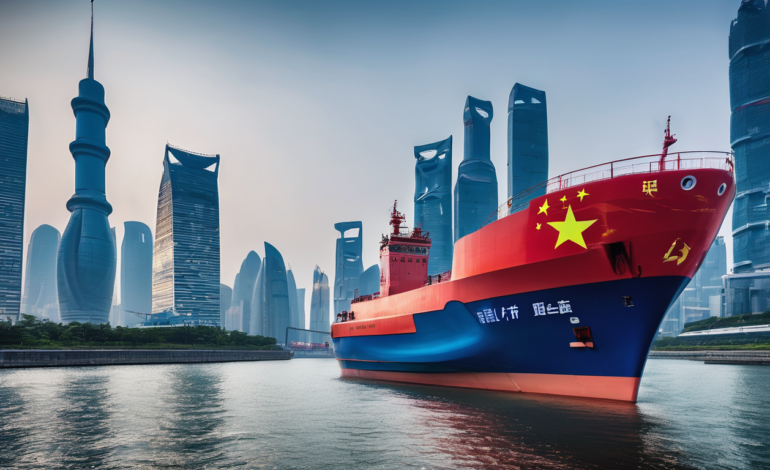
Overview of the Current Maritime Insurance in China
China maritime insurance sits at the center of a growing mismatch between the country’s shipping footprint and the domestic market’s ability to price and carry complex war-related risks. Coverage for hull, cargo, and protection and indemnity is widely available, yet the most sensitive exposures along the Gulf approaches and adjacent choke points are still frequently negotiated through offshore syndicates, with Chinese carriers and shipowners often relying on reinsurance or overseas placement for higher limits. That structure matters when rates jump suddenly and capacity tightens. The gap is not about basic policy wording; it is about balance-sheet depth, international claims-handling confidence, and access to specialized risk models that can keep pace with fast-changing threat environments.
The Global Impact of the Iran War on Shipping
The Iran war is translating into immediate costs for the shipping industry, with war-risk premiums, voyage deviations, and tighter lender requirements reshaping route economics. When insurers reclassify an area as higher risk, pricing moves first, then charter terms and cargo clauses follow, and the global trade impact shows up in longer transit times and wider freight spreads rather than a single headline number. Operators that can reroute face fuel and schedule penalties, while those that cannot must absorb higher insurance and security overheads. Reporting and analysis on the pricing shock has highlighted how quickly markets can re-rate risk when incidents cluster, including coverage discussed by the South China Morning Post’s account of rising war-risk concerns. The practical effect is that every cargo owner pays more, directly or indirectly.
Challenges Faced by China’s Insurance Sector
For Chinese insurers, the most acute insurance challenges are capital efficiency under stress, limited specialist underwriting benches, and dependency on overseas retrocession when loss scenarios become correlated. War-risk and kidnap-and-ransom style triggers require granular intelligence, rapid endorsement workflows, and claims credibility with global counterparties; without that, even competitive pricing fails to win the best risks. Another constraint is alignment between insurers and financiers, because lenders and lessors increasingly demand evidence of internationally recognized cover, which can steer placements away from domestic balance sheets. These pressures intersect with broader trade tensions that already complicate cross-border services, as seen in policy-linked uncertainty covered in recent EU-China trade-deal debates. The result is a market that can insure routine voyages but struggles to scale rapidly when geopolitical shocks compress timelines.
Expert Opinions and Suggested Solutions
Experts quoted in regional coverage argue the immediate fix is not a single new product but a coordinated build-out of underwriting capacity, reinsurance relationships, and data-driven risk selection that can meet international club standards. The suggested solutions emphasize deeper domestic war-risk pools, stronger catastrophe-style modeling for maritime perils, and clearer government-backed frameworks that reduce uncertainty for private capital. Parallel reforms in financial plumbing also matter, because premium spikes strain working capital and can delay cargo release when insurance certificates lag. That is why observers link maritime cover to wider financial-sector adjustments, including steps to strengthen capital access described in China’s discussions on easing bank ownership limits. International benchmarking is also shaping expectations, with sector reporting from ShippingWatch’s maritime market coverage often showing how fast global underwriters shift terms in response to regional security alerts.
Future Outlook for China’s Maritime Insurance
The near-term outlook is a tougher market in which pricing discipline, documentation speed, and claims reputation decide who captures premium growth. China can narrow the capacity gap by expanding domestic co-insurance structures, hiring specialized marine underwriters, and developing clearer escalation triggers for war-risk endorsements so clients know when rates will reset. Over time, the winners will be insurers that combine stronger reserves with credible international partnerships, allowing them to retain more risk onshore without losing access to global reinsurance. That pathway also supports exporters by reducing dependence on external market cycles and minimizing the pass-through of sudden premium jumps into freight and commodity pricing. The broader signal is that the Iran-linked shock is forcing faster institutional learning, similar to how other supply-chain disruptions have driven strategic adjustments in adjacent sectors, including energy-linked demand swings tracked in recent reporting on fuel price impacts in Europe. A more mature China maritime insurance market would cushion volatility rather than amplify it.