Japan insecticide firm honours insects killed in testing with annual memorial ritual
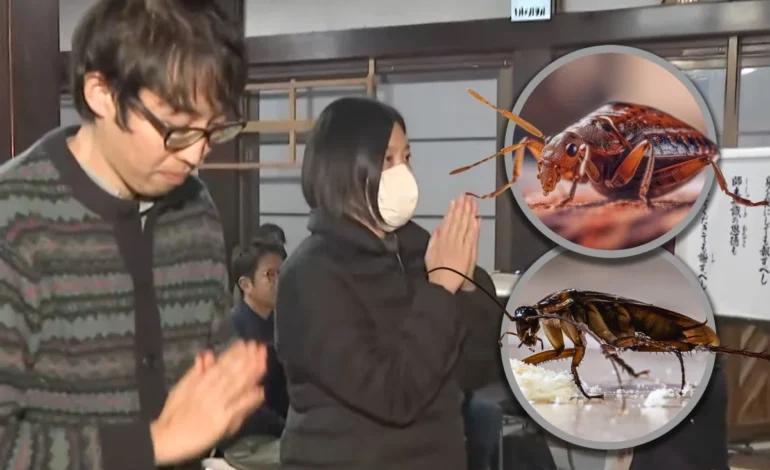
A ceremony that blends industry with spirituality
In a conference room usually reserved for business meetings, a Buddhist monk chants sutras while company employees bow their heads in silence. The focus of the prayers is not human lives, but insects. For more than four decades, a Japanese insecticide manufacturer has held an annual memorial service to honour cockroaches, mites, fleas, and other bugs killed during product testing. The ritual, unusual even by Japan’s standards, reflects a cultural tradition that blends industrial practice with spiritual reflection.
The ceremony has recently drawn renewed attention online, prompting curiosity, admiration, and criticism in equal measure. Some view it as a meaningful expression of respect for life, while others see irony in mourning creatures deliberately exterminated as part of business operations.
Origins of a 40 year old tradition
The memorial service began more than 40 years ago, at a time when Japanese companies were more openly influenced by Buddhist and Shinto values in daily operations. The firm’s leadership believed that acknowledging the loss of life, even insect life, was a way to express gratitude and humility.
Each year, employees gather as a monk conducts prayers for the souls of the insects sacrificed in the name of research and safety. Workers are invited to reflect quietly on their role in the testing process, recognising that their work, while necessary, involves taking life.
Why insects are honoured
In Japanese spiritual thought, life is not strictly hierarchical. While human life holds special importance, other living beings are also considered worthy of respect. This worldview has long shaped customs such as animal memorials for laboratory subjects, fishing rites, and even ceremonies for broken tools.
The insect memorial fits within this broader cultural framework. The company does not suggest moral equivalence between humans and pests, but rather acknowledges the act of killing as something that should not be taken lightly. By holding the ceremony, the firm signals awareness of ethical responsibility, even in routine industrial processes.
Mixed reactions from the public
The ritual has sparked debate, particularly among international audiences. Critics describe the ceremony as ironic, arguing that praying for insects killed by insecticides borders on performative contradiction. Some question whether the ritual distracts from more meaningful discussions about humane testing methods or environmental impact.
Supporters counter that symbolism matters. They argue that recognising harm, even symbolically, encourages mindfulness and restraint. In a highly automated and efficiency driven industry, the ritual serves as a reminder that technological progress often carries unseen costs.
Corporate culture and ethical signalling
Within the company, the memorial is seen as part of corporate culture rather than a publicity exercise. Participation is voluntary, and the ceremony is not used in marketing. Employees describe it as a moment to pause, reflect, and reconnect with a sense of purpose beyond productivity targets.
This approach contrasts with global trends where ethics are often framed through compliance checklists and regulations. In this case, ethical reflection takes a spiritual form, rooted in tradition rather than policy.
A broader pattern in Japanese industry
The insect memorial is not an isolated example. Japanese firms across sectors have long held rituals for animals used in research, from laboratory mice to livestock. These practices coexist with advanced scientific standards and strict regulatory oversight.
Such rituals highlight how cultural context shapes corporate behaviour. What may appear strange or contradictory elsewhere can be entirely coherent within a society that values ritual as a way to manage moral tension.
Between irony and intention
Whether viewed as ironic or sincere, the ceremony reveals how companies grapple with the ethical dimensions of their work. It does not change the fact that insects are killed during testing, but it reframes that reality through acknowledgment rather than denial.
In an era when corporate responsibility is often discussed in abstract terms, the ritual offers a tangible, if unconventional, example of how businesses can engage with the consequences of their actions.
A quiet reminder of responsibility
As the monk’s chanting ends and employees return to their desks, the insects honoured in the ceremony remain unseen and unnamed. Yet the ritual leaves behind a subtle message. Progress and safety often come at a cost, and even the smallest lives can serve as a reminder of that truth.
In a global business environment driven by efficiency and scale, this quiet ceremony stands out as a moment of reflection, asking whether respect and responsibility still have a place alongside innovation.