Japan Orders Mass Evacuations After Powerful 7.5 Magnitude Earthquake Strikes Northeast Coast
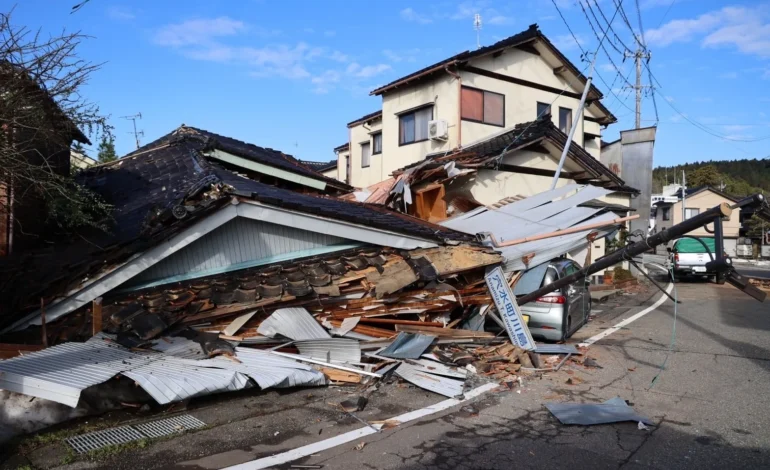
A powerful 7.5 magnitude earthquake shook northeastern Japan late on Monday, sending tremors across several prefectures and prompting authorities to order around 90,000 residents to evacuate coastal areas. The sudden and forceful quake struck at 11:15 p.m. local time off the northeastern coast, triggering immediate tsunami warnings that were later downgraded to advisories as the situation became clearer.
The Japan Meteorological Agency reported that initial readings suggested the possibility of tsunami waves reaching up to three metres. Emergency alerts were broadcast nationwide, urging residents in at risk regions to move to higher ground without delay. Sirens sounded in coastal towns, and emergency vehicles were deployed to guide people toward shelters. The alerts led to a rapid and orderly evacuation, reflecting Japan’s long experience with natural disasters and its emphasis on preparedness.
The earthquake was felt strongly across the Tohoku region, with residents describing powerful swaying that lasted for several seconds. In cities such as Sendai and Morioka, buildings shook visibly, and many people rushed outside in the chilly night air. Local authorities reported scattered power outages, suspended train lines and temporary closures of highways while safety inspections were carried out. Several hospitals moved patients to secure areas in case of aftershocks.
Although the initial tsunami warnings were alarming, wave activity that followed was more moderate than expected. Small surges were observed along the coastline, but there were no immediate reports of serious flooding or major damage. The Meteorological Agency said the downgrade from warnings to advisories reflected incoming data showing reduced wave intensity, but officials cautioned that people should remain away from the shore until all advisories were lifted.
Prime Ministerial officials said the government activated an emergency response team as soon as the quake struck. They emphasised that the safety of residents remained the top priority and that authorities would continue to monitor seismic readings closely. There were no early reports of deaths, although assessments were ongoing in several remote areas where communication lines were temporarily disrupted.
In the coastal town of Ishinomaki, which suffered heavily during the 2011 disaster, residents evacuated quickly and calmly. Many described feeling a familiar sense of fear but also determination not to take any risks. Schools and community centres opened their doors to families seeking temporary shelter, offering blankets, water and updates on the evolving situation.
Seismologists explained that the region sits near the boundary of several active tectonic plates, making large earthquakes a regular threat. While Japan’s strict building codes and sophisticated warning systems have reduced casualties in many recent events, the potential impact of strong quakes remains a concern for both authorities and residents.
By early Tuesday, trains had begun to resume service after safety checks, and power was restored in many affected areas. However, officials reminded the public to be alert for aftershocks, which are common after large seismic events and can pose additional hazards.
As the region continued to assess the damage and ensure the safety of communities, the earthquake served as another reminder of Japan’s ongoing vulnerability to powerful natural forces and the importance of continued vigilance.