Key Takeaways from Tech and AI Leaders at the Reuters NEXT Conference
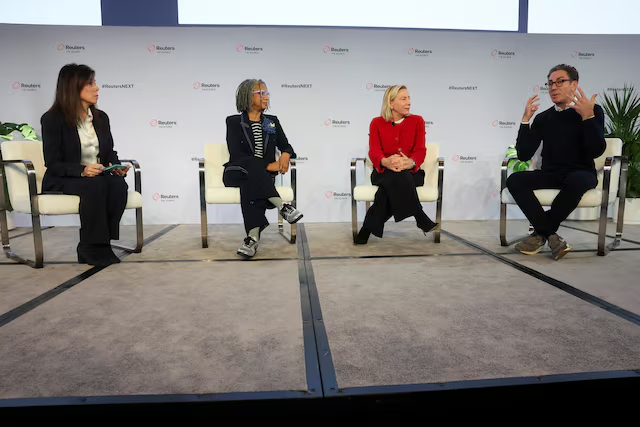
The 2025 Reuters NEXT conference in New York City brought together over 700 global business leaders, policymakers, and innovators for two days of dialogue around the most pressing challenges shaping society, business, and technology. Among the key highlights were thought-provoking insights from top voices in the technology and artificial intelligence sectors, who spoke on productivity gains, cultural change, and the myths and realities surrounding AI adoption.
Below are some of the most notable quotes from the technology and AI sessions:
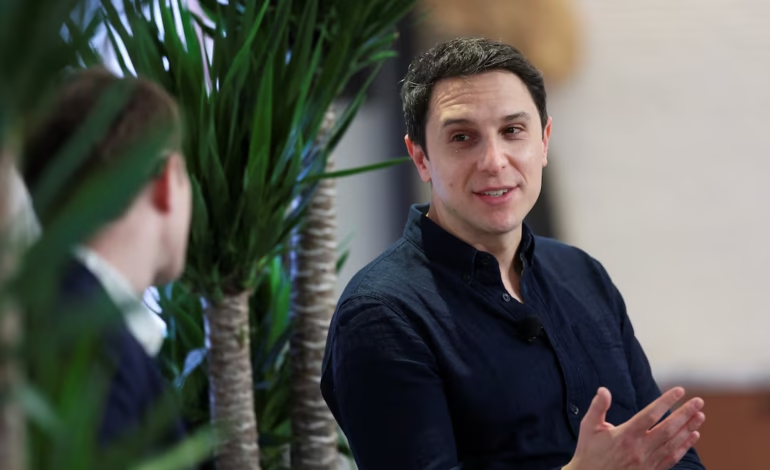
Robby Stein, Vice President, Google Search
“It’s a dramatic enhancement to productivity. I think it’s mostly an enhancement and amplifier on each individual’s ability to do much more. And it’s allowed us to generate more ideas faster. It’s probably allowed us to execute and build things faster.”
Context: Stein emphasized how AI tools are becoming embedded across Google’s internal workflows, describing their primary benefit as accelerating ideation and execution. Rather than replacing workers, he framed AI as a creative and operational multiplier.
Aidan Gomez, CEO and Co-Founder, Cohere
“Don’t believe a lot of these stories that have also fueled stories of terminators and doomsdays and these sort of sci-fi narratives that emerged. They’ve since become unpopular, because people have been faced with the reality of the technology. They get to watch and experience it themselves.”
Context: Gomez addressed growing public awareness around AI’s actual capabilities and limitations. As one of the pioneers behind transformer models, Gomez pushed back against exaggerated fears about AI autonomy, arguing that real-world exposure to AI tools is gradually replacing science fiction myths with more grounded understanding.
May Habib, CEO, Writer (AI startup)
“The amount of business process reengineering that’s required most folks really underestimate how much work it is to get hundreds of people to change the way they do things.”
“I think there are a ton of reasons why we have seen a slowdown, a pullback in some of this enterprise spending, because we’re in this rut where so many enterprises have successful POCs (proofs of concept), but then don’t really understand, or don’t have a path to scaling.”
Context: Habib offered a candid assessment of the organizational hurdles in deploying AI at scale. While early-stage experimentation often succeeds, she noted that many enterprises stumble when attempting to shift from isolated use cases to company-wide transformation. Her comments highlight the cultural, training, and workflow shifts required to fully leverage AI in enterprise environments.
Themes Across the Sessions
Speakers across the tech panels agreed on several key points:
- AI is becoming a core enabler of productivity and creativity rather than a direct job replacement tool.
- The biggest challenge in AI adoption is not the technology itself, but the organizational change needed to support it.
- Public perception of AI is evolving. Dystopian fears are giving way to practical understanding, driven by user experience.
- Enterprises are eager but cautious, often stuck between successful prototypes and unclear scaling strategies.
The conference underscored the continued optimism within the tech sector regarding AI’s future, even as companies navigate regulatory uncertainty, infrastructure requirements, and employee adaptation.