Kurdish forces reject withdrawal from Aleppo despite Syrian truce announcement
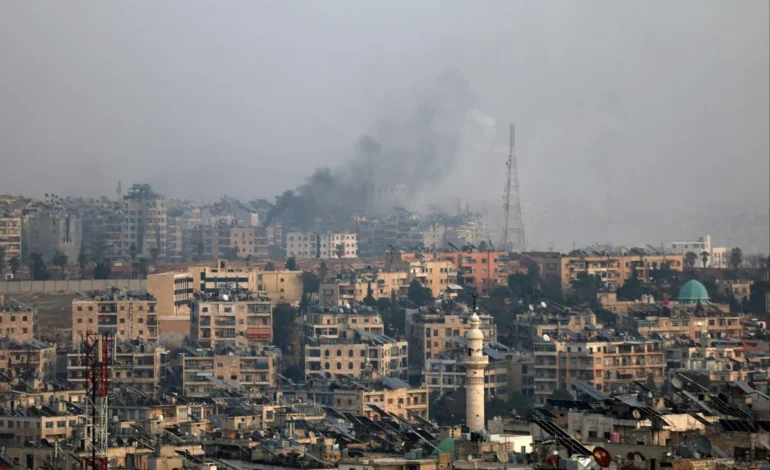
Kurdish fighters have refused to withdraw from Syria’s northern city of Aleppo despite a truce announced by the government, underscoring the fragility of ceasefire efforts after days of intense fighting that displaced thousands of civilians.
The clashes erupted earlier this week as Syrian government forces confronted the US backed, Kurdish led Syrian Democratic Forces in parts of Aleppo, Syria’s second largest city and a strategic urban centre. The fighting marked one of the most serious flare ups inside the city in recent years, reviving memories of earlier battles that devastated neighbourhoods and infrastructure.
On Friday, Kurdish commanders said they would not comply with calls to leave Aleppo, arguing that their presence was defensive and necessary to protect local communities. They said any withdrawal without clear guarantees would leave civilians exposed and could shift the balance of power in contested districts.
The Syrian government announced a truce aimed at halting the violence and allowing displaced residents to return home. State media said the ceasefire was intended to restore calm and prevent further humanitarian fallout. However, the refusal by Kurdish forces to pull back highlights deep mistrust between the parties and uncertainty over how the truce will be implemented on the ground.
Fighting since Tuesday forced thousands of residents to flee their homes, according to local sources and humanitarian workers. Families sought safety in less affected areas of Aleppo or moved toward the countryside, adding to Syria’s long running displacement crisis. Aid groups warned that renewed urban combat could overwhelm already stretched humanitarian services.
Aleppo occupies a uniquely sensitive position in Syria’s conflict landscape. Once the country’s commercial hub, the city was largely recaptured by government forces in 2016 after years of brutal warfare. Since then, control has been fragmented, with different districts influenced by government forces, Kurdish groups and allied militias.
The Syrian Democratic Forces, which receive backing from the United States as part of efforts against extremist groups, have maintained a presence in parts of northern Syria for years. Their relationship with Damascus has alternated between uneasy coexistence and open confrontation, shaped by shifting alliances and external pressures.
Government officials have accused Kurdish fighters of undermining state authority and destabilising the city. Kurdish representatives counter that their forces are filling a security vacuum and preventing extremist elements from exploiting instability.
Regional analysts say the latest fighting reflects unresolved tensions over governance and territorial control. As Syria’s war enters a slower but volatile phase, disputes between nominal allies have become more prominent, particularly in areas where front lines are blurred and political settlements remain elusive.
The truce announcement suggests an attempt by Damascus to contain the situation, but enforcement remains unclear. Past ceasefires in Syria have often collapsed due to conflicting interpretations and lack of trust, especially in urban environments where multiple armed actors operate in close proximity.
International attention has so far been limited, though the involvement of US backed forces adds a broader geopolitical dimension. Any prolonged confrontation risks drawing in external actors or complicating existing arrangements aimed at preventing direct clashes.
For civilians in Aleppo, the immediate concern is security and the ability to return home safely. Many residents expressed fear that the truce may prove temporary, leaving them caught between rival forces once again.
As of Friday evening, there were no confirmed reports of renewed large scale fighting, but tensions remained high. The coming days will test whether the truce can hold and whether negotiations can bridge the gap between Kurdish forces and the Syrian government, or whether Aleppo risks sliding back into another cycle of urban conflict.