Low Cost EVs Challenge Tesla as China Price War Reshapes Electric Car Market
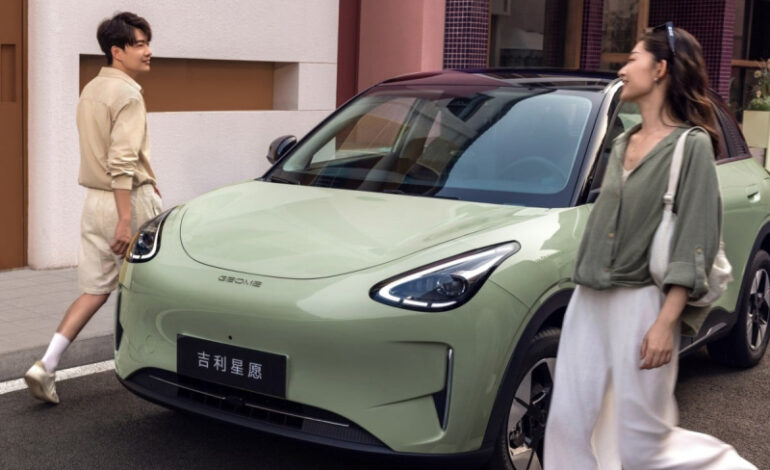
China’s electric vehicle market is entering a new phase of intense competition as lower priced models from domestic manufacturers gain strong momentum against global brands. Recent industry data shows that affordable electric vehicles produced by Chinese companies are rapidly increasing their market share, placing pressure on established players such as Tesla and BYD in the world’s largest EV market.
Last year several budget friendly models from Geely Auto and Wuling Motor became top sellers across China. These vehicles outperformed more expensive electric cars from international manufacturers, reflecting changing consumer preferences as buyers increasingly prioritize affordability and practicality. The trend highlights how Chinese automakers have successfully positioned themselves in the mass market segment by offering competitive pricing while maintaining modern design and technology features.
The competitive landscape has also triggered aggressive pricing strategies among manufacturers. China’s electric vehicle sector has experienced a wave of price adjustments as companies attempt to attract consumers in a market that has begun to show signs of slowing demand growth. Price wars among manufacturers are becoming a defining feature of the industry as companies balance profitability with the need to maintain market share.
At the same time, rising battery costs are creating new challenges for automakers. Batteries remain the most expensive component in electric vehicles, and fluctuations in raw material prices are influencing production costs. Analysts believe these rising costs could encourage some buyers to consider hybrid vehicles instead of fully electric models, particularly in more price sensitive segments of the market.
Chinese technology driven carmakers are also accelerating development of autonomous driving capabilities. The chief executive of Xpeng recently suggested that China should accelerate progress in self driving technology by moving directly toward more advanced systems rather than focusing only on incremental improvements. Companies across the industry are investing heavily in artificial intelligence and advanced sensors to enhance autonomous driving features.
Policy changes in the United States have also added a geopolitical dimension to the electric vehicle race. Recent adjustments to federal EV incentive rules have led some analysts to argue that the policy environment could slow the pace of American EV expansion while China continues to strengthen its domestic industry and global manufacturing capacity.
Despite the intense competition and pricing pressure, Chinese manufacturers are exploring technological improvements rather than relying solely on discounts. Geely, for example, is investing heavily in research aimed at extending vehicle range and reducing charging times. The company believes that improvements in battery performance and charging infrastructure will be more effective than price cuts in securing long term leadership.
The electric vehicle ecosystem in China is also evolving beyond passenger cars. Insurance companies covering EVs are gradually improving profitability by using data driven pricing models and artificial intelligence to better assess risk and manage claims. These developments are helping build a more mature financial infrastructure around electric mobility.
China is also expanding the electrification trend into other sectors of transportation. Shipbuilders and battery companies are exploring electric propulsion for commercial vessels as part of broader efforts to reduce emissions in shipping and logistics.