Luxury car demand weakens across China
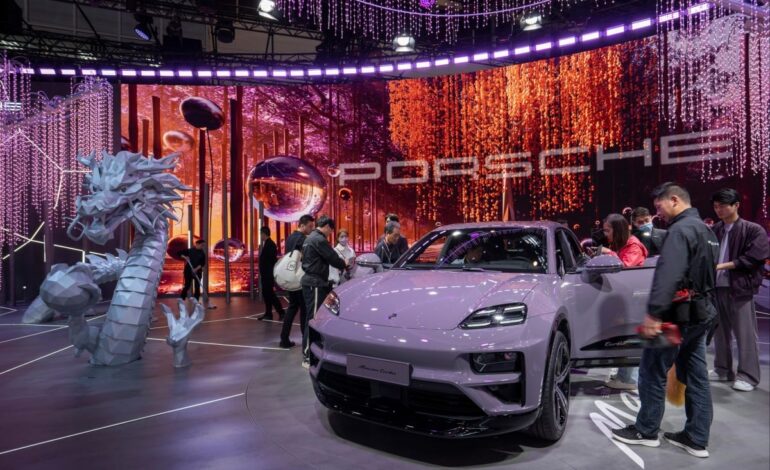
Sales of high end foreign cars are falling in China as consumers increasingly turn away from European luxury marques in favour of more affordable domestic brands. The shift marks a significant change in the world’s largest automotive market, where overseas names such as Porsche, Mercedes Benz, BMW, and Aston Martin have long dominated the premium segment. Today, that dominance is being challenged by Chinese manufacturers offering vehicles that better align with local preferences and budgets.
Local brands win on price and features
Chinese carmakers have gained ground by delivering vehicles packed with advanced electronics, digital dashboards, and comfort focused features at significantly lower prices. Many domestic models are being sold with heavy discounts, making them attractive alternatives to imported or joint venture luxury cars. For buyers, the value proposition has become hard to ignore, especially as technology has become a key factor in purchasing decisions.
Consumers are increasingly prioritising intelligent driving systems, large infotainment screens, and seamless smartphone integration. Local brands have been quicker to tailor these features to Chinese tastes, while also keeping prices within reach of a broader customer base.
European marques feel the pressure
For European automakers, the trend represents a serious challenge. Brands that once relied on their prestige and engineering reputation are seeing demand soften as buyers reassess what luxury means. High sticker prices and limited discounting have made foreign models less competitive in a market where price sensitivity is rising.
Sales slowdowns for established names have raised concerns about long term positioning in China. While these brands still command recognition, their appeal is being tested as domestic competitors narrow the quality gap and outperform them on technology and perceived value.
Property downturn weighs on consumer confidence
China’s prolonged property slump has played a central role in dampening demand for expensive vehicles. With housing prices under pressure and household wealth affected, many consumers are reluctant to make large discretionary purchases. Cars at the top end of the market are often among the first to be delayed or abandoned when confidence weakens.
The slowdown has reduced not only the number of buyers willing to spend on luxury vehicles but also the urgency to upgrade. As a result, replacement cycles have lengthened, further hitting sales volumes.
Changing attitudes toward displays of wealth
Beyond economics, social attitudes are also shifting. According to Paul Gong, head of China automotive industry research at UBS, affluent consumers are becoming more cautious about publicly displaying their wealth. In a more subdued economic climate, conspicuous consumption carries greater social sensitivity, leading some buyers to favour understated or locally branded vehicles over flashy foreign luxury cars.
This change in mindset has benefited Chinese brands that position themselves around smart design and quiet comfort rather than overt status symbols.
Domestic brands reshape the premium segment
Chinese manufacturers are no longer confined to entry level or mid range categories. Many are moving aggressively into higher priced segments with models that blur the line between mainstream and luxury. By combining competitive pricing with premium interiors and advanced software, they are redefining expectations of what a high end car can be.
This evolution has accelerated competition and forced all players to rethink product strategies, marketing, and pricing.
A turning point for the auto market
The decline in demand for foreign luxury cars suggests China’s auto market is entering a new phase. Brand loyalty is weakening, and practical considerations are outweighing traditional prestige. For European carmakers, success in China may increasingly depend on localised design, flexible pricing, and deeper integration of digital features.
For Chinese brands, the shift represents a validation of years of investment in technology and product development. As consumer priorities continue to evolve, the balance of power in China’s premium car market appears to be changing.